Building Blocks
This section contains fundamental products for the synthesis of organic and biological compounds. Building blocks are the essential starting materials used to construct complex molecules through various chemical reactions. They play a critical role in drug discovery, material science, and chemical research. At CymitQuimica, we offer a diverse range of high-quality building blocks to support your innovative research and industrial projects, ensuring you have the essential components for successful synthesis.
Subcategories of "Building Blocks"
- Boronic Acids & Boronic Acid Derivatives(5,778 products)
- Chiral Building Blocks(1,242 products)
- Hydrocarbon Building Blocks(6,098 products)
- Organic Building Blocks(61,084 products)
Found 198714 products of "Building Blocks"
Sort by
Purity (%)
0
100
|
0
|
50
|
90
|
95
|
100
8-Methylene-1,4-dioxa-spiro[4.5]decane
CAS:<p>Versatile small molecule scaffold</p>Formula:C9H14O2Purity:Min. 95%Molecular weight:154.21 g/mol2-Benzoyl-3-phenylaziridine
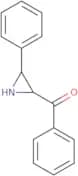
CAS:<p>2-Benzoyl-3-phenylaziridine is a heterocyclic compound that is obtained by the condensation of benzoyl chloride and phenylamine. It is used in the synthesis of azomethine dyes, which are mainly used as textile dyes. The ammonium salt of 2-benzoyl-3-phenylaziridine can be obtained on refluxing the hydrate with thiocyanate and acetonitrile. This transformation has been shown to be dependent on pH with an optimum at pH 8.5.</p>Formula:C15H13NOPurity:Min. 95%Molecular weight:223.27 g/mol1,2,4,5-Tetrahydro-3-benzothiepin-1-one
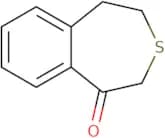
CAS:Versatile small molecule scaffoldFormula:C10H10OSPurity:Min. 95%Molecular weight:178.25 g/molBis(2-bromoethyl)dimethylsilane
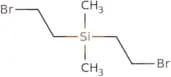
CAS:<p>Versatile small molecule scaffold</p>Formula:C6H14Br2SiPurity:Min. 95%Molecular weight:274.07 g/mol4-Bromo-2-chloronaphthalen-1-amine
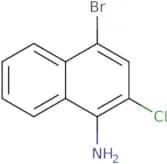
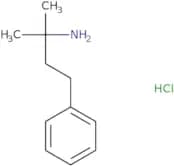
CAS:<p>4-Bromo-2-chloronaphthalen-1-amine is a chemical compound that can be synthesized from acetone and chlorides. The reaction proceeds via a nucleophilic substitution reaction in which one of the chlorine atoms is replaced by an electron pair from acetone. This process occurs when the substituent on the naphthalene ring is not sterically hindered, and it is therefore necessary to use substituents that are electron donors, such as methyl or ethyl groups. 4-Bromo-2-chloronaphthalen-1-amine has been synthesized in Japan by reacting acetone with sodium chloride and bromine at high temperature and pressure. The solvent used was benzene, which was removed after the reaction was complete.</p>Formula:C10H7BrClNPurity:Min. 95%Molecular weight:256.52 g/mol2-Methyl-4-phenylbutan-2-amine hydrochloride
CAS:Versatile small molecule scaffoldFormula:C11H18ClNPurity:Min. 95%Molecular weight:199.72 g/mol2-Methylbenzene-1,3-dicarbaldehyde
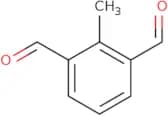
CAS:<p>2-Methylbenzene-1,3-dicarbaldehyde is a divalent hydrocarbon that has an oxidation catalyst. This compound is used as an intermediate in the production of drugs and pharmaceuticals. It has been shown to have cardiovascular disorders, such as vasodilatation and hypotension. The mechanism of action is not fully understood but may be related to its ability to act as a nitrovasodilator by increasing nitric oxide (NO) release. 2-Methylbenzene-1,3-dicarbaldehyde also produces psychotic disorders when long term exposure occurs. This compound has been shown to have neurotoxic effects in animal models with long term exposure.</p>Formula:C9H8O2Purity:Min. 95%Molecular weight:148.16 g/mol4-Methyl-3-phenylpentanoic acid
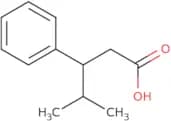
CAS:<p>4-Methyl-3-phenylpentanoic acid is a chiral, enantioselective catalyst. It is catalyzed by rhodium and used in the asymmetric synthesis of β-unsaturated amides. This reaction is an example of an esterification that is catalyzed by a chiral, enantioselective reagent. 4-Methyl-3-phenylpentanoic acid has also been shown to be effective for the synthesis of chiral esters.</p>Formula:C12H16O2Purity:Min. 95%Molecular weight:192.25 g/mol4-(4-Ethoxyphenoxy)aniline
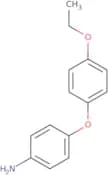
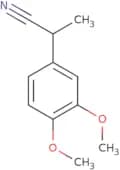
CAS:<p>Versatile small molecule scaffold</p>Formula:C14H15NO2Purity:Min. 95%Molecular weight:229.27 g/mol2-(3,4-Dimethoxyphenyl)propanenitrile
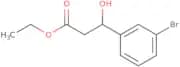
CAS:<p>Versatile small molecule scaffold</p>Formula:C11H13NO2Purity:Min. 95%Molecular weight:191.23 g/molEthyl 3-(3-bromophenyl)-3-hydroxypropanoate
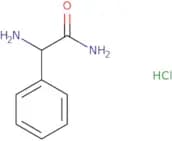
CAS:<p>Versatile small molecule scaffold</p>Formula:C11H13BrO3Purity:Min. 95%Molecular weight:273.12 g/mol2-Amino-2-phenylacetamide hydrochloride
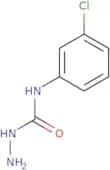
CAS:Versatile small molecule scaffoldFormula:C8H11ClN2OPurity:Min. 95%Molecular weight:186.64 g/molN-(3-Chlorophenyl)hydrazinecarboxamide
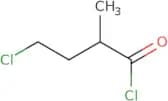
CAS:<p>Versatile small molecule scaffold</p>Formula:C7H8ClN3OPurity:Min. 95%Molecular weight:185.61 g/mol4-Chloro-2-methylbutanoyl Chloride
CAS:<p>4-Chloro-2-methylbutanoyl Chloride is a thiolactone that is used in the synthesis of dl-homocysteine. It is an environmental pollutant and can be found in the distillate from chlorinated solvents. 4-Chloro-2-methylbutanoyl Chloride reacts with chloride to form an environmentally hazardous reaction product. This chemical has been used as a medicine, but it has not been approved by the FDA for use in humans.</p>Formula:C5H8Cl2OPurity:Min. 95%Molecular weight:155.02 g/molBenzyl[2-(4-methoxyphenyl)ethyl]amine
CAS:Controlled Product<p>Versatile small molecule scaffold</p>Formula:C16H19NOPurity:Min. 95%Molecular weight:241.33 g/molHexahydro-1'H-spiro[1,3-dioxolane-2,2'-pentalene]-5'-one
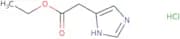
CAS:Versatile small molecule scaffoldFormula:C10H14O3Purity:Min. 95%Molecular weight:182.22 g/molEthyl 2-(1H-imidazol-4-yl)acetate hydrochloride
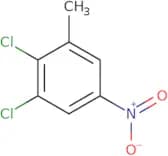
CAS:Versatile small molecule scaffoldFormula:C7H11ClN2O2Purity:Min. 95%Molecular weight:190.6 g/mol1,2-Dichloro-3-methyl-5-nitrobenzene
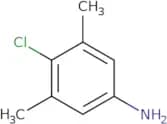
CAS:<p>Versatile small molecule scaffold</p>Formula:C7H5Cl2NO2Purity:Min. 95%Molecular weight:206.02 g/mol4-chloro-3,5-dimethylaniline
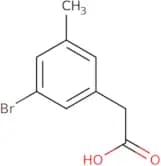
CAS:<p>Versatile small molecule scaffold</p>Formula:C8H10ClNPurity:Min. 95%Molecular weight:155.63 g/mol3-Bromo-5-methylphenylacetic acid
CAS:<p>Versatile small molecule scaffold</p>Formula:C9H9BrO2Purity:Min. 95%Molecular weight:229.07 g/mol
![8-Methylene-1,4-dioxa-spiro[4.5]decane](/_next/image/?url=https%3A%2Fstatic.cymitquimica.com%2Fproducts%2F3D%2Fthumb-webp%2FBCA65690.webp&w=3840&q=75)

![Benzyl[2-(4-methoxyphenyl)ethyl]amine](/_next/image/?url=https%3A%2Fstatic.cymitquimica.com%2Fproducts%2F3D%2Fthumb-webp%2FBCA71372.webp&w=3840&q=75)
![Hexahydro-1'H-spiro[1,3-dioxolane-2,2'-pentalene]-5'-one](/_next/image/?url=https%3A%2Fstatic.cymitquimica.com%2Fproducts%2F3D%2Fthumb-webp%2FBCA71662.webp&w=3840&q=75)