Building Blocks
This section contains fundamental products for the synthesis of organic and biological compounds. Building blocks are the essential starting materials used to construct complex molecules through various chemical reactions. They play a critical role in drug discovery, material science, and chemical research. At CymitQuimica, we offer a diverse range of high-quality building blocks to support your innovative research and industrial projects, ensuring you have the essential components for successful synthesis.
Subcategories of "Building Blocks"
- Boronic Acids & Boronic Acid Derivatives(5,778 products)
- Chiral Building Blocks(1,242 products)
- Hydrocarbon Building Blocks(6,098 products)
- Organic Building Blocks(61,084 products)
Found 198714 products of "Building Blocks"
Sort by
Purity (%)
0
100
|
0
|
50
|
90
|
95
|
100
1-[4-(2-Bromoacetyl)piperidin-1-yl]-2,2,2-trifluoroethan-1-one
CAS:Versatile small molecule scaffoldFormula:C9H11BrF3NO2Purity:Min. 95%Molecular weight:302.09 g/molAmiodarone
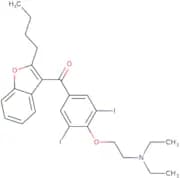
CAS:Controlled Product<p>Amiodarone is a drug that is used to treat and prevent certain types of irregular heartbeats. It belongs to the group of drugs called class III anti-arrhythmics. Amiodarone is a long-acting medication that can take up to three weeks for full effect. Amiodarone has been shown to reduce the number of atrial and ventricular arrhythmias in patients with structural heart disease. This drug also has significant cytotoxicity, which means it may affect normal cells as well as cancer cells, and increases the risk of serious side effects such as fibrillation and glucose intolerance. Amiodarone should not be taken with other medications that can cause fibrillation or make it hard for your body to control blood pressure, such as nonsteroidal anti-inflammatory drugs (NSAIDs) like ibuprofen or naproxen.</p>Formula:C25H29I2NO3Purity:Min. 95%Molecular weight:645.31 g/molPotassium (benzylcarbamothioyl)sulfanide
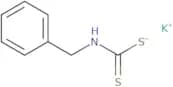
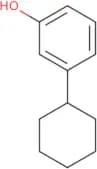
CAS:Versatile small molecule scaffoldFormula:C8H8KNS2Purity:Min. 95%Molecular weight:221.4 g/mol3-Cyclohexylphenol
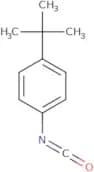
CAS:<p>Versatile small molecule scaffold</p>Formula:C12H16OPurity:Min. 95%Molecular weight:176.3 g/molBenzene, 1-(1,1-dimethylethyl)-4-isocyanato-
CAS:<p>Benzene, 1-(1,1-dimethylethyl)-4-isocyanato-, is a potent inhibitor of the methyltransferase that catalyzes the conversion of S-adenosylmethionine to methionine. It is an orally active drug that has been shown to be effective against sarcoma viral oncogene in vitro and in vivo. Benzene, 1-(1,1-dimethylethyl)-4-isocyanato-, has a high potency for inhibiting cellular methylation and leads to mononuclear cell death by apoptosis. Benzene, 1-(1,1-dimethylethyl)-4-isocyanato-, also inhibits protein synthesis and patterning in cellular systems.</p>Formula:C11H13NOPurity:Min. 95%Molecular weight:175.23 g/mol2-bromo-4,5-dichloroaniline
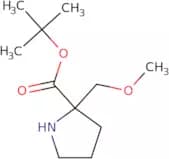
CAS:<p>2-bromo-4,5-dichloroaniline is a homologous compound that is used as an intermediate in the production of dopamine and polyphosphoric acid. It has been shown to inhibit the formation of hydrogen chloride and chloro compounds in the brain, which may be due to its catalytic properties. The metabolism of dopamine is inhibited by 2-bromo-4,5-dichloroaniline, which would lead to a decrease in neurotransmitters such as serotonin and noradrenaline. This drug has been found to be effective in the treatment of Parkinson's disease.</p>Formula:C6H4BrCl2NPurity:Min. 95%Molecular weight:240.91 g/moltert-Butyl 2-(methoxymethyl)pyrrolidine-2-carboxylate
CAS:Versatile small molecule scaffoldFormula:C11H21NO3Purity:Min. 95%Molecular weight:215.29 g/mol4-Bromo-3,5-dichlorophenol
CAS:<p>4-Bromo-3,5-dichlorophenol is a preservative that is used to prevent the growth of microorganisms in water. The compound is added to water at concentrations of 1-10 ppm and can be found in drinking water, swimming pools, and waste water. 4-Bromo-3,5-dichlorophenol is dechlorinated with chlorine to make it more stable. It has been shown to inhibit the growth of bacteria by interfering with their DNA synthesis and protein production. 4-Bromo-3,5-dichlorophenol also inhibits the growth of fungi and algae by interfering with their cell membrane structure. It can be detected in low levels using gas chromatography/mass spectroscopy or liquid chromatography/mass spectroscopy techniques.<br>4-Bromo-3,5-dichlorophenol has been shown to be toxic to mice and rats at high concentrations (>100 mg/kg).</p>Formula:C6H3BrCl2OPurity:Min. 95%Molecular weight:241.9 g/mol4-Bromo-2,5-dichloroaniline
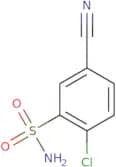
CAS:<p>Versatile small molecule scaffold</p>Formula:C6H4BrCl2NPurity:Min. 95%Molecular weight:240.91 g/mol2-Chloro-5-cyanobenzene-1-sulfonamide
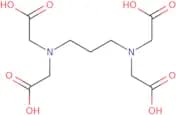
CAS:2-Chloro-5-cyanobenzene-1-sulfonamide is an ATP-sensitive myorelaxant. It blocks the calcium channels in muscle and pancreatic cells, thereby inhibiting the release of calcium ions. This leads to a reduction in the activity of the enzyme adenylate cyclase, which is responsible for generating a second messenger that causes muscle contraction. 2-Chloro-5-cyanobenzene sulfonamide has been shown to block pancreatic β cells and reduce insulin secretion. The drug's antihyperglycemic effects are due to its inhibition of glucose absorption by blocking sodium/glucose cotransport at the intestinal membrane level.Formula:C7H5ClN2O2SPurity:Min. 95%Molecular weight:216.65 g/mol1,3-Diaminopropane-N,N,N²,N²-tetraacetic acid
CAS:1,3-Diaminopropane-N,N,N²,N²-tetraacetic acid (1,3-DAPTA) is a carboxylate that can form chelate complexes with palladium. It is a weak acid that has been shown to have the ability to act as an efficient water scavenger. 1,3-DAPTA is a white crystalline solid with a melting point of 69°C and shows no evidence of kinetic isotope effects. The crystal structure of 1,3-DAPTA consists of two molecules in the asymmetric unit. The nitrogen atoms are coordinated by four oxygen atoms from two neighboring water molecules and one hydrogen atom from the carboxylate group.Formula:C11H18N2O8Purity:Min. 95%Molecular weight:306.27 g/mol6-(Dimethylamino)hexylamine
CAS:<p>Dimethylaminohexylamine is a petrochemical that is synthesized from xylene. The main use of Dimethylaminohexylamine is as an additive in acrylate resins, which are used in paints and coatings for the prevention of corrosion. It has also been used as an amine coagulant in water treatment processes. Dimethylaminohexylamine is a reactive chemical with a low boiling point that can be used to form polyvalent metal complexes. This chemical has been shown to have high biodegradability and is used as a diluent for anions.</p>Formula:C8H20N2Purity:Min. 95%Molecular weight:144.26 g/mol3-(4-Nitrophenyl)-1-phenylurea
CAS:<p>Versatile small molecule scaffold</p>Formula:C13H11N3O3Purity:Min. 95%Molecular weight:257.24 g/mol[(2,5-Dihydrothiophen-3-yl)methyl](methyl)amine
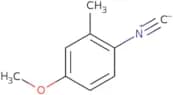
CAS:<p>Versatile small molecule scaffold</p>Formula:C6H11NSPurity:Min. 95%Molecular weight:129.23 g/mol1-Isocyano-4-methoxy-2-methylbenzene
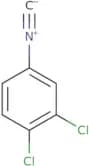
CAS:<p>1-Isocyano-4-methoxy-2-methylbenzene is an efficient and selective catalyst for the synthesis of imidoyl cations from N-alkyl isocyanides. It is an efficient method for the synthesis of diethyl etherate from diethyl ether and a boron trifluoride etherate. This catalyst has been used to synthesize <br>imidoyl cations from N-alkyl isocyanides with high efficiency and selectivity, as well as to synthesize diethyl etherate from diethyl ether and a boron trifluoride etherate.</p>Formula:C9H9NOPurity:Min. 95%Molecular weight:147.17 g/mol1,2-Dichloro-4-isocyanobenzene
CAS:<p>Versatile small molecule scaffold</p>Formula:C7H3Cl2NPurity:Min. 95%Molecular weight:172.01 g/mol1-Chloro-3-isocyano-2-methylbenzene
CAS:<p>Versatile small molecule scaffold</p>Formula:C8H6ClNPurity:Min. 95%Molecular weight:151.59 g/molN-Phenylfuran-2-carboxamide
CAS:<p>N-Phenylfuran-2-carboxamide is an oxadiazole with a heterobicyclic structure. This compound has been shown to be a potent microbicide in the form of microcapsules, providing protection against fungi and bacteria. It can be used as a biocide in agrochemical formulations and as a control agent for fatty acids. The carboxamide group is susceptible to bond cleavage under acidic conditions, which can lead to the formation of hydrogen bonds between the amide and target pest. The mechanism of action for this compound is not fully understood, but it is thought that it may inhibit glycosidase enzymes by disrupting hydrogen bonds between the enzyme's active site and its substrate.</p>Formula:C11H9NO2Purity:Min. 95%Molecular weight:187.19 g/mol4-[(3-Cyclohexyl-1,2,4-oxadiazol-5-yl)methyl]piperidine hydrochloride
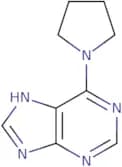
CAS:Versatile small molecule scaffoldFormula:C14H24ClN3OPurity:Min. 95%Molecular weight:285.81 g/mol6-(Pyrrolidin-1-yl)-9H-purine
CAS:<p>6-(Pyrrolidin-1-yl)-9H-purine is an inhibitor of lipid peroxidation. It has been shown to scavenge free radicals and prevent the formation of reactive oxygen species (ROS) by inhibiting the lipoxygenase enzyme. This compound also inhibits superoxide, a ROS that is produced in large quantities during irradiation, and thrombin activity. 6-(Pyrrolidin-1-yl)-9H-purine has a stable anion that interacts with other compounds and can be used as an antithrombotic agent.</p>Formula:C9H11N5Purity:Min. 95%Molecular weight:189.22 g/mol
![1-[4-(2-Bromoacetyl)piperidin-1-yl]-2,2,2-trifluoroethan-1-one](/_next/image/?url=https%3A%2Fstatic.cymitquimica.com%2Fproducts%2F3D%2Fthumb-webp%2FGGD26868.webp&w=3840&q=75)






amine](/_next/image/?url=https%3A%2Fstatic.cymitquimica.com%2Fproducts%2F3D%2Fthumb-webp%2FGGD26865.webp&w=3840&q=75)


![4-[(3-Cyclohexyl-1,2,4-oxadiazol-5-yl)methyl]piperidine hydrochloride](/_next/image/?url=https%3A%2Fstatic.cymitquimica.com%2Fproducts%2F3D%2Fthumb-webp%2FGGD26124.webp&w=3840&q=75)