


Building Blocks
This section contains fundamental products for the synthesis of organic and biological compounds. Building blocks are the essential starting materials used to construct complex molecules through various chemical reactions. They play a critical role in drug discovery, material science, and chemical research. At CymitQuimica, we offer a diverse range of high-quality building blocks to support your innovative research and industrial projects, ensuring you have the essential components for successful synthesis.
Subcategories of "Building Blocks"
- Boronic Acids & Boronic Acid Derivatives(5,778 products)
- Chiral Building Blocks(1,242 products)
- Hydrocarbon Building Blocks(6,098 products)
- Organic Building Blocks(61,084 products)
Found 198714 products of "Building Blocks"
Sort by
Purity (%)
0
100
|
0
|
50
|
90
|
95
|
100
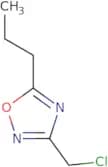
3-(Chloromethyl)-5-propyl-1,2,4-oxadiazole
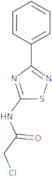
CAS:Versatile small molecule scaffoldFormula:C6H9ClN2OPurity:Min. 95%Molecular weight:160.6 g/mol2-Chloro-N-(3-phenyl-1,2,4-thiadiazol-5-yl)acetamide
CAS:<p>Versatile small molecule scaffold</p>Formula:C10H8ClN3OSPurity:Min. 95%Molecular weight:253.71 g/mol6-Chloro-3-(thiophen-3-yl)-[1,2,4]triazolo[4,3-b]pyridazine
CAS:Versatile small molecule scaffoldFormula:C9H5ClN4SPurity:Min. 95%Molecular weight:236.68 g/molDimethyl({1H-pyrrolo[2,3-c]pyridin-3-yl}methyl)amine
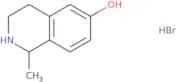
CAS:Versatile small molecule scaffoldFormula:C10H13N3Purity:Min. 95%Molecular weight:175.23 g/mol1-Methyl-1,2,3,4-tetrahydroisoquinolin-6-ol hydrobromide
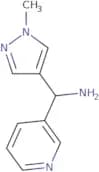
CAS:Versatile small molecule scaffoldFormula:C10H14BrNOPurity:Min. 95%Molecular weight:244.13 g/mol(1-Methyl-1H-pyrazol-4-yl)(pyridin-3-yl)methanamine
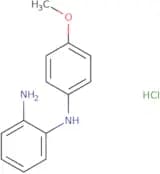
CAS:<p>Versatile small molecule scaffold</p>Formula:C10H12N4Purity:Min. 95%Molecular weight:188.23 g/mol1-N-(4-Methoxyphenyl)benzene-1,2-diamine
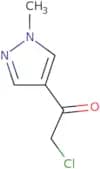
CAS:Versatile small molecule scaffoldFormula:C13H15ClN2OPurity:Min. 95%Molecular weight:250.72 g/mol2-Chloro-1-(1-methyl-1H-pyrazol-4-yl)ethan-1-one
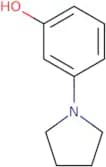
CAS:Versatile small molecule scaffoldFormula:C6H7ClN2OPurity:Min. 95%Molecular weight:158.58 g/mol3-(Pyrrolidin-1-yl)phenol
CAS:<p>Versatile small molecule scaffold</p>Formula:C10H13NOPurity:Min. 95%Molecular weight:163.22 g/mol4-[(3-Nitrophenyl)carbamoyl]butanoic acid
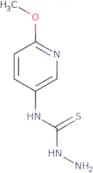
CAS:Versatile small molecule scaffoldFormula:C11H12N2O5Purity:Min. 95%Molecular weight:252.22 g/mol3-Amino-1-(6-methoxypyridin-3-yl)thiourea
CAS:Versatile small molecule scaffoldFormula:C7H10N4OSPurity:Min. 95%Molecular weight:198.25 g/mol2-[4-(Dimethylamino)phenyl]propanoic acid
CAS:<p>Versatile small molecule scaffold</p>Formula:C11H15NO2Purity:Min. 95%Molecular weight:193.24 g/mol3-Amino-1-[2-(2,4-dichlorophenyl)ethyl]thiourea
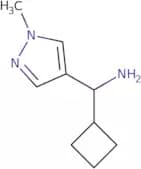
CAS:Versatile small molecule scaffoldFormula:C9H11Cl2N3SPurity:Min. 95%Molecular weight:264.17 g/molCyclobutyl(1-methyl-1H-pyrazol-4-yl)methanamine
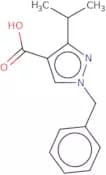
CAS:Versatile small molecule scaffoldFormula:C9H15N3Purity:Min. 95%Molecular weight:165.24 g/mol1-Benzyl-3-(propan-2-yl)-1H-pyrazole-4-carboxylic acid
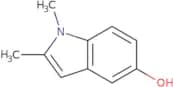
CAS:Versatile small molecule scaffoldFormula:C14H16N2O2Purity:Min. 95%Molecular weight:244.3 g/mol1,2-Dimethyl-1H-indol-5-ol
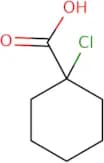
CAS:<p>1,2-Dimethyl-1H-indol-5-ol is an indole with the chemical formula C8H9NO2. It is a colorless to white crystalline solid that is soluble in water and ethanol. The compound has an acidic nature and a pungent odor. It also has a nitro group and two substituents: methoxy and acetoxy. This compound is used as a precursor for the synthesis of other organic compounds, including pharmaceuticals, agrochemicals, and dyes.</p>Formula:C10H11NOPurity:Min. 95%Molecular weight:161.2 g/mol1-Chlorocyclohexane-1-carboxylic acid
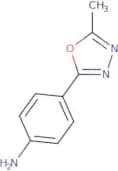
CAS:<p>1-Chlorocyclohexane-1-carboxylic acid (1CCA) is an aryl halide that is used in the synthesis of polymers. It is used as an oxidation catalyst and as a structural formula for cationic polymerization. 1CCA has been shown to efficiently initiate the polymerization of aromatic hydrocarbons, such as styrene, divinylbenzene, and vinyl toluene. The structure of 1CCA is similar to that of aminoglycosides, which are antibiotics that inhibit bacterial protein synthesis by binding to ribosomes. This similarity suggests that 1CCA may have antibiotic properties and could be useful in treating lymphocytic leukemia. However, more research would be needed to confirm this hypothesis.</p>Formula:C7H11ClO2Purity:Min. 95%Molecular weight:162.61 g/mol4-(5-Methyl-1,3,4-oxadiazol-2-yl)aniline
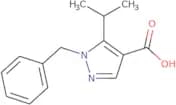
CAS:Versatile small molecule scaffoldFormula:C9H9N3OPurity:Min. 95%Molecular weight:175.19 g/mol1-Benzyl-5-(propan-2-yl)-1H-pyrazole-4-carboxylic acid
CAS:<p>Versatile small molecule scaffold</p>Formula:C14H16N2O2Purity:Min. 95%Molecular weight:244.29 g/molMethyl 3-{[(3,4-difluorophenyl)methyl]amino}propanoate
CAS:Versatile small molecule scaffoldFormula:C11H13F2NO2Purity:Min. 95%Molecular weight:229.22 g/mol

![6-Chloro-3-(thiophen-3-yl)-[1,2,4]triazolo[4,3-b]pyridazine](/_next/image/?url=https%3A%2Fstatic.cymitquimica.com%2Fproducts%2F3D%2Fthumb-webp%2FCWB55196.webp&w=3840&q=75)
![Dimethyl({1H-pyrrolo[2,3-c]pyridin-3-yl}methyl)amine](/_next/image/?url=https%3A%2Fstatic.cymitquimica.com%2Fproducts%2F3D%2Fthumb-webp%2FABA95773.webp&w=3840&q=75)
![4-[(3-Nitrophenyl)carbamoyl]butanoic acid](/_next/image/?url=https%3A%2Fstatic.cymitquimica.com%2Fproducts%2F3D%2Fthumb-webp%2FABA90127.webp&w=3840&q=75)
![2-[4-(Dimethylamino)phenyl]propanoic acid](/_next/image/?url=https%3A%2Fstatic.cymitquimica.com%2Fproducts%2F3D%2Fthumb-webp%2FABA89990.webp&w=3840&q=75)
![3-Amino-1-[2-(2,4-dichlorophenyl)ethyl]thiourea](/_next/image/?url=https%3A%2Fstatic.cymitquimica.com%2Fproducts%2F3D%2Fthumb-webp%2FCWB54909.webp&w=3840&q=75)
![Methyl 3-{[(3,4-difluorophenyl)methyl]amino}propanoate](/_next/image/?url=https%3A%2Fstatic.cymitquimica.com%2Fproducts%2F3D%2Fthumb-webp%2FCWB54866.webp&w=3840&q=75)