Building Blocks
This section contains fundamental products for the synthesis of organic and biological compounds. Building blocks are the essential starting materials used to construct complex molecules through various chemical reactions. They play a critical role in drug discovery, material science, and chemical research. At CymitQuimica, we offer a diverse range of high-quality building blocks to support your innovative research and industrial projects, ensuring you have the essential components for successful synthesis.
Subcategories of "Building Blocks"
- Boronic Acids & Boronic Acid Derivatives(5,778 products)
- Chiral Building Blocks(1,242 products)
- Hydrocarbon Building Blocks(6,098 products)
- Organic Building Blocks(61,063 products)
Found 197855 products of "Building Blocks"
Sort by
Purity (%)
0
100
|
0
|
50
|
90
|
95
|
100
[5-Chloro-2-(2-methylpropoxy)phenyl]methanol
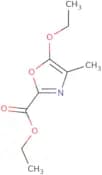
CAS:Versatile small molecule scaffoldFormula:C11H15ClO2Purity:Min. 95%Molecular weight:214.69 g/molEthyl 5-ethoxy-4-methyl-1,3-oxazole-2-carboxylate
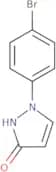
CAS:<p>Versatile small molecule scaffold</p>Formula:C9H13NO4Purity:Min. 95%Molecular weight:199.2 g/mol1-(4-Bromophenyl)-1H-pyrazol-3-ol
CAS:<p>Versatile small molecule scaffold</p>Formula:C9H7BrN2OPurity:Min. 95%Molecular weight:239.07 g/mol4-Hydroxy-6-nitroquinoline
CAS:<p>4-Hydroxy-6-nitroquinoline is an amide compound that has shown potential in interferon research. It is a solute with an acid reaction and is commonly spray-dried for ease of use. This compound can be synthesized through a pyrazole-based method and is often found in hydrocarbon mixtures. Its cyano and phenoxy groups make it suitable for applications in semisolid formulations, while its phosphite moiety allows it to be incorporated into matrix composites. 4-Hydroxy-6-nitroquinoline is commonly used in the field of Research Chemicals and has been studied for its interactions with uridine.</p>Formula:C9H6N2O3Purity:Min. 95%Molecular weight:190.16 g/mol1,3-Octanediol
CAS:1,3-Octanediol is an acidic compound that is commonly used in polymers and research chemicals. It can be synthesized by the reaction of methanol with 1,6-hexanediol or by the hydrogenation of phenol. 1,3-Octanediol has a hydroxyl group at each end of its molecular structure, which makes it a versatile compound for various applications.Formula:C8H18O2Purity:Min. 95%Molecular weight:146.22 g/mol7-{[(benzyloxy)carbonyl]amino}heptanoic acid
CAS:<p>Versatile small molecule scaffold</p>Formula:C15H21NO4Purity:Min. 95%Molecular weight:279.3 g/mol3-(4-Chlorophenyl)-2-hydroxypropionic acid
CAS:Versatile small molecule scaffoldFormula:C9H9ClO3Purity:Min. 95%Molecular weight:200.62 g/mol4-Phenylquinazolin-2(1H)-One
CAS:<p>4-Phenylquinazolin-2(1H)-One is a chemical compound that is related to tylosin tartrate. It is a water-soluble substance that contains a 1-6 carbon atom chain with an alkoxy group. This compound has an acidic nature and is commonly used in research studies as a reference standard or for ion extraction purposes. Its chemical name is derived from its structure, and it shares similarities with erythromycin, a well-known antibiotic.</p>Formula:C14H10N2OPurity:Min. 95%Molecular weight:222.24 g/mol4H-Pyrido[1,2-a]pyrimidin-4-one
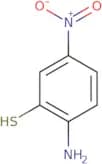
CAS:4H-Pyrido[1,2-a]pyrimidin-4-one is a sulfonated compound that has various applications. It is commonly used as a preservative in cosmetic and personal care products. Additionally, it has been found to have potential therapeutic effects on iron homeostasis and collagen synthesis. Research suggests that 4H-Pyrido[1,2-a]pyrimidin-4-one can enhance the production of siderophores, which are molecules involved in iron uptake and storage. This compound also exhibits antiplatelet activity, making it a promising candidate for the development of cardiovascular drugs. Furthermore, it has been studied for its role in activating collagen hydrolysate and promoting wound healing. With its versatile properties, 4H-Pyrido[1,2-a]pyrimidin-4-one holds great potential for various scientific and industrial applications.Formula:C8H6N2OPurity:Min. 95%Molecular weight:146.15 g/mol2-amino-5-nitrobenzenethiol
CAS:<p>2-Amino-5-nitrobenzenethiol is a versatile compound that has various applications in different industries. It is commonly used as a research chemical and is also utilized in the production of pioglitazone, a medication used to treat diabetes. Additionally, 2-Amino-5-nitrobenzenethiol can serve as an intermediate in the synthesis of other compounds such as diterpenes, triazines, pyrazoles, and pyrazolines.</p>Formula:C6H6N2O2SPurity:Min. 95%Molecular weight:170.19 g/mol5-Chloro-2-methyl-4-nitrobenzene-1-sulfonyl chloride
CAS:Versatile small molecule scaffoldFormula:C7H5Cl2NO4SPurity:Min. 95%Molecular weight:270.09 g/mol5-Chloro-2-methyl-4-nitrobenzene-1-sulfonamide
CAS:Versatile small molecule scaffoldFormula:C7H7ClN2O4SPurity:Min. 95%Molecular weight:250.66 g/mol5-Methoxy-1-benzofuran-3-carboxylic acid
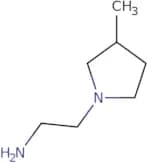
CAS:Versatile small molecule scaffoldFormula:C10H8O4Purity:Min. 95%Molecular weight:192.17 g/mol2-(3-Methylpyrrolidin-1-yl)ethan-1-amine
CAS:Versatile small molecule scaffoldFormula:C7H16N2Purity:Min. 95%Molecular weight:128.22 g/mol5,6-dihydro-1h-indol-7(4h)-one
CAS:<p>Versatile small molecule scaffold</p>Formula:C8H9NOPurity:Min. 95%Molecular weight:135.17 g/molCyclopentyl(phenyl)methanamine
CAS:<p>Cyclopentyl(phenyl)methanamine is a versatile compound that has various applications. It is commonly used in the production of research chemicals and as a solid catalyst. Cyclopentyl(phenyl)methanamine is also known for its use in microbial consortia, where it aids in the growth and development of microorganisms. Additionally, it can be utilized as a plasticizer and is often found in products such as cellulose and phosphoric acid. With its wide range of uses, Cyclopentyl(phenyl)methanamine is an essential component in many industries.</p>Formula:C12H17NPurity:Min. 95%Molecular weight:175.27 g/mol2-Chloro-N-[cyclohexyl(phenyl)methyl]acetamide
CAS:<p>Versatile small molecule scaffold</p>Formula:C15H20ClNOPurity:Min. 95%Molecular weight:265.78 g/mol2-Chloro-N-[cyclopentyl(phenyl)methyl]acetamide
CAS:Versatile small molecule scaffoldFormula:C14H18ClNOPurity:Min. 95%Molecular weight:251.75 g/mol2-Chloro-N-[cyclopropyl(phenyl)methyl]acetamide
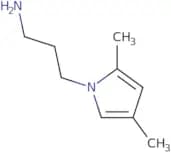
CAS:<p>Versatile small molecule scaffold</p>Formula:C12H14ClNOPurity:Min. 95%Molecular weight:223.7 g/mol3-(2,4-Dimethyl-1H-pyrrol-1-yl)propan-1-amine
CAS:Versatile small molecule scaffoldFormula:C9H16N2Purity:Min. 95%Molecular weight:152.24 g/mol
![[5-Chloro-2-(2-methylpropoxy)phenyl]methanol](/_next/image/?url=https%3A%2Fstatic.cymitquimica.com%2Fproducts%2F3D%2Fthumb-webp%2FYAA42637.webp&w=3840&q=75)

![7-{[(benzyloxy)carbonyl]amino}heptanoic acid](/_next/image/?url=https%3A%2Fstatic.cymitquimica.com%2Fproducts%2F3D%2Fthumb-webp%2FYAA43437.webp&w=3840&q=75)
![4H-Pyrido[1,2-a]pyrimidin-4-one](/_next/image/?url=https%3A%2Fstatic.cymitquimica.com%2Fproducts%2F3D%2Fthumb-webp%2FYAA44310.webp&w=3840&q=75)

![2-Chloro-N-[cyclohexyl(phenyl)methyl]acetamide](/_next/image/?url=https%3A%2Fstatic.cymitquimica.com%2Fproducts%2F3D%2Fthumb-webp%2FYAA45941.webp&w=3840&q=75)
![2-Chloro-N-[cyclopentyl(phenyl)methyl]acetamide](/_next/image/?url=https%3A%2Fstatic.cymitquimica.com%2Fproducts%2F3D%2Fthumb-webp%2FYAA45943.webp&w=3840&q=75)
![2-Chloro-N-[cyclopropyl(phenyl)methyl]acetamide](/_next/image/?url=https%3A%2Fstatic.cymitquimica.com%2Fproducts%2F3D%2Fthumb-webp%2FYAA45947.webp&w=3840&q=75)