Building Blocks
This section contains fundamental products for the synthesis of organic and biological compounds. Building blocks are the essential starting materials used to construct complex molecules through various chemical reactions. They play a critical role in drug discovery, material science, and chemical research. At CymitQuimica, we offer a diverse range of high-quality building blocks to support your innovative research and industrial projects, ensuring you have the essential components for successful synthesis.
Subcategories of "Building Blocks"
- Boronic Acids & Boronic Acid Derivatives(5,778 products)
- Chiral Building Blocks(1,242 products)
- Hydrocarbon Building Blocks(6,098 products)
- Organic Building Blocks(61,059 products)
Found 199580 products of "Building Blocks"
Sort by
Purity (%)
0
100
|
0
|
50
|
90
|
95
|
100
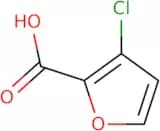
3-Chlorofuran-2-carboxylic acid
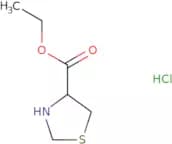
CAS:<p>Versatile small molecule scaffold</p>Formula:C5H3ClO3Purity:Min. 95%Molecular weight:146.53 g/molEthyl 1,3-thiazolidine-4-carboxylate hydrochloride
CAS:<p>Versatile small molecule scaffold</p>Formula:C6H12ClNO2SPurity:Min. 95%Molecular weight:197.68 g/mol2-Acetamido-6-methylbenzoic acid
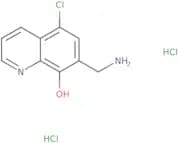
CAS:Versatile small molecule scaffoldFormula:C10H11NO3Purity:Min. 95%Molecular weight:193.2 g/mol7-(Aminomethyl)-5-chloroquinolin-8-ol dihydrochloride
CAS:Versatile small molecule scaffoldFormula:C10H11Cl3N2OPurity:Min. 95%Molecular weight:281.6 g/mol2-{[1,2,4]Triazolo[4,3-a]pyridin-3-ylsulfanyl}acetic acid
CAS:<p>Versatile small molecule scaffold</p>Formula:C8H7N3O2SPurity:Min. 95%Molecular weight:209.23 g/mol[1,2,4]Triazolo[1,5-a]pyrimidine-2-thiol
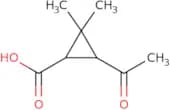
CAS:<p>Versatile small molecule scaffold</p>Formula:C5H4N4SPurity:Min. 95%Molecular weight:152.18 g/molrac-(1R,3R)-3-Acetyl-2,2-dimethylcyclopropane-1-carboxylic acid
CAS:<p>Versatile small molecule scaffold</p>Formula:C8H12O3Purity:Min. 95%Molecular weight:156.2 g/mol3-(2,5-Dioxopyrrolidin-1-yl)propanamide
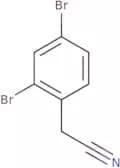
CAS:<p>Versatile small molecule scaffold</p>Formula:C7H10N2O3Purity:Min. 95%Molecular weight:170.17 g/mol2-(2,4-Dibromophenyl)acetonitrile
CAS:Versatile small molecule scaffoldFormula:C8H5Br2NPurity:Min. 95%Molecular weight:274.94 g/mol5-Methylnaphthalen-2-ol
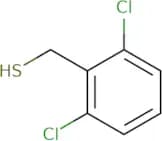
CAS:<p>Versatile small molecule scaffold</p>Formula:C11H10OPurity:Min. 95%Molecular weight:158.2 g/mol(2,6-Dichlorophenyl)methanethiol
CAS:<p>Versatile small molecule scaffold</p>Formula:C7H6Cl2SPurity:Min. 95%Molecular weight:193.09 g/mol1-Methyl-3,4-dinitro-1H-pyrazole
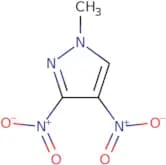
CAS:<p>1-Methyl-3,4-dinitro-1H-pyrazole is a chemical compound that is not naturally occurring. It has been synthesized by the reaction of 1,2-diaminoethane with nitric acid and dinitrobenzene. The synthesis of this compound was first reported in 1966 by an Australian research team. The magnetic resonance spectrum of this compound showed a monoclinic crystal structure with a molecular weight of 166.19 g/mol. The molecular formula for this compound is C6H5N3O2 and it has an empirical formula of C6H5N3O2I. The yield for this reaction was found to be 85%.</p>Formula:C4H4N4O4Purity:Min. 95%Molecular weight:172.1 g/mol2-{[4-(4-Methylphenyl)-4H-1,2,4-triazol-3-yl]sulfanyl}acetic acid
CAS:<p>Versatile small molecule scaffold</p>Formula:C11H11N3O2SPurity:Min. 95%Molecular weight:249.29 g/mol2-{[4-(4-Methoxyphenyl)-4H-1,2,4-triazol-3-yl]sulfanyl}acetic acid
CAS:<p>Versatile small molecule scaffold</p>Formula:C11H11N3O3SPurity:Min. 95%Molecular weight:265.29 g/mol{[4-(3-Chlorophenyl)-4H-1,2,4-triazol-3-yl]thio}acetic acid
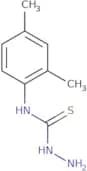
CAS:<p>Versatile small molecule scaffold</p>Formula:C10H8ClN3O2SPurity:Min. 95%Molecular weight:269.71 g/mol4-(2,4-Dimethylphenyl)-3-thiosemicarbazide
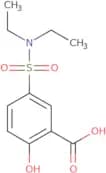
CAS:<p>Versatile small molecule scaffold</p>Formula:C9H13N3SPurity:Min. 95%Color and Shape:PowderMolecular weight:195.28 g/mol5-(Diethylsulfamoyl)-2-hydroxybenzoic acid
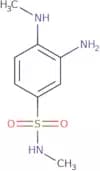
CAS:<p>Versatile small molecule scaffold</p>Formula:C11H15NO5SPurity:Min. 95%Molecular weight:273.31 g/mol3-Amino-N-methyl-4-(methylamino)benzenesulfonamide
CAS:<p>3-Amino-N-methyl-4-(methylamino)benzenesulfonamide is a synthetic compound that is used in the synthesis of oligosaccharides and polysaccharides. It is also used as a reagent for the methylation of saccharide, carbonyls and amines. 3-Amino-N-methyl-4-(methylamino)benzenesulfonamide has been shown to be useful in click chemistry reactions.</p>Formula:C8H13N3O2SPurity:Min. 95%Molecular weight:215.28 g/mol3-Amino-4-(methylamino)benzoic acid
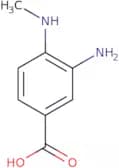
CAS:<p>3-Amino-4-(methylamino)benzoic acid is a modified amino acid that is used in the synthesis of proteins. It has been shown to inhibit the growth of retinoblastoma cells and to bind to specific sites in cellular protein, thereby inhibiting protein synthesis. 3-Amino-4-(methylamino)benzoic acid has also been shown to be effective as a linker in chemical ligation reactions, which can be used for the synthesis of peptides and proteins. This compound has not been found to have any biochemical or chemical modifications.</p>Formula:C8H10N2O2Purity:Min. 95%Molecular weight:166.18 g/molMethyl 3-amino-4-(methylamino)benzenecarboxylate
CAS:<p>Versatile small molecule scaffold</p>Formula:C9H12N2O2Purity:Min. 95%Molecular weight:180.21 g/mol


![2-{[1,2,4]Triazolo[4,3-a]pyridin-3-ylsulfanyl}acetic acid](/_next/image/?url=https%3A%2Fstatic.cymitquimica.com%2Fproducts%2F3D%2Fthumb-webp%2FRCA23467.webp&w=3840&q=75)
![[1,2,4]Triazolo[1,5-a]pyrimidine-2-thiol](/_next/image/?url=https%3A%2Fstatic.cymitquimica.com%2Fproducts%2F3D%2Fthumb-webp%2FRCA23479.webp&w=3840&q=75)


![2-{[4-(4-Methylphenyl)-4H-1,2,4-triazol-3-yl]sulfanyl}acetic acid](/_next/image/?url=https%3A%2Fstatic.cymitquimica.com%2Fproducts%2F3D%2Fthumb-webp%2FRCA29764.webp&w=3840&q=75)
![2-{[4-(4-Methoxyphenyl)-4H-1,2,4-triazol-3-yl]sulfanyl}acetic acid](/_next/image/?url=https%3A%2Fstatic.cymitquimica.com%2Fproducts%2F3D%2Fthumb-webp%2FRCA29767.webp&w=3840&q=75)
![{[4-(3-Chlorophenyl)-4H-1,2,4-triazol-3-yl]thio}acetic acid](/_next/image/?url=https%3A%2Fstatic.cymitquimica.com%2Fproducts%2F3D%2Fthumb-webp%2FRCA29769.webp&w=3840&q=75)