Building Blocks
This section contains fundamental products for the synthesis of organic and biological compounds. Building blocks are the essential starting materials used to construct complex molecules through various chemical reactions. They play a critical role in drug discovery, material science, and chemical research. At CymitQuimica, we offer a diverse range of high-quality building blocks to support your innovative research and industrial projects, ensuring you have the essential components for successful synthesis.
Subcategories of "Building Blocks"
- Boronic Acids & Boronic Acid Derivatives(5,778 products)
- Chiral Building Blocks(1,243 products)
- Hydrocarbon Building Blocks(6,098 products)
- Organic Building Blocks(61,057 products)
Found 200716 products of "Building Blocks"
Sort by
Purity (%)
0
100
|
0
|
50
|
90
|
95
|
100
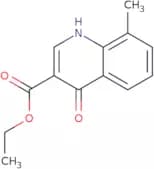
Ethyl 4-hydroxy-8-methylquinoline-3-carboxylate
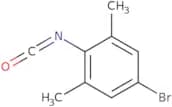
CAS:Versatile small molecule scaffoldFormula:C13H13NO3Purity:Min. 95%Molecular weight:231.25 g/mol4-Bromo-2,6-dimethylphenyl isocyanate
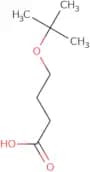
CAS:<p>Versatile small molecule scaffold</p>Formula:C9H8BrNOPurity:Min. 95%Molecular weight:226.07 g/mol4-(tert-Butoxy)butanoic acid
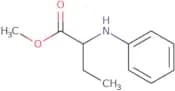
CAS:Controlled ProductVersatile small molecule scaffoldFormula:C8H16O3Purity:Min. 95%Molecular weight:160.21 g/molMethyl 2-(phenylamino)butanoate
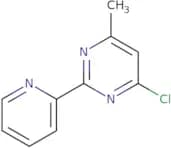
CAS:<p>Versatile small molecule scaffold</p>Formula:C11H15NO2Purity:Min. 95%Molecular weight:193.24 g/mol4-Chloro-6-methyl-2-(2-pyridinyl)pyrimidine
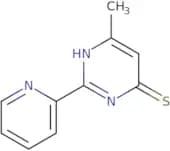
CAS:<p>4-Chloro-6-methyl-2-(2-pyridinyl)pyrimidine is a crossover high spin ligand, with a mononuclear low spin transition state. This ligand has been shown to bind to the Fe site of the enzyme cytochrome c oxidase by forming an interaction with the heme and the protein. This interaction results in a hysteretic, isomeric ligand that binds reversibly to the Fe site. 4-Chloro-6-methyl-2-(2-pyridinyl)pyrimidine has been found to be autocatalytic in some cases, but this effect can be overcome by using a higher concentration of ligand.</p>Formula:C10H8ClN3Purity:Min. 95%Molecular weight:205.65 g/mol6-Methyl-2-pyridin-2-yl-pyrimidine-4-thiol
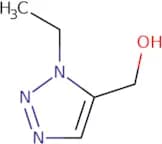
CAS:Versatile small molecule scaffoldFormula:C10H9N3SPurity:Min. 95%Molecular weight:203.27 g/mol(1-Ethyl-1H-1,2,3-triazol-5-yl)methanol
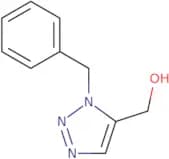
CAS:<p>Versatile small molecule scaffold</p>Formula:C5H9N3OPurity:Min. 95%Molecular weight:127.14 g/mol(1-Benzyl-1H-1,2,3-triazol-5-yl)methanol
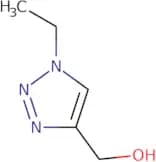
CAS:Versatile small molecule scaffoldFormula:C10H11N3OPurity:Min. 95%Molecular weight:189.21 g/mol(1-Ethyl-1H-1,2,3-triazol-4-yl)methanol
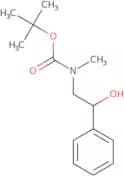
CAS:Versatile small molecule scaffoldFormula:C5H9N3OPurity:Min. 95%Molecular weight:127.14 g/mol2-(N-Boc-N-methylamino)-1-phenylethanol
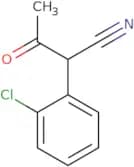
CAS:Versatile small molecule scaffoldFormula:C14H21NO3Purity:Min. 95%Molecular weight:251.32 g/mol2-(2-Chlorophenyl)-3-oxobutanenitrile
CAS:<p>Versatile small molecule scaffold</p>Formula:C10H8ClNOPurity:Min. 95%Molecular weight:193.63 g/molNefiracetam
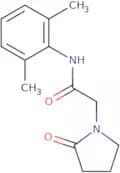
CAS:Nefiracetam is a nootropic drug used for the treatment of Alzheimer's disease, Parkinson's disease, and other cognitive disorders. It binds to voltage-dependent calcium channels and inhibits neuronal death. Nefiracetam also has a protective effect on the brain from thermal expansion. This drug has been shown to be safe in human serum at doses up to 1,000 mg/kg and was not found to be toxic in animal toxicity studies. Nefiracetam is also effective in treating HIV infection by inhibiting cholinergic neurotransmission. It has been shown to increase locomotor activity and improve energy metabolism in the caudate putamen of rats with stroke-induced brain damage.Formula:C14H18N2O2Purity:Min. 95%Molecular weight:246.3 g/molBis(1-(propan-2-yl)guanidine), sulfuric acid
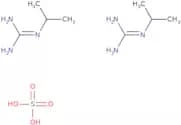
CAS:Versatile small molecule scaffoldFormula:C8H24N6O4SPurity:Min. 95%Molecular weight:300.38 g/mol(1-Bromocyclopropyl)benzene
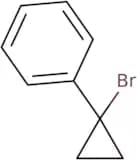
CAS:Versatile small molecule scaffoldFormula:C9H9BrPurity:Min. 95%Molecular weight:197.07 g/molN-(2-Phenylethyl)benzenesulfonamide
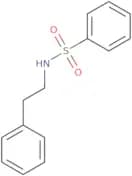
CAS:<p>N-(2-Phenylethyl)benzenesulfonamide is a biodegradable and aerobic catalyst that is used in the production of nitrates. It can be recycled and has a high solubility, which allows for efficient extraction from wastewater effluents. The reactor system can be operated at an aerobic or anaerobic conditions. N-(2-Phenylethyl)benzenesulfonamide is soluble in water and can be hydrolyzed by acids or bases to release ammonia gas. The process can also be sustainable due to the use of renewable energy sources such as solar, wind, tidal, or biomass power.</p>Formula:C14H15NO2SPurity:Min. 95%Molecular weight:261.34 g/mol(3-Amino-phenyl)-piperidin-1-yl-methanone
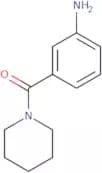
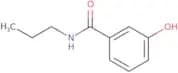
CAS:Versatile small molecule scaffoldFormula:C12H16N2OPurity:Min. 95%Molecular weight:204.27 g/mol3-Hydroxy-N-propylbenzamide
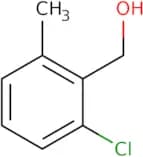
CAS:<p>Versatile small molecule scaffold</p>Formula:C10H13NO2Purity:Min. 95%Molecular weight:179.22 g/mol(2-Chloro-6-methylphenyl)methanol
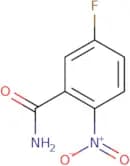
CAS:<p>Versatile small molecule scaffold</p>Formula:C8H9ClOPurity:Min. 95%Molecular weight:156.61 g/mol5-Fluoro-2-nitrobenzamide
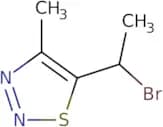
CAS:<p>Versatile small molecule scaffold</p>Formula:C7H5FN2O3Purity:Min. 95%Molecular weight:184.13 g/mol5-(1-Bromoethyl)-4-methyl-1,2,3-thiadiazole
CAS:Versatile small molecule scaffoldFormula:C5H7BrN2SPurity:Min. 95%Molecular weight:207.09 g/mol