Building Blocks
This section contains fundamental products for the synthesis of organic and biological compounds. Building blocks are the essential starting materials used to construct complex molecules through various chemical reactions. They play a critical role in drug discovery, material science, and chemical research. At CymitQuimica, we offer a diverse range of high-quality building blocks to support your innovative research and industrial projects, ensuring you have the essential components for successful synthesis.
Subcategories of "Building Blocks"
- Boronic Acids & Boronic Acid Derivatives(5,778 products)
- Chiral Building Blocks(1,243 products)
- Hydrocarbon Building Blocks(6,097 products)
- Organic Building Blocks(61,052 products)
Found 201390 products of "Building Blocks"
Sort by
Purity (%)
0
100
|
0
|
50
|
90
|
95
|
100
1H-Imidazo[4,5-F]quinoline
CAS:<p>1H-Imidazo[4,5-F]quinoline is an antimicrobial agent that inhibits the growth of cells by binding to the benzodiazepine site on the GABA receptor in mammalian cells. The drug binds to this site and prevents the influx of chloride ions into the cell, which results in a decrease in the membrane potential. This leads to cell death by apoptosis. 1H-Imidazo[4,5-F]quinoline has been shown to be active against many different types of bacteria, including candida glabrata, virus and anions. 1H-Imidazo[4,5-F]quinoline has been used as a fluorescent probe for detection methods such as spectroscopy and x-ray crystallography.</p>Formula:C10H7N3Purity:Min. 95%Molecular weight:169.18 g/mol1H-Imidazo[4,5-c]quinoline
CAS:<p>1H-Imidazo[4,5-c]quinoline is a hydrogen bond acceptor that can be used as an amide in pharmaceutical preparations. It has shown clinical development in the treatment of an infant with leukodystrophy. 1H-Imidazo[4,5-c]quinoline is also the first known example of a quinoline derivative that is orally active and has been shown to have monoclonal antibody binding activity. 1H-Imidazo[4,5-c]quinoline binds to the centroid of the T cell receptor and may work by stimulating or inhibiting T cell activation.<br>!-- END --></p>Formula:C10H7N3Purity:Min. 95%Molecular weight:169.18 g/mol5H-Pyrido[3,2-b]indole
CAS:<p>5H-Pyrido[3,2-b]indole is a synthetic compound that is used as a fluorescence probe. It has been shown to bind to the amine groups of proteins, such as those found in the adenosine receptor and protein kinase C. The protonation of 5H-pyrido[3,2-b]indole leads to an equilibrium between two tautomers, which have different resonance structures and different emission spectra. This means that 5H-pyrido[3,2-b]indole can be used to measure pH values because its fluorescence intensity increases with increasing acidity. Its fluorescence spectrum can also be transferred into other solvents by mixing with them.</p>Formula:C11H8N2Purity:Min. 95%Molecular weight:168.2 g/mol7-Thia-2,4,5-triazatricyclo[6.4.0.0,2,6]dodeca-1(12),3,5,8,10-pentaene
CAS:7-Thia-2,4,5-triazatricyclo[6.4.0.0,2,6]dodeca-1(12),3,5,8,10-pentaene is a chlorinated aromatic hydrocarbon that inhibits the enzyme acetylcholinesterase in the central and peripheral nervous system by binding to the active site of this enzyme. It has been shown to be useful as an intermediate for producing other chemicals such as benzothiazoles or amides. 7-Thia-2,4,5-triazatricyclo[6.4.0.0,2,6]dodeca-1(12),3,5,8,10-pentaene is used in horticultural applications as a long acting herbicide because it binds tightly to soil particles and does not leach into groundwater or evaporate easily from foliage surfaces.Formula:C8H5N3SPurity:Min. 95%Molecular weight:175.21 g/molImidazo[4,3-b][1,3]thiazole
CAS:<p>Imidazo[4,3-b][1,3]thiazole is a heterocyclic aromatic compound. It is stable in air and water, but hydrolyzes in alkaline media to form an alkylthio that is relatively stable. Imidazo[4,3-b][1,3]thiazole has been shown to have antibacterial activity against enterococci and β-lactamase-producing strains of bacteria. It has been used as a component of topical ointments for the treatment of skin infections caused by gram-positive bacteria. Imidazo[4,3-b][1,3]thiazole also has antiviral properties and can be used as a component of influenza vaccines. This drug may also act as a nitroaromatic explosive or as an antimicrobial agent when it reacts with carbapenems such as ertapenem or doripenem.</p>Formula:C5H4N2SPurity:Min. 95%Molecular weight:124.17 g/molImidazo[2,1-b][1,3]thiazole
CAS:<p>Imidazo[2,1-b][1,3]thiazole is an antimicrobial agent that inhibits the growth of bacteria and viruses. Imidazo[2,1-b][1,3]thiazole has been shown to inhibit Cox-2 in a human tumor cell line and has been used to treat cancer. This drug is a potent inhibitor of sofosbuvir and other drugs that are cox-2 inhibitors. Imidazo[2,1-b][1,3]thiazole also inhibits the mitochondrial membrane potential and has been shown to be a potent inhibitor of sorafenib in cells grown in culture. The molecular modeling study showed that this drug binds to the ATP binding site on the enzyme and blocks ATP from binding. This leads to disruption of cellular processes such as protein synthesis and DNA replication.</p>Formula:C5H4N2SPurity:Min. 95%Molecular weight:124.17 g/mol2,6-Naphthyridine
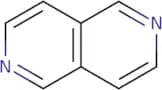
CAS:<p>2,6-Naphthyridine is a small molecule that binds to the response elements in the promoter region of genes and alters gene expression. This compound has been shown to affect the brain cells and may be useful for treating brain diseases such as Parkinson's disease. 2,6-Naphthyridine has also been shown to have vibrational properties that can be used in spectroscopy. The compound has been shown to cause cardiac hypertrophy in rats when given at high doses. 2,6-Naphthyridine is a competitive inhibitor of ferroptosis protein binding and inhibits human proteins. It also inhibits the synthesis of naphthalene, which is known for its carcinogenic potential. 2,6-Naphthyridine has been shown to have sublethal effects on organisms such as yeast and nematodes; however, it was not toxic to mice or rats at low doses.</p>Formula:C8H6N2Purity:Min. 95%Molecular weight:130.15 g/mol2H-Chromene
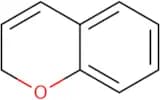
CAS:<p>2H-Chromene is a hydrogen tartrate with hydroxyl groups. It can be used as an anti-inflammatory agent and for the treatment of cancer or bowel disease. 2H-Chromene has been shown to inhibit the growth of some bacteria and fungi in vitro, but it is not active against Gram-negative bacteria. 2H-Chromene is also used as a pharmacological agent that can be administered orally or intravenously, to treat inflammatory bowel disease or congestive heart failure.<br>2H-Chromene is structurally similar to amines and alkanoic acids, which are known to have anti-inflammatory properties. The mechanism by which 2H-Chromene exhibits its therapeutic effects may be related to its ability to inhibit the production of proinflammatory cytokines such as TNFα, IL1β, IL6, and IL8.</p>Formula:C9H8OPurity:Min. 95%Molecular weight:132.16 g/mol5H-chromeno[2,3-b]pyridine
CAS:<p>5H-chromeno[2,3-b]pyridine is a substance that is used as a drug. It is an x-ray active compound and can be used in the production of pharmaceuticals. 5H-chromeno[2,3-b]pyridine has been shown to have anti-inflammatory properties, which may be due to its inhibition of prostaglandin synthesis. It also has the ability to regulate insulin resistance by decreasing the levels of glucose and aldehydes in blood plasma. The use of this compound for the treatment of inflammatory diseases is currently being investigated.</p>Formula:C12H9NOPurity:Min. 95%Molecular weight:183.21 g/mol1H-Pyrazolo[3,4-b]quinoxaline
CAS:<p>1H-Pyrazolo[3,4-b]quinoxaline is a molecule that contains a pyrazole ring. It is used as an anticancer agent that can inhibit the growth of cancer cells by inhibiting the production of DNA and RNA in cancer cells. 1H-Pyrazolo[3,4-b]quinoxaline has been shown to have high values in blood group O and A individuals. It has also been studied for its anticancer activity against leukemia and breast cancers. This molecule is synthesized through acetylation of 2-chloro-1H-pyrazole with acetic anhydride or acetyl chloride. The chloride ion is replaced by a hydroxyl group to form pyrazole derivatives such as imidazopyridine, which are used as antihistamines and antipyretics. Sugar residues are found on the surface of the molecule, making it more soluble in water than other molecules.</p>Formula:C9H6N4Purity:Min. 95%Molecular weight:170.17 g/mol7-Thieno[3,2-d]pyrimidine
CAS:<p>7-Thieno[3,2-d]pyrimidines are potent antitumor agents that inhibit the activity of protein kinases. The 7-thieno[3,2-d]pyrimidine derivatives (e.g., AZD1775) were developed as inhibitors of DPP-IV enzyme and have shown promising results in clinical trials for treatment of type 2 diabetes. They are also being investigated for the treatment of autoimmune diseases, such as rheumatoid arthritis and multiple sclerosis.<br>7-Thieno[3,2-d]pyrimidines bind to the ATP binding site of enzymes in a competitive manner and inhibit the function of these enzymes by preventing ATP from binding to the enzyme's active site. These compounds have been shown to have antimicrobial properties against Leishmania species and myeloma cell lines.<br>The 7-thieno[3,2-d]pyrimidines target receptor activity at GPC</p>Formula:C6H4N2SPurity:Min. 95%Molecular weight:136.17 g/mol[2-(Cyclopentyloxy)-4-methylphenyl]methanamine
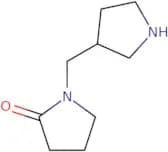
CAS:Versatile small molecule scaffoldFormula:C13H19NOPurity:Min. 95%Molecular weight:205.3 g/mol1-(Pyrrolidin-3-ylmethyl)pyrrolidin-2-one
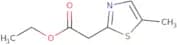
CAS:<p>Versatile small molecule scaffold</p>Formula:C9H16N2OPurity:Min. 95%Molecular weight:168.24 g/molEthyl 2-(5-methyl-1,3-thiazol-2-yl)acetate
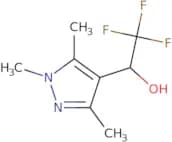
CAS:Versatile small molecule scaffoldFormula:C8H11NO2SPurity:Min. 95%Molecular weight:185.25 g/mol2,2,2-Trifluoro-1-(trimethyl-1H-pyrazol-4-yl)ethan-1-ol
CAS:Versatile small molecule scaffoldFormula:C8H11F3N2OPurity:Min. 95%Molecular weight:208.18 g/mol1-[(1-Ethyl-1H-pyrazol-4-yl)methyl]-1,4-diazepane
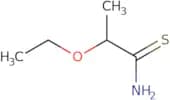
CAS:Versatile small molecule scaffoldFormula:C11H20N4Purity:Min. 95%Molecular weight:208.3 g/mol2-Ethoxypropanethioamide
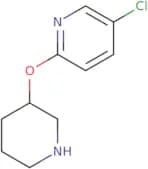
CAS:<p>Versatile small molecule scaffold</p>Formula:C5H11NOSPurity:Min. 95%Molecular weight:133.21 g/mol5-Chloro-2-(piperidin-3-yloxy)pyridine
CAS:Versatile small molecule scaffoldFormula:C10H13ClN2OPurity:Min. 95%Molecular weight:212.67 g/mol[1-(Propan-2-yloxy)cyclohexyl]methanamine
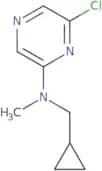
CAS:<p>Versatile small molecule scaffold</p>Formula:C10H21NOPurity:Min. 95%Molecular weight:171.28 g/mol6-Chloro-N-(cyclopropylmethyl)-N-methylpyrazin-2-amine
CAS:Versatile small molecule scaffoldFormula:C9H12ClN3Purity:Min. 95%Molecular weight:197.66 g/mol
![1H-Imidazo[4,5-F]quinoline](/_next/image/?url=https%3A%2Fstatic.cymitquimica.com%2Fproducts%2F3D%2Fthumb-webp%2FAAA23355.webp&w=3840&q=75)

![1H-Imidazo[4,5-c]quinoline](/_next/image/?url=https%3A%2Fstatic.cymitquimica.com%2Fproducts%2F3D%2Fthumb-webp%2FAAA23356.webp&w=3840&q=75)
![5H-Pyrido[3,2-b]indole](/_next/image/?url=https%3A%2Fstatic.cymitquimica.com%2Fproducts%2F3D%2Fthumb-webp%2FAAA24508.webp&w=3840&q=75)
![7-Thia-2,4,5-triazatricyclo[6.4.0.0,2,6]dodeca-1(12),3,5,8,10-pentaene](/_next/image/?url=https%3A%2Fstatic.cymitquimica.com%2Fproducts%2F3D%2Fthumb-webp%2FAAA24792.webp&w=3840&q=75)
![Imidazo[4,3-b][1,3]thiazole](/_next/image/?url=https%3A%2Fstatic.cymitquimica.com%2Fproducts%2F3D%2Fthumb-webp%2FAAA25189.webp&w=3840&q=75)
![Imidazo[2,1-b][1,3]thiazole](/_next/image/?url=https%3A%2Fstatic.cymitquimica.com%2Fproducts%2F3D%2Fthumb-webp%2FAAA25197.webp&w=3840&q=75)
![5H-chromeno[2,3-b]pyridine](/_next/image/?url=https%3A%2Fstatic.cymitquimica.com%2Fproducts%2F3D%2Fthumb-webp%2FAAA26127.webp&w=3840&q=75)
![1H-Pyrazolo[3,4-b]quinoxaline](/_next/image/?url=https%3A%2Fstatic.cymitquimica.com%2Fproducts%2F3D%2Fthumb-webp%2FAAA26975.webp&w=3840&q=75)
![7-Thieno[3,2-d]pyrimidine](/_next/image/?url=https%3A%2Fstatic.cymitquimica.com%2Fproducts%2F3D%2Fthumb-webp%2FAAA27268.webp&w=3840&q=75)
![[2-(Cyclopentyloxy)-4-methylphenyl]methanamine](/_next/image/?url=https%3A%2Fstatic.cymitquimica.com%2Fproducts%2F3D%2Fthumb-webp%2FAAC16762.webp&w=3840&q=75)
![1-[(1-Ethyl-1H-pyrazol-4-yl)methyl]-1,4-diazepane](/_next/image/?url=https%3A%2Fstatic.cymitquimica.com%2Fproducts%2F3D%2Fthumb-webp%2FAAC18330.webp&w=3840&q=75)
![[1-(Propan-2-yloxy)cyclohexyl]methanamine](/_next/image/?url=https%3A%2Fstatic.cymitquimica.com%2Fproducts%2F3D%2Fthumb-webp%2FAAC18841.webp&w=3840&q=75)