


Building Blocks
This section contains fundamental products for the synthesis of organic and biological compounds. Building blocks are the essential starting materials used to construct complex molecules through various chemical reactions. They play a critical role in drug discovery, material science, and chemical research. At CymitQuimica, we offer a diverse range of high-quality building blocks to support your innovative research and industrial projects, ensuring you have the essential components for successful synthesis.
Subcategories of "Building Blocks"
- Boronic Acids & Boronic Acid Derivatives(5,783 products)
- Chiral Building Blocks(1,242 products)
- Hydrocarbon Building Blocks(6,105 products)
- Organic Building Blocks(61,055 products)
Found 205383 products of "Building Blocks"
Sort by
Purity (%)
0
100
|
0
|
50
|
90
|
95
|
100
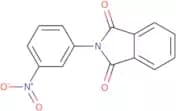
2-(3-Nitrophenyl)-2,3-dihydro-1H-isoindole-1,3-dione
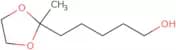
CAS:2-(3-Nitrophenyl)-2,3-dihydro-1H-isoindole-1,3-dione is a nonsteroidal antiinflammatory drug that inhibits cyclooxygenase (COX) and lipoxygenase. It has been shown to be effective in reducing plasma cholesterol levels and the fatty acid content of blood platelets. 2-(3-Nitrophenyl)-2,3-dihydro-1H-isoindole-1,3-dione also has an analgesic effect on inflamed tissue. The effective dose for this drug is 25 mg/kg body weight. This compound binds to the COX enzyme by hydrogen bonding at the same site as aspirin. 2-(3-Nitrophenyl)-2,3-dihydro-1H-isoindole-1,3-dione also has optical activity due to its chirality and can be used in spectroscFormula:C14H8N2O4Purity:Min. 95%Molecular weight:268.22 g/mol5-(2-Methyl-1,3-dioxolan-2-yl)pentan-1-ol
CAS:Versatile small molecule scaffoldFormula:C9H18O3Purity:Min. 95%Molecular weight:174.24 g/mol2-(Naphthalen-2-yl)acetamide
CAS:Versatile small molecule scaffoldFormula:C12H11NOPurity:Min. 95%Molecular weight:185.22 g/mol2-Methyl-5-(methylamino)-1,3-oxazole-4-carbonitrile
CAS:Versatile small molecule scaffoldFormula:C6H7N3OPurity:Min. 95%Molecular weight:137.14 g/molDimethyl 3-hydroxyphthalate
CAS:Dimethyl 3-hydroxyphthalate is a compound that is used in the production of phthalic acid esters. It can be synthesized by reacting chlorine with phthalic anhydride. The reaction system consists of aqueous solution of dimethyl 3-hydroxyphthalate, chlorine, and water. The electrons are accepted by chloride ions and the reaction proceeds through an electron transfer mechanism. Dimethyl 3-hydoxyphthalate undergoes desorption and spin resonance spectroscopy to determine its kinetic properties. Radical species are generated during the process and these radicals may react with other molecules to form new compounds, leading to mineralization or process efficiency. Phthalic acid esters are produced from this compound by oxidative polymerization reactions.Formula:C10H10O5Purity:Min. 95%Molecular weight:210.18 g/mol3,3-Dimethyl-2,3-dihydro-1-benzofuran-5-ol
CAS:Versatile small molecule scaffoldFormula:C10H12O2Purity:Min. 95%Molecular weight:164.2 g/mol2-(4-Hydroxyphenyl)-1,3-thiazole-4-carboxylic acid
CAS:Versatile small molecule scaffold
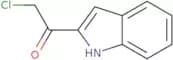
Formula:C10H7NO3SPurity:Min. 95%Molecular weight:221.23 g/mol2-Chloro-1-(1H-indol-2-yl)ethan-1-one
CAS:Versatile small molecule scaffoldFormula:C10H8ClNOPurity:Min. 95%Molecular weight:193.63 g/molN-[2-(Pyrrolidin-1-yl)ethyl]aniline
CAS:Versatile small molecule scaffoldFormula:C12H18N2Purity:Min. 95%Molecular weight:190.28 g/mol4-(4-Fluorophenyl)-4-hydroxycyclohexan-1-one
CAS:Versatile small molecule scaffoldFormula:C12H13FO2Purity:Min. 95%Molecular weight:208.23 g/mol4-(4-Chlorophenyl)cyclohex-3-en-1-one
CAS:Versatile small molecule scaffoldFormula:C12H11ClOPurity:Min. 95%Molecular weight:206.67 g/mol4-Chlorocinnoline-3-carbonitrile
CAS:4-Chlorocinnoline-3-carbonitrile is a heterocyclic compound with the molecular formula C6H5ClN. It is a pyridine derivative that has been used in the synthesis of other heterocycles, such as cinnolines and thioglycolates. The compound can be prepared by condensation reactions between hydrazine and thiourea or by catalytic hydrogenation of 4-chlorothiophene. 4-Chlorocinnoline-3-carbonitrile has been shown to have antiplatelet aggregation activity and inhibitory effects on the growth of certain bacteria.Formula:C9H4ClN3Purity:Min. 95%Molecular weight:189.6 g/mol(2S)-2-(Pyridin-3-ylformamido)propanoic acid
CAS:Versatile small molecule scaffoldFormula:C9H10N2O3Purity:Min. 95%Molecular weight:194.19 g/mol3-Phenyl-2-(pyridin-3-ylformamido)propanoic acid
CAS:Versatile small molecule scaffoldFormula:C15H14N2O3Purity:Min. 95%Molecular weight:270.28 g/mol6-(4-Bromophenyl)-4,5-dihydro-2H-pyridazin-3-one
CAS:Versatile small molecule scaffoldFormula:C10H9BrN2OPurity:Min. 95%Molecular weight:253.1 g/mol6,7,8,9-Tetrahydro-5H-carbazole-3-carboxylic acid
CAS:Versatile small molecule scaffoldFormula:C13H13NO2Purity:Min. 95%Molecular weight:215.25 g/mol3-Bromo-6-chloro-1-benzofuran
CAS:Versatile small molecule scaffoldFormula:C8H4BrClOPurity:Min. 95%Molecular weight:231.47 g/mol4-Oxo-4-(pyridin-3-yl)butanenitrile
CAS:Versatile small molecule scaffoldFormula:C9H8N2OPurity:Min. 95%Molecular weight:160.17 g/mol4-(1-Phenylcyclopentyl)phenol
CAS:Versatile small molecule scaffold
Formula:C17H18OPurity:Min. 95%Molecular weight:238.32 g/mol7-Chloro-8-methoxyquinoline
CAS:Versatile small molecule scaffold
Formula:C10H8ClNOPurity:Min. 95%Molecular weight:193.63 g/mol



![N-[2-(Pyrrolidin-1-yl)ethyl]aniline](/_next/image/?url=https%3A%2Fstatic.cymitquimica.com%2Fproducts%2F3D%2Fthumb-webp%2FLBA71644.webp&w=3840&q=75)


