Building Blocks
This section contains fundamental products for the synthesis of organic and biological compounds. Building blocks are the essential starting materials used to construct complex molecules through various chemical reactions. They play a critical role in drug discovery, material science, and chemical research. At CymitQuimica, we offer a diverse range of high-quality building blocks to support your innovative research and industrial projects, ensuring you have the essential components for successful synthesis.
Subcategories of "Building Blocks"
- Boronic Acids & Boronic Acid Derivatives(5,783 products)
- Chiral Building Blocks(1,242 products)
- Hydrocarbon Building Blocks(6,105 products)
- Organic Building Blocks(61,055 products)
Found 205383 products of "Building Blocks"
Sort by
Purity (%)
0
100
|
0
|
50
|
90
|
95
|
100
7-Chloro-5-phenyl-[1,2,4]triazolo[1,5-a]pyrimidine
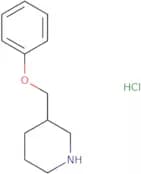
CAS:Versatile small molecule scaffoldFormula:C11H7ClN4Purity:Min. 95%Molecular weight:230.65 g/mol3-(Phenoxymethyl)piperidine hydrochloride
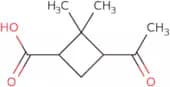
CAS:Versatile small molecule scaffoldFormula:C12H18ClNOPurity:Min. 95%Molecular weight:227.74 g/molrac-(1R,3S)-3-Acetyl-2,2-dimethylcyclobutane-1-carboxylic acid
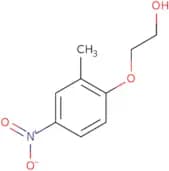
CAS:Versatile small molecule scaffoldFormula:C9H14O3Purity:Min. 95%Molecular weight:170.21 g/mol2-(2-Methyl-4-nitrophenoxy)ethan-1-ol
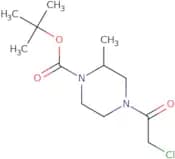
CAS:Versatile small molecule scaffoldFormula:C9H11NO4Purity:Min. 95%Molecular weight:197.19 g/moltert-Butyl 4-(2-chloroacetyl)-2-methylpiperazine-1-carboxylate
CAS:Versatile small molecule scaffoldFormula:C12H21ClN2O3Purity:Min. 95%Molecular weight:276.76 g/moltert-Butyl 4-[(6-ethoxypyrimidin-4-yl)amino]piperidine-1-carboxylate
CAS:Versatile small molecule scaffoldFormula:C16H26N4O3Purity:Min. 95%Molecular weight:322.4 g/mol2-[3-(Methoxymethyl)piperidin-1-yl]ethan-1-amine
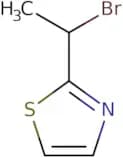
CAS:Versatile small molecule scaffoldFormula:C9H20N2OPurity:Min. 95%Molecular weight:172.27 g/mol2-(1-Bromo-ethyl)-thiazole
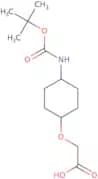
CAS:Versatile small molecule scaffoldFormula:C5H6BrNSPurity:Min. 95%Molecular weight:192.08 g/mol(4-tert-Butoxycarbonylamino-cyclohexyloxy)-acetic acid
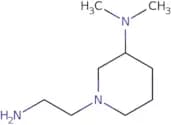
CAS:Versatile small molecule scaffoldFormula:C13H23NO5Purity:Min. 95%Molecular weight:273.33 g/mol1-(2-Aminoethyl)-N,N-dimethylpiperidin-3-amine
CAS:Versatile small molecule scaffold
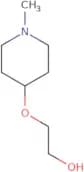
Formula:C9H21N3Purity:Min. 95%Molecular weight:171.28 g/mol2-(1-Methyl-piperidin-4-yloxy)-ethanol
CAS:Versatile small molecule scaffoldFormula:C8H17NO2Purity:Min. 95%Molecular weight:159.23 g/mol[4-(tert-Butoxycarbonylamino-methyl)-piperidin-1-yl]-acetic acid
CAS:Versatile small molecule scaffold
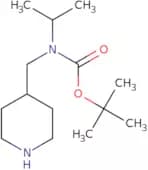
Formula:C13H24N2O4Purity:Min. 95%Molecular weight:272.34 g/molIsopropyl-piperidin-4-ylmethyl-carbamic acid tert-butyl ester
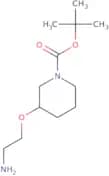
CAS:Versatile small molecule scaffoldFormula:C14H28N2O2Purity:Min. 95%Molecular weight:256.38 g/moltert-Butyl 3-(2-aminoethoxy)piperidine-1-carboxylate
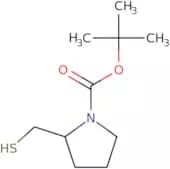
CAS:Versatile small molecule scaffoldFormula:C12H24N2O3Purity:Min. 95%Molecular weight:244.33 g/moltert-Butyl 2-(sulfanylmethyl)pyrrolidine-1-carboxylate
CAS:Versatile small molecule scaffoldFormula:C10H19NO2SPurity:Min. 95%Molecular weight:217.33 g/mol3-Mercaptomethyl-piperidine-1-carboxylic acid tert-butyl ester
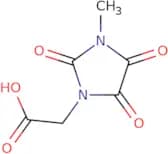
CAS:Versatile small molecule scaffoldFormula:C11H21NO2SPurity:Min. 95%Molecular weight:231.35 g/mol2-(3-Methyl-2,4,5-trioxoimidazolidin-1-yl)acetic acid
CAS:Controlled Product2-(3-Methyl-2,4,5-trioxoimidazolidin-1-yl)acetic acid is a potent activator of the GABAA receptor and an inhibitor of glutamate release. It has been observed to increase GABAergic neurotransmission in the brain and to inhibit protein interactions. In addition, 2-(3-Methyl-2,4,5-trioxoimidazolidin-1-yl)acetic acid can be used as a research tool for studying ion channels and peptides.Formula:C6H6N2O5Purity:Min. 95%Molecular weight:186.12 g/mol4-bromo-2-chloropyridine-3-carbaldehyde
CAS:Versatile small molecule scaffold
Formula:C6H3BrClNOPurity:Min. 95%Molecular weight:220.5 g/mol5-Chloropyridine-2-carbonyl chloride
CAS:Morpholine is a five-membered heterocyclic compound with the molecular formula CHN. It is a colorless solid that is soluble in water, ethanol and ether. Morpholine is an intermediate in the production of carbamates, urea, and other organic chemicals. It can be converted to 5-chloropyridine-2-carbonyl chloride by condensation with hydrobromic acid and chlorination. This reaction requires high yield and high purity morpholine as an intermediate.Formula:C6H3Cl2NOPurity:Min. 95%Molecular weight:176 g/molo-(2-Fluorophenyl)hydroxylamine
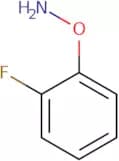
CAS:Versatile small molecule scaffoldFormula:C6H6FNOPurity:Min. 95%Molecular weight:127.12 g/mol
![7-Chloro-5-phenyl-[1,2,4]triazolo[1,5-a]pyrimidine](/_next/image/?url=https%3A%2Fstatic.cymitquimica.com%2Fproducts%2F3D%2Fthumb-webp%2FDBA56543.webp&w=3840&q=75)

![tert-Butyl 4-[(6-ethoxypyrimidin-4-yl)amino]piperidine-1-carboxylate](/_next/image/?url=https%3A%2Fstatic.cymitquimica.com%2Fproducts%2F3D%2Fthumb-webp%2FDEC95509.webp&w=3840&q=75)
![2-[3-(Methoxymethyl)piperidin-1-yl]ethan-1-amine](/_next/image/?url=https%3A%2Fstatic.cymitquimica.com%2Fproducts%2F3D%2Fthumb-webp%2FDEC95561.webp&w=3840&q=75)
![[4-(tert-Butoxycarbonylamino-methyl)-piperidin-1-yl]-acetic acid](/_next/image/?url=https%3A%2Fstatic.cymitquimica.com%2Fproducts%2F3D%2Fthumb-webp%2FDEC98441.webp&w=3840&q=75)