Building Blocks
This section contains fundamental products for the synthesis of organic and biological compounds. Building blocks are the essential starting materials used to construct complex molecules through various chemical reactions. They play a critical role in drug discovery, material science, and chemical research. At CymitQuimica, we offer a diverse range of high-quality building blocks to support your innovative research and industrial projects, ensuring you have the essential components for successful synthesis.
Subcategories of "Building Blocks"
- Boronic Acids & Boronic Acid Derivatives(5,778 products)
- Chiral Building Blocks(1,242 products)
- Hydrocarbon Building Blocks(6,098 products)
- Organic Building Blocks(61,034 products)
Found 199601 products of "Building Blocks"
Sort by
Purity (%)
0
100
|
0
|
50
|
90
|
95
|
100
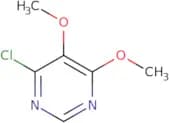
4-chloro-5,6-dimethoxypyrimidine
CAS:<p>Versatile small molecule scaffold</p>Formula:C6H7ClN2O2Purity:Min. 95%Molecular weight:174.59 g/mol(2-Methylpyrimidin-5-yl)methanamine dihydrochloride
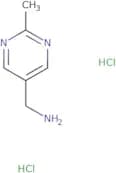
CAS:<p>Versatile small molecule scaffold</p>Formula:C6H11Cl2N3Purity:Min. 95%Molecular weight:196.07 g/mol4-Bromobenzo[b]thiophene-2-carboxylic acid
CAS:<p>Versatile small molecule scaffold</p>Formula:C9H5BrO2SPurity:Min. 95%Molecular weight:257.1 g/mol2-(4-Bromophenyl)-2-oxoacetaldehyde
CAS:<p>2-(4-Bromophenyl)-2-oxoacetaldehyde (BPOD) is a molecule that can be synthesized by reacting benzonitrile with thiazolone. BPOD is an acetylation and benzoylation substrate, which makes it useful for the preparation of fatty acids and glyoxal. BPOD has been used as a reactive intermediate in the synthesis of other molecules, such as phenylacetic acid, 2-chloro-4-nitrobenzoyl chloride, and 1,3-dichloroacetone. The reaction of BPOD with proton gives 2-(4-bromophenyl)-2-hydroxyethanal. This reaction is catalyzed by electrolysis or by chromatography.<br>BPOD also reacts with glyoxal to form 2-(4-bromophenyl)-2-(2,3-dihydroxypropoxy)acetaldehyde (BPPD).</p>Formula:C8H5BrO2Purity:Min. 95%Molecular weight:213.03 g/mol2-[2-[2-(2-Chloroethoxy)ethoxy]ethoxy]ethanol
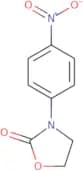
CAS:<p>2-[2-[2-(2-Chloroethoxy)ethoxy]ethoxy]ethanol is a hydroxylated cationic surfactant that has been used in the production of polyurethane elastomers. It has two hydroxy groups and one ethoxy group, with an average molecular weight of 216. It is an ether alcohol with a hydroxyl and two ethoxy groups, which can be obtained as a residue from the reaction between ethylene oxide and 2-chloroethanol. 2-[2-[2-(2-Chloroethoxy)ethoxy]ethoxy]ethanol is used in the production of polyurethane elastomers by reacting with diisocyanates to form urethanes. The ether alcohols react with diisocyanates to form urethanes, which are then reacted with diols to produce urethane elastomers. This monomer reacts more readily than other mon</p>Formula:C8H17ClO4Purity:Min. 95%Molecular weight:212.67 g/mol3-(4-Nitrophenyl)-1,3-oxazolidin-2-one
CAS:<p>Versatile small molecule scaffold</p>Formula:C9H8N2O4Purity:Min. 95%Molecular weight:208.17 g/mol2-Chloro-4-(chloromethyl)thiazole
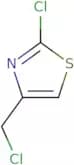
CAS:<p>2-Chloro-4-(chloromethyl)thiazole is a coplanar molecule with torsion and dihedral angles. It has an IUPAC name of 2-chloro-4-(chloromethyl)thiazole, but is also known as CMT or 2,4-dichlorotriazole.</p>Formula:C4H3Cl2NSPurity:Min. 95%Molecular weight:168.05 g/mol2-Chloro-4-thiazole-methanol
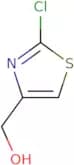
CAS:Versatile small molecule scaffoldFormula:C4H4ClNOSPurity:Min. 95%Molecular weight:149.6 g/mol4-Amino-2,6-dichlorobenzoic acid
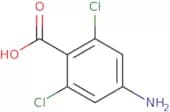
CAS:<p>Versatile small molecule scaffold</p>Formula:C7H5Cl2NO2Purity:Min. 95%Molecular weight:206.02 g/molEthyl 5-oxooxolane-3-carboxylate
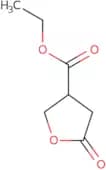
CAS:<p>Versatile small molecule scaffold</p>Formula:C7H10O4Purity:Min. 95%Molecular weight:158.15 g/molMethyl(phenyl)phosphinoyl chloride
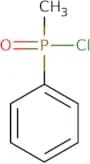
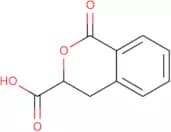
CAS:<p>Methyl(phenyl)phosphinoyl chloride is a phosphorus-containing compound that is an intermediate in the synthesis of the drug phosphinothioyl chloride. Methyl(phenyl)phosphinoyl chloride is used in the treatment of hepatitis, but it also has antiviral properties. The enantiomers of methyl(phenyl)phosphinoyl chloride have different effects on viruses. The left-handed enantiomer inhibits RNA polymerase and other enzymes involved in virus replication, while the right-handed enantiomer blocks virus assembly. Magnetic resonance spectroscopy (MRS) analysis has shown that the left-handed enantiomer binds to the receptor for growth factor, which may account for its antiviral activity.</p>Formula:C7H8ClOPPurity:Min. 95%Molecular weight:174.56 g/mol1-Oxo-isochroman-3-carboxylic acid
CAS:<p>Versatile small molecule scaffold</p>Formula:C10H8O4Purity:Min. 95%Molecular weight:192.17 g/mol3-Azabicyclo[3.2.1]octane-2,4-dione
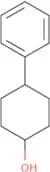
CAS:<p>Versatile small molecule scaffold</p>Formula:C7H9NO2Purity:Min. 95%Molecular weight:139.15 g/mol4-Phenylcyclohexan-1-ol
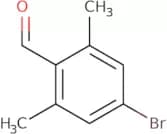
CAS:<p>4-Phenylcyclohexan-1-ol is an organic compound with the chemical formula C10H12O. It is a colorless liquid with a sweet odor. It is produced by the oxidation of naphthalene and isopropylbenzyl alcohol in the presence of a catalyst such as iron(III) sulfate, potassium permanganate, or manganese dioxide. The reaction mechanism begins with the formation of furyl radicals from naphthalene and isopropylbenzyl alcohol. These radicals then react to form 4-phenylcyclohexan-1-ol. 4-Phenylcyclohexan-1-ol has been found to serve as an electron donor in catalysis, where it participates in the conversion of hydrocarbons into aromatic hydrocarbons. It also participates in biosynthesis through its role in fatty acid synthesis.</p>Formula:C12H16OPurity:Min. 95%Molecular weight:176.25 g/mol4-Bromo-2,6-dimethyl-benzaldehyde
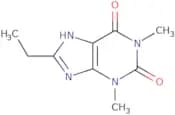
CAS:<p>Versatile small molecule scaffold</p>Formula:C9H9BrOPurity:Min. 95%Molecular weight:213.07 g/mol8-Ethyl-1,3-dimethyl-1H-purine-2,6(3H,7H)-dione
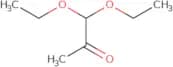
CAS:Controlled Product8-Ethyl-1,3-dimethyl-1H-purine-2,6(3H,7H)-dione is a purine that can be synthesized by the reaction of 8-ethylanthracene with formaldehyde. It has a molecular weight of 218.24 g/mol and an enthalpy of formation of -385.9 kJ/mol. This compound has been used as a reagent in the synthesis of other compounds such as theophylline, which is used to treat asthma and other respiratory disorders.Formula:C9H12N4O2Purity:Min. 95%Molecular weight:208.22 g/mol1,1-Diethoxypropan-2-one
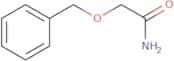
CAS:<p>Versatile small molecule scaffold</p>Formula:C7H14O3Purity:Min. 95%Molecular weight:146.18 g/mol2-(Benzyloxy)acetamide
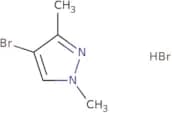
CAS:<p>2-(Benzyloxy)acetamide is a potent inhibitor of the h2 receptor. It has been shown to be effective against congestive heart failure, depression, and cancer. This drug also inhibits bacterial growth and has a potent antibacterial efficacy. 2-(Benzyloxy)acetamide has a fast absorption rate and high bioavailability, making it an ideal candidate for oral administration.</p>Formula:C9H11NO2Purity:Min. 95%Molecular weight:165.19 g/mol4-Bromo-1,3-dimethyl-1H-pyrazole hydrobromide
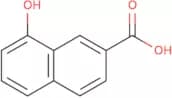
CAS:<p>4-Bromo-1,3-dimethyl-1H-pyrazole hydrobromide is a research tool that is used to study the interactions between peptides and proteins. It is also used as a ligand to investigate the function of the receptor and ion channels. 4-Bromo-1,3-dimethyl-1H-pyrazole hydrobromide inhibits the phosphatase activity of protein tyrosine phosphatase 1B (PTP1B) and protein tyrosine phosphatase 1A (PTP1A). This inhibition leads to increased levels of cyclic AMP in the cell. 4-Bromo-1,3-dimethyl-1H-pyrazole hydrobromide has been shown to activate potassium channels, which may contribute to its cytotoxic effects on cancer cells.</p>Formula:C5H8Br2N2Purity:Min. 95%Molecular weight:255.94 g/mol8-Hydroxynaphthalene-2-Carboxylic Acid
CAS:8-Hydroxynaphthalene-2-carboxylic acid (8HNCA) is a synthetic, quinolinecarboxylic acid that is coexpressed with indole-3-carboxylic acid in the coelenterate Hydra. 8HNCA can be hydroxylated to produce 8-hydroxyquinoline carboxylic acid, which is a substrate for putidaredoxin reductase and also has monooxygenase activity. The enzyme encoded by the reductase gene catalyzes the conversion of 8HNCA into 2,4-dihydroxyphenylacetic acid, which is an intermediate in tyrosine synthesis. The enzyme encoded by the carboxylic acids sequence oxidizes 8HNCA to form 5,6-dihydroindole-2-carboxylic acid.Formula:C11H8O3Purity:Min. 95%Molecular weight:188.18 g/mol

![4-Bromobenzo[b]thiophene-2-carboxylic acid](/_next/image/?url=https%3A%2Fstatic.cymitquimica.com%2Fproducts%2F3D%2Fthumb-webp%2FFAA19437.webp&w=3840&q=75)
![2-[2-[2-(2-Chloroethoxy)ethoxy]ethoxy]ethanol](/_next/image/?url=https%3A%2Fstatic.cymitquimica.com%2Fproducts%2F3D%2Fthumb-webp%2FFAA19766.webp&w=3840&q=75)
![3-Azabicyclo[3.2.1]octane-2,4-dione](/_next/image/?url=https%3A%2Fstatic.cymitquimica.com%2Fproducts%2F3D%2Fthumb-webp%2FFAA76345.webp&w=3840&q=75)