


Building Blocks
Subcategories of "Building Blocks"
- Boronic Acids & Boronic Acid Derivatives(5,780 products)
- Chiral Building Blocks(1,241 products)
- Hydrocarbon Building Blocks(6,100 products)
- Organic Building Blocks(61,023 products)
Found 205289 products of "Building Blocks"
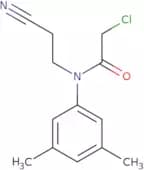
2-Chloro-N-(2-cyanoethyl)-N-(3,5-dimethylphenyl)acetamide
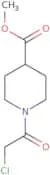
CAS:Controlled ProductThis chemical is an inhibitor of protein interactions. It has been used as a research tool and as a pharmacological agent. This product is a ligand that binds to receptors or ion channels, which are proteins found in the cell membrane or cell wall. When these proteins interact with ligands, they can initiate a response inside the cell, such as opening or closing ion channels or initiating other cellular processes. The efficacy of this product depends on its concentration and binding affinity for the receptor or ion channel. This product has been shown to inhibit the activity of both potassium and calcium channels at high concentrations.Formula:C13H15ClN2OPurity:Min. 95%Molecular weight:250.72 g/mol1-(2-Chloro-acetyl)-piperidine-4-carboxylic acid methyl ester
CAS:Versatile small molecule scaffoldFormula:C9H14ClNO3Purity:Min. 95%Molecular weight:219.67 g/mol2,2,4,4,6,8,8-Heptamethylnonane
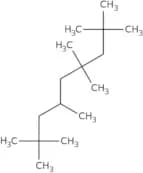
CAS:2,2,4,4,6,8,8-Heptamethylnonane is a hydrogenated form of 2-methylnonane. It is used as a model system for fatty acids in order to study the kinetics of air entrainment and constant pressure distillation. The chemical stability of 2,2,4,4,6,8,8-heptamethylnonane has been shown to be excellent when heated at 200°C under nitrogen. This compound can also be used as an analytical method for ethylene diamine in pharmaceutical preparations of sodium salts and boron nitride. The use of 2-methylnonane as a starting material may lead to the production of chinese herb by reacting with acetic acid or formic acid.
Formula:C16H34Purity:Min. 95%Color and Shape:PowderMolecular weight:226.44 g/mol1-(Hydroxymethyl)cyclopropaneacetonitrile
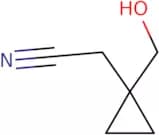
CAS:1-(Hydroxymethyl)cyclopropaneacetonitrile is a cyclic molecule that can be synthesized from the reaction of sulfite and formaldehyde. It can also be obtained by hydrolysis of 1-hydroxycyclopropanecarboxylic acid. The synthesis of 1-(hydroxymethyl)cyclopropaneacetonitrile involves the oxidation of formaldehyde with sodium metaperiodate, followed by hydrolysis with potassium hydroxide or sodium hydroxide to produce 1-formylcyclopropaneacetonitrile, which reacts with sodium sulfite to yield the desired product. This compound has not been found in nature, but it is used as an intermediate in the synthesis of other compounds.
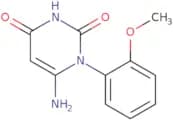
Formula:C6H9NOPurity:Min. 95%Molecular weight:111.14 g/mol6-Amino-1-(2-methoxyphenyl)pyrimidine-2,4(1H,3H)-dione
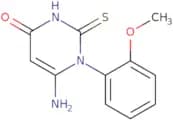
CAS:Versatile small molecule scaffoldFormula:C11H11N3O3Purity:Min. 95%Molecular weight:233.22 g/mol6-Amino-1-(2-methoxyphenyl)-2-sulfanylidene-1,2,3,4-tetrahydropyrimidin-4-one
CAS:Versatile small molecule scaffold
Formula:C11H11N3O2SPurity:Min. 95%Molecular weight:249.29 g/mol2-(Thiophen-2-ylmethanesulfonyl)acetic acid
CAS:Versatile small molecule scaffoldFormula:C7H8O4S2Purity:Min. 95%Molecular weight:220.3 g/molMethyl 3-{[(2-methoxyphenyl)methyl]sulfanyl}propanoate
CAS:Versatile small molecule scaffoldFormula:C12H16O3SPurity:Min. 95%Molecular weight:240.32 g/mol2-[(1R,4R)-4-({[(tert-Butoxy)carbonyl]amino}methyl)cyclohexyl]acetic acid
CAS:Versatile small molecule scaffold
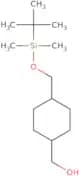
Formula:C14H25NO4Purity:Min. 95%Molecular weight:271.35 g/molrac-((1R,4R)-4-(((tert-Butyldimethylsilyl)oxy)methyl)cyclohexyl)methanol
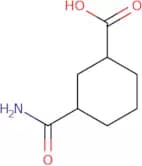
CAS:Versatile small molecule scaffoldFormula:C14H30O2SiPurity:Min. 95%Molecular weight:258.47 g/mol3-Carbamoylcyclohexane-1-carboxylic acid
CAS:Versatile small molecule scaffold
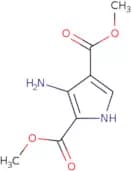
Formula:C8H13NO3Purity:Min. 95%Molecular weight:171.19 g/mol2,4-Dimethyl 3-amino-1H-pyrrole-2,4-dicarboxylate
CAS:2,4-Dimethyl 3-amino-1H-pyrrole-2,4-dicarboxylate is an inhibitor of the enzyme formamidine acetate N-formyltransferase. This compound has been shown to inhibit bacterial growth in vitro and in vivo, and is being investigated as a potential antibacterial agent. 2,4-Dimethyl 3-amino-1H-pyrrole-2,4,-dicarboxylate inhibits the synthesis of formamidines by blocking the enzyme formamidine acetate N-formyltransferase. Formamidines are important for bacterial cell wall synthesis and cell division. This compound also inhibits the growth of methicillin resistant Staphylococcus aureus (MRSA) isolates.Formula:C8H10N2O4Purity:Min. 95%Molecular weight:198.18 g/moltert-Butyl N-[1-(3-nitrophenyl)ethyl]carbamate
CAS:Versatile small molecule scaffoldFormula:C13H18N2O4Purity:Min. 95%Molecular weight:266.3 g/moltert-Butyl (2S)-3-(4-aminophenyl)-2-{[(tert-butoxy)carbonyl]amino}propanoate
CAS:Versatile small molecule scaffoldFormula:C18H28N2O4Purity:Min. 95%Molecular weight:336.4 g/molN-[(3-Aminophenyl)methyl]acetamide
CAS:Versatile small molecule scaffold
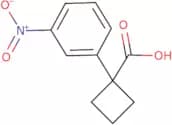
Formula:C9H12N2OPurity:Min. 95%Molecular weight:164.2 g/mol1-(3-Nitrophenyl)cyclobutanecarboxylic acid
CAS:Versatile small molecule scaffold
Formula:C11H11NO4Purity:Min. 95%Molecular weight:221.21 g/moltert-Butyl N-[3-(4-aminophenyl)propyl]carbamate
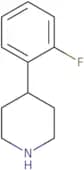
CAS:Versatile small molecule scaffoldFormula:C14H22N2O2Purity:Min. 95%Molecular weight:250.34 g/mol4-(2-Fluorophenyl)piperidine
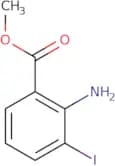
CAS:Versatile small molecule scaffoldFormula:C11H14FNPurity:Min. 95%Molecular weight:179.23 g/molmethyl 2-amino-3-iodobenzoate
CAS:Versatile small molecule scaffoldFormula:C8H8INO2Purity:Min. 95%Molecular weight:277.1 g/mol3-([(9H-Fluoren-9-ylmethoxy)carbonyl]amino)-2,2-dimethyl-3-phenylpropanoic acid
CAS:Versatile small molecule scaffoldFormula:C26H25NO4Purity:Min. 95%Molecular weight:415.5 g/mol


![Methyl 3-{[(2-methoxyphenyl)methyl]sulfanyl}propanoate](/_next/image/?url=https%3A%2Fstatic.cymitquimica.com%2Fproducts%2F3D%2Fthumb-webp%2FFHA04450.webp&w=3840&q=75)
![2-[(1R,4R)-4-({[(tert-Butoxy)carbonyl]amino}methyl)cyclohexyl]acetic acid](/_next/image/?url=https%3A%2Fstatic.cymitquimica.com%2Fproducts%2F3D%2Fthumb-webp%2FFHA04657.webp&w=3840&q=75)
![tert-Butyl N-[1-(3-nitrophenyl)ethyl]carbamate](/_next/image/?url=https%3A%2Fstatic.cymitquimica.com%2Fproducts%2F3D%2Fthumb-webp%2FFHA07958.webp&w=3840&q=75)
![tert-Butyl (2S)-3-(4-aminophenyl)-2-{[(tert-butoxy)carbonyl]amino}propanoate](/_next/image/?url=https%3A%2Fstatic.cymitquimica.com%2Fproducts%2F3D%2Fthumb-webp%2FFHA08007.webp&w=3840&q=75)
![N-[(3-Aminophenyl)methyl]acetamide](/_next/image/?url=https%3A%2Fstatic.cymitquimica.com%2Fproducts%2F3D%2Fthumb-webp%2FFHA08056.webp&w=3840&q=75)
![tert-Butyl N-[3-(4-aminophenyl)propyl]carbamate](/_next/image/?url=https%3A%2Fstatic.cymitquimica.com%2Fproducts%2F3D%2Fthumb-webp%2FFHA14782.webp&w=3840&q=75)
![3-([(9H-Fluoren-9-ylmethoxy)carbonyl]amino)-2,2-dimethyl-3-phenylpropanoic acid](/_next/image/?url=https%3A%2Fstatic.cymitquimica.com%2Fproducts%2F3D%2Fthumb-webp%2FFHA18106.webp&w=3840&q=75)