Building Blocks
Subcategories of "Building Blocks"
- Boronic Acids & Boronic Acid Derivatives(5,780 products)
- Chiral Building Blocks(1,241 products)
- Hydrocarbon Building Blocks(6,100 products)
- Organic Building Blocks(61,017 products)
Found 205265 products of "Building Blocks"
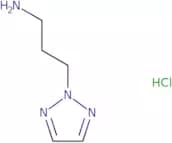
3-(2H-1,2,3-Triazol-2-yl)propan-1-amine hydrochloride
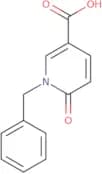
CAS:Versatile small molecule scaffoldFormula:C5H11ClN4Purity:Min. 95%Molecular weight:162.62 g/mol1-Benzyl-6-oxo-1,6-dihydro-3-pyridinecarboxylic acid
CAS:Versatile small molecule scaffold
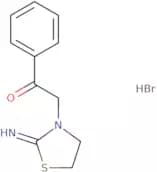
Formula:C13H11NO3Purity:Min. 95%Molecular weight:229.24 g/mol2-(2-Imino-1,3-thiazolidin-3-yl)-1-phenylethanone hydrobromide
CAS:Versatile small molecule scaffold
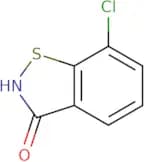
Formula:C11H13BrN2OSPurity:Min. 95%Molecular weight:301.2 g/mol7-Chloro-2,3-dihydro-1,2-benzothiazol-3-one
CAS:Versatile small molecule scaffoldFormula:C7H4ClNOSPurity:Min. 95%Molecular weight:185.63 g/mol2H,3H-[1,2]Thiazolo[5,4-b]pyridin-3-one
CAS:Versatile small molecule scaffold
Formula:C6H4N2OSPurity:Min. 95%Molecular weight:152.18 g/mol{Tricyclo[2.2.1.0,2,6]heptan-3-yl}methanol
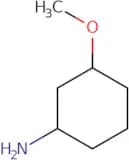
CAS:Versatile small molecule scaffoldFormula:C8H12OPurity:Min. 95%Molecular weight:124.18 g/mol3-Methoxy-cyclohexylamine
CAS:Versatile small molecule scaffoldFormula:C7H15NOPurity:Min. 95%Molecular weight:129.2 g/mol4-Propoxycyclohexan-1-amines
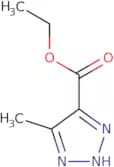
CAS:Versatile small molecule scaffoldFormula:C9H19NOPurity:Min. 95%Molecular weight:157.3 g/molEthyl 5-methyl-1H-1,2,3-triazole-4-carboxylate
CAS:Versatile small molecule scaffoldFormula:C6H9N3O2Purity:Min. 95%Molecular weight:155.15 g/mol1-Methyl-2-(methylsulfanyl)-1H-1,3-benzodiazole
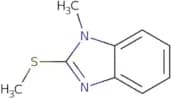
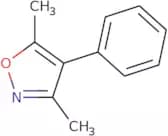
CAS:1-Methyl-2-(methylsulfanyl)-1H-1,3-benzodiazole is an alkylating agent that undergoes a regiospecific reaction with N-methylmorpholine and dimethylformamide to produce the desired 1-(methylsulfanyl)benzene. This process can be carried out in the presence of activated carbon to remove any byproducts. The kinetics of the reaction are dependent on temperature, which can be adjusted by using different solvents. The product is then purified through techniques such as recrystallization or distillation.Formula:C9H10N2SPurity:Min. 95%Molecular weight:178.26 g/mol3,5-Dimethyl-4-phenyl-1,2-oxazole
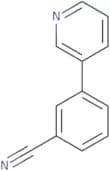
CAS:Versatile small molecule scaffoldFormula:C11H11NOPurity:Min. 95%Molecular weight:173.21 g/mol3-(Pyridin-3-yl)benzonitrile
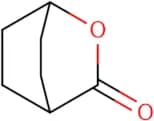
CAS:Versatile small molecule scaffoldFormula:C12H8N2Purity:Min. 95%Molecular weight:180.2 g/mol4-Hydroxy-1-cyclohexanecarboxylic Acid '-Lactone
CAS:4-Hydroxy-1-cyclohexanecarboxylic acid ´-lactone is a lactone that is used as an initiator in the production of polyesters. It has also been used as a reactant for synthesizing organolithium compounds. It has been shown that 4-hydroxy-1-cyclohexanecarboxylic acid ´-lactone can be polymerized with styrene and toluene to form a copolymer. This copolymer has been studied by spectroscopy and calorimetry. The enthalpy of this reaction was determined to be -2,979 kJ/mol. The structure of 4-hydroxy-1-cyclohexanecarboxylic acid ´-lactone has been confirmed using crystallography.
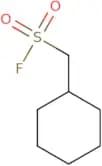
Formula:C7H10O2Purity:Min. 95%Molecular weight:126.16 g/molCyclohexylmethanesulfonyl fluoride
CAS:Versatile small molecule scaffold
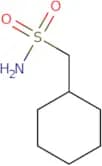
Formula:C7H13FO2SPurity:Min. 95%Molecular weight:180.24 g/molCyclohexylmethanesulfonamide
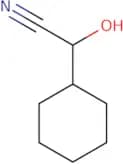
CAS:Cyclohexylmethanesulfonamide is a quinoline derivative that has been shown to have affinity for the CB1 receptor. It has been used in animal studies as an anti-inflammatory agent and may also have cancer chemopreventive properties. The compound has also been shown to inhibit the activity of the NS5B polymerase, which is involved in viral RNA synthesis. Cyclohexylmethanesulfonamide binds to the C1-C6 alkyl group and alkylsulfonyl group on the enzyme, inhibiting its ability to replicate viral RNA. It has been suggested that this drug may be useful in treating psychotic disorders because it can cross the blood brain barrier.Formula:C7H15NO2SPurity:Min. 95%Molecular weight:177.27 g/mol2-Cyclohexyl-2-hydroxyacetonitrile
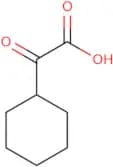
CAS:2-Cyclohexyl-2-hydroxyacetonitrile is a reaction mixture that can be used to synthesize an amide, dialkyl, or carbonate. It is a high yield reaction with hydrogen chloride and carbonate as reagents. The reactants are cyanohydrin and alkoxide or halide. The product of this reaction is an anhydride. 2-Cyclohexyl-2-hydroxyacetonitrile can also be used to make phosgene by reacting with phosgene gas in the presence of metallic chloride or other halides.Formula:C8H13NOPurity:Min. 95%Molecular weight:139.19 g/mol2-Cyclohexyl-2-oxoacetic acid
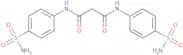
CAS:2-Cyclohexyl-2-oxoacetic acid (2C2OA) is a quaternary ammonium salt that has been used in the synthesis of benzyl esters. 2C2OA is also reactive and can be used as an organic solvent. It reacts with Friedel-Crafts reaction to produce enantiomeric cyclohexanones, which are useful for the preparation of acyl halides and hydroxyl groups. 2C2OA is not an acid but can react with inorganic acids to form condensation products. Hydrogen chloride (HCl) will react with 2C2OA to produce cyclohexene and cyclohexanone chlorides, which are both volatile compounds. 2C2OA can also act as an acyl halide by reacting with acyl halides.Formula:C8H12O3Purity:Min. 95%Molecular weight:156.18 g/molN,N'-Bis(4-sulfamoylphenyl)propanediamide
CAS:Versatile small molecule scaffold
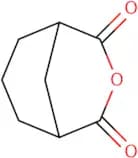
Formula:C15H16N4O6S2Purity:Min. 95%Molecular weight:412.4 g/molcis-1,3-Cyclohexanedicarboxylic anhydride
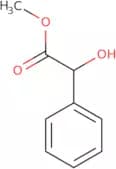
CAS:Versatile small molecule scaffoldFormula:C8H10O3Purity:Min. 95%Molecular weight:154.17 g/molMethyl DL-Mandelate
CAS:Methyl DL-Mandelate is a chiral compound that has been shown to have an inhibitory effect on the growth of bacteria. It binds to bacterial cell surface receptors and causes lysis by creating holes in the membrane. Methyl DL-Mandelate also has high resistance against wastewater treatment; it is not removed during conventional treatment processes and can be used in the treatment of infectious diseases. The mechanism for this inhibition is unknown, but it has been hypothesized that methyl DL-Mandelate acts as an adsorbent, which blocks or inhibits the binding sites of other antibiotics or toxins.
Formula:C9H10O3Purity:Min. 95%Molecular weight:166.18 g/mol

![2H,3H-[1,2]Thiazolo[5,4-b]pyridin-3-one](/_next/image/?url=https%3A%2Fstatic.cymitquimica.com%2Fproducts%2F3D%2Fthumb-webp%2FEAA33760.webp&w=3840&q=75)
![{Tricyclo[2.2.1.0,2,6]heptan-3-yl}methanol](/_next/image/?url=https%3A%2Fstatic.cymitquimica.com%2Fproducts%2F3D%2Fthumb-webp%2FEAA33795.webp&w=3840&q=75)