Building Blocks
Subcategories of "Building Blocks"
- Boronic Acids & Boronic Acid Derivatives(5,778 products)
- Chiral Building Blocks(1,243 products)
- Hydrocarbon Building Blocks(6,099 products)
- Organic Building Blocks(61,038 products)
Found 205376 products of "Building Blocks"
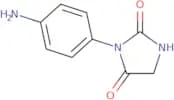
3-(4-Aminophenyl)imidazolidine-2,4-dione
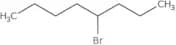
CAS:Versatile small molecule scaffoldFormula:C9H9N3O2Purity:Min. 95%Molecular weight:191.19 g/mol4-Bromooctane
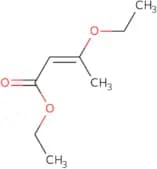
CAS:4-Bromooctane is a nonpolar, hydrophobic compound that has been quantified by gas chromatography. The solute is protonated in the presence of chloride, alkene, or tribromide to give the corresponding cation, which can be detected by gas chromatography. The frequency range for 4-bromobutane is from 0.1 Hz to 10 kHz and the parameters for this compound are halides and dipole.Formula:C8H17BrPurity:Min. 95%Molecular weight:193.12 g/molEthyl 3-ethoxycrotonate
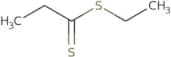
CAS:Ethyl 3-ethoxycrotonate is an organic compound with the molecular formula C5H11O2. It is a colorless liquid that boils at 46°C. The molecule has a pyridine ring and an ethoxy group on the third carbon. This product can be used in enantioselective syntheses, yielding optically pure products. It also has structural analogues that are aliphatic and ketonic.Formula:C8H14O3Purity:Min. 95%Molecular weight:158.2 g/mol1-(Ethylsulfanyl)propane-1-thione
CAS:Versatile small molecule scaffold
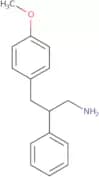
Formula:C5H10S2Purity:Min. 95%Molecular weight:134.3 g/mol3-(4-Methoxyphenyl)-2-phenylpropan-1-amine
CAS:Versatile small molecule scaffoldFormula:C16H19NOPurity:Min. 95%Molecular weight:241.33 g/mol2-(Methoxymethyl)phenol
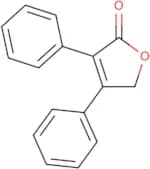
CAS:2-(Methoxymethyl)phenol is a synthetic compound that has been shown to interact with other compounds. It is also an antioxidant, which may be due to its ability to reduce hydroperoxides and scavenge free radicals. 2-(Methoxymethyl)phenol has a liquid crystal composition and can react with amines and alkylthio groups. It also has a safety profile and pharmacokinetic properties that have been studied in animals, including rats, dogs, and rhesus monkeys.Formula:C8H10O2Purity:Min. 95%Molecular weight:138.17 g/mol3,4-Diphenyl-2,5-dihydrofuran-2-one
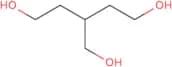
CAS:Versatile small molecule scaffoldFormula:C16H12O2Purity:Min. 95%Molecular weight:236.26 g/mol3-(Hydroxymethyl)pentane-1,5-diol
CAS:Versatile small molecule scaffold
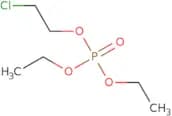
Formula:C6H14O3Purity:Min. 95%Molecular weight:134.17 g/mol2-Chloroethyl diethyl phosphate
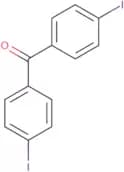
CAS:2-Chloroethyl diethyl phosphate is a reactive, alkylating agent that is used in organic chemistry as a synthetic intermediate. It has been shown to react with hydrogen peroxide and amine to yield 2-chloroethyl diethyl phosphite. This reaction proceeds through the intermediacy of an organophosphate ester, which undergoes hydrolysis to form the desired product. In addition, 2-chloroethyl diethyl phosphate reacts with phosphorous acid to form a phosphotriester, which can be hydrolyzed by base to produce the desired product.Formula:C6H14ClO4PPurity:Min. 95%Molecular weight:216.6 g/molBis(4-iodophenyl)methanone
CAS:Versatile small molecule scaffold
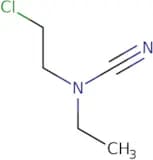
Formula:C13H8I2OPurity:Min. 95%Molecular weight:434.01 g/mol(2-Chloroethyl)(cyano)ethylamine
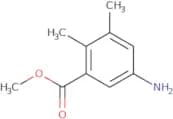
CAS:Versatile small molecule scaffoldFormula:C5H9ClN2Purity:Min. 95%Molecular weight:132.59 g/molmethyl 5-amino-2,3-dimethylbenzoate
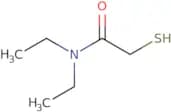
CAS:Versatile small molecule scaffoldFormula:C10H13NO2Purity:Min. 95%Molecular weight:179.2 g/molN,N-Diethyl-2-sulfanylacetamide
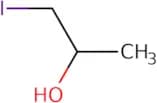
CAS:Versatile small molecule scaffoldFormula:C6H13NOSPurity:Min. 95%Molecular weight:147.24 g/mol1-Iodopropan-2-ol
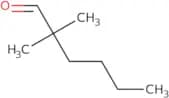
CAS:1-Iodopropan-2-ol is a bifunctional reagent that has been used in epoxide ring opening reactions. It reacts with alkoxides and carbonates to form epoxides. 1-Iodopropan-2-ol also has been shown to react with silicon, forming siloxanes, which are used in the synthesis of polymers. This chemical is catalytic and can be used as a polymerization initiator. It has also been reinvestigated for use in the synthesis of cyclic compounds.Formula:C3H7IOPurity:Min. 95%Molecular weight:186 g/mol2,2-Dimethylhexanal
CAS:Versatile small molecule scaffoldFormula:C8H16OPurity:Min. 95%Molecular weight:128.21 g/mol7-Methyl-2-phenylimidazo[1,2-a]pyridine
CAS:7-Methyl-2-phenylimidazo[1,2-a]pyridine is a fluorescent compound that has been used as a shift reagent. It is colorless and stable in air and light. The fluorescence of 7-methyl-2-phenylimidazo[1,2-a]pyridine is excited at wavelengths of 315 nm and 380 nm with an emission maximum at 460 nm. This compound can be used to study the conformational changes of proteins and nucleic acids by monitoring the change in fluorescence properties.
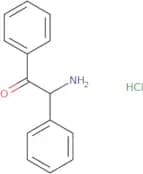
Formula:C14H12N2Purity:Min. 95%Molecular weight:208.26 g/mol2-Amino-1,2-diphenylethan-1-one hydrochloride
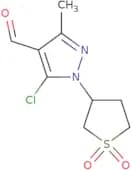
CAS:Controlled Product2-Amino-1,2-diphenylethan-1-one hydrochloride belongs to the class of sulfoxides and is a potent anti-inflammatory agent. It inhibits inflammation by reducing the production of prostaglandins and thiols from arachidonic acid. 2-Amino-1,2-diphenylethan-1-one hydrochloride has been shown to be effective in alleviating inflammatory symptoms caused by arthritis. The compound also has an antagonistic effect on acetylcholine and muscarinic receptors, which may cause side effects such as dry mouth, blurred vision, and difficulty urinating.Formula:C14H14ClNOPurity:Min. 95%Molecular weight:247.72 g/mol5-Chloro-1-(1,1-dioxidotetrahydrothien-3-yl)-3-methyl-1H-pyrazole-4-carbaldehyde
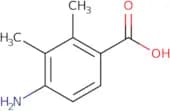
CAS:Versatile small molecule scaffoldFormula:C9H11ClN2O3SPurity:Min. 95%Molecular weight:262.71 g/mol4-Amino-2,3-dimethyl-benzoic acid
CAS:4-Amino-2,3-dimethyl-benzoic acid is a benzene derivative that has been detected in wastewater treatment plants at median concentrations of 3.2 μg/L. It is used as a sunscreen agent and can be found in sunscreens, cosmetics, and soaps. 4-Amino-2,3-dimethyl-benzoic acid has been shown to induce cancer in the skin of mice. This drug may also have effects on the production of reactive oxygen species that cause DNA mutations. 4DMBBA binds to proteins and nucleic acids by hydrogen bonding interactions with amino groups. The binding of 4DMBBA to DNA prevents the transcription of genes encoding proteins involved in DNA repair, leading to cell death and cancer.
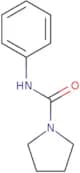
Formula:C9H11NO2Purity:Min. 95%Molecular weight:165.19 g/molN-Phenylpyrrolidine-1-carboxamide
CAS:N-phenylpyrrolidine-1-carboxamide is an organic compound with the chemical formula CHN. It is a nitrogen containing amine that is used as a reagent to synthesize other nitrogen containing compounds. The compound can be prepared by reacting tert-butyl hydroperoxide with an amine, such as ammonia or methylamine. The reaction produces a mixture of tertiary amines and hydroxylated aliphatic tertiary amines. N-Phenylpyrrolidine-1-carboxamide is reactive and soluble in organic solvents and can be stored at room temperature for long periods of time.
Formula:C11H14N2OPurity:Min. 95%Molecular weight:190.24 g/mol


![7-Methyl-2-phenylimidazo[1,2-a]pyridine](/_next/image/?url=https%3A%2Fstatic.cymitquimica.com%2Fproducts%2F3D%2Fthumb-webp%2FAAA88591.webp&w=3840&q=75)