


Building Blocks
This section contains fundamental products for the synthesis of organic and biological compounds. Building blocks are the essential starting materials used to construct complex molecules through various chemical reactions. They play a critical role in drug discovery, material science, and chemical research. At CymitQuimica, we offer a diverse range of high-quality building blocks to support your innovative research and industrial projects, ensuring you have the essential components for successful synthesis.
Subcategories of "Building Blocks"
- Boronic Acids & Boronic Acid Derivatives(5,756 products)
- Chiral Building Blocks(1,242 products)
- Hydrocarbon Building Blocks(6,095 products)
- Organic Building Blocks(61,055 products)
Found 199650 products of "Building Blocks"
Sort by
Purity (%)
0
100
|
0
|
50
|
90
|
95
|
100
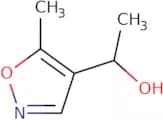
1-(5-Methyl-1,2-oxazol-4-yl)ethan-1-ol
CAS:<p>Versatile small molecule scaffold</p>Formula:C6H9NO2Purity:Min. 95%Molecular weight:127.14 g/molL-152,804
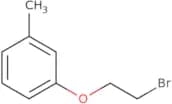
CAS:<p>L-152,804 is a potent inhibitor of the dopamine receptor. It has been shown to have an inhibitory effect on wild-type mice and functional assays in vitro. L-152,804 inhibits locomotor activity in wild type mice and increases energy metabolism in adipose tissue. L-152,804 binds to the dopamine receptor by competitive inhibition and inhibits the binding of glutamate and dopamine to the receptor. This drug has also been shown to have anti-inflammatory effects in a rat model of arthritis.</p>Formula:C23H26O4Purity:Min. 95%Molecular weight:366.46 g/mol1-(2-Bromo-ethoxy)-3-methyl-benzene
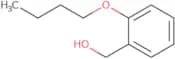
CAS:<p>Versatile small molecule scaffold</p>Formula:C9H11BrOPurity:Min. 95%Molecular weight:215.09 g/mol(2-Butoxyphenyl)methanol
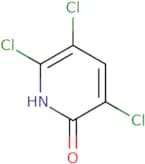
CAS:<p>Versatile small molecule scaffold</p>Formula:C11H16O2Purity:Min. 95%Molecular weight:180.24 g/mol3,5,6-Trichloro-2-pyridinol
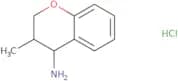
CAS:<p>3,5,6-Trichloro-2-pyridinol (3,5,6-TCP) is an intermediate in the production of chlorpyrifos. It is also a metabolite of chlorpyrifos and has been detected in urine samples. 3,5,6-TCP can be determined by titrimetric analysis using sodium carbonate as a reagent. 3,5,6-TCP is toxic to both humans and animals at high doses. The process optimization for the synthesis of 3,5,6-TCP was investigated in order to reduce the amount of wastewater produced during production. In this study it was found that reaction solution pH was significantly lower when anhydrous sodium carbonate was used instead of water saturated sodium carbonate. This discovery would allow for more efficient wastewater treatment because less wastewater would need to be treated per unit product.</p>Formula:C5H2Cl3NOPurity:Min. 95%Color and Shape:PowderMolecular weight:198.43 g/mol3-Methyl-3,4-dihydro-2H-1-benzopyran-4-amine hydrochloride
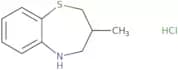
CAS:<p>Versatile small molecule scaffold</p>Formula:C10H14ClNOPurity:Min. 95%Molecular weight:199.68 g/mol3-Methyl-2,3,4,5-tetrahydro-1,5-benzothiazepine hydrochloride
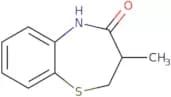
CAS:<p>Versatile small molecule scaffold</p>Formula:C10H14ClNSPurity:Min. 95%Molecular weight:215.74 g/mol3-Methyl-2,3,4,5-tetrahydro-1,5-benzothiazepin-4-one
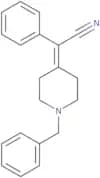
CAS:<p>Versatile small molecule scaffold</p>Formula:C10H11NOSPurity:Min. 95%Molecular weight:193.27 g/mol2-(1-Benzylpiperidin-4-ylidene)-2-phenylacetonitrile
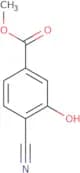
CAS:<p>Versatile small molecule scaffold</p>Formula:C20H20N2Purity:Min. 95%Molecular weight:288.4 g/molMethyl 4-cyano-3-hydroxybenzoate
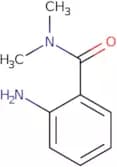
CAS:<p>Versatile small molecule scaffold</p>Formula:C9H7NO3Purity:Min. 95%Molecular weight:177.16 g/mol2-Amino-N,N-dimethylbenzamide
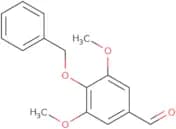
CAS:<p>2-Amino-N,N-dimethylbenzamide is an organic compound with the chemical formula CH3CONH2. It is a white solid with a pungent odor. 2-Amino-N,N-dimethylbenzamide is used as an industrial chemical in the synthesis of selenium oxide and carbon monoxide. It also acts as a catalyst for various reactions such as the synthesis of acetaldehyde from ethanol and oxygen gas or the conversion of ammonia to nitric acid.</p>Formula:C9H12N2OPurity:Min. 95%Molecular weight:164.2 g/mol4-(Benzyloxy)-3,5-dimethoxybenzaldehyde
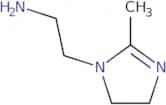
CAS:<p>4-(Benzyloxy)-3,5-dimethoxybenzaldehyde is a phosphonium salt that can be used in vitro assays for the determination of the activity of glyceric, hydrochloric acid, colchicine, catechol-o-methyltransferase and asymmetric synthesis. This compound has also been shown to be a ligand for the receptor protein of several viruses. 4-(Benzyloxy)-3,5-dimethoxybenzaldehyde has been shown to inhibit the growth of virus in vivo through its interaction with the receptor protein.</p>Formula:C16H16O4Purity:Min. 95%Molecular weight:272.3 g/mol2-(2-Methyl-4,5-dihydro-1H-imidazol-1-yl)ethan-1-amine
CAS:<p>2-(2-Methyl-4,5-dihydro-1H-imidazol-1-yl)ethan-1-amine is an organic compound that has been used as a catalyst. It crystallizes in the triclinic system and exhibits high catalytic activity. The hydrothermal synthesis of 2-(2,4,5-trimethylphenyl)-N,N′,N″,N″′-[2(2,4,5-trimethylphenyl)ethenyl]-tetrahedrane (Cp*TiMe3) was achieved by using diethylenetriamine (DETA) as a starting material. This product catalyzes the cyclization of acetaldehyde to form benzaldehyde with high catalytic activity. The probe 2-(2,4,5-trimethylphenyl)-N,N′-[2(2,4,5-trimethylphenyl</p>Formula:C6H13N3Purity:Min. 95%Molecular weight:127.19 g/mol2-(2-Ethyl-4,5-dihydro-1H-imidazol-1-yl)ethan-1-amine
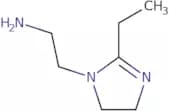
CAS:<p>Versatile small molecule scaffold</p>Formula:C7H15N3Purity:Min. 95%Molecular weight:141.21 g/mol7-Methoxy-2H-benzo[b][1,4]oxazin-3(4H)-one
CAS:<p>7-Methoxy-2H-benzo[b][1,4]oxazin-3(4H)-one (7MB) is a hydroxamic acid that has been shown to be an effective inhibitor of β-glucosidase. 7MB leaves the glucosides intact and only affects the substrate by attacking the carbonyl group. The enzyme β-glucosidase is responsible for hydrolyzing these glycosides into glucose, which can then be absorbed by the body. 7MB has been shown to inhibit glucosidase activity in insect and bacterial cells. It also inhibits esculin, which is a drug used as a skin test for allergies, and has been shown to have antiinflammatory properties.</p>Formula:C9H9NO3Purity:Min. 95%Molecular weight:179.17 g/mol1-{[4-(2-Hydroxyethyl)piperazin-1-yl]methyl}-2,3-dihydro-1H-indole-2,3-dione
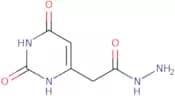
CAS:<p>Versatile small molecule scaffold</p>Formula:C15H19N3O3Purity:Min. 95%Molecular weight:289.33 g/mol2-(2,6-Dioxo-1,2,3,6-tetrahydropyrimidin-4-yl)acetohydrazide
CAS:<p>Versatile small molecule scaffold</p>Formula:C6H8N4O3Purity:Min. 95%Molecular weight:184.15 g/mol5H-chromeno[2,3-b]pyridin-5-one
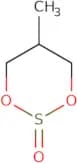
CAS:<p>5H-chromeno[2,3-b]pyridin-5-one is a truncated aromatic ketone that has been synthesized by the cyclodehydration of 5-hydroxybenzaldehyde. This compound can be used in the synthesis of analogues and it can also be used for cross coupling, hydrazine and hydroxylamine synthesis. 5H-chromeno[2,3-b]pyridin-5-one has been shown to react with amines to form substituted pyridines. The substituent on the aryl ring determines the type of substitution that will occur. This product may also be used as a palladium catalyst in cross coupling reactions.</p>Formula:C12H7NO2Purity:Min. 95%Molecular weight:197.19 g/mol5-Methyl-1,3,2λ⁴-dioxathian-2-one
CAS:<p>Versatile small molecule scaffold</p>Formula:C4H8O3SPurity:Min. 95%Molecular weight:136.17 g/mol3-[(4-Sulfamoylphenyl)amino]propanoic acid
CAS:<p>Versatile small molecule scaffold</p>Formula:C9H12N2O4SPurity:Min. 95%Molecular weight:244.27 g/mol


![7-Methoxy-2H-benzo[b][1,4]oxazin-3(4H)-one](/_next/image/?url=https%3A%2Fstatic.cymitquimica.com%2Fproducts%2F3D%2Fthumb-webp%2FGAA52994.webp&w=3840&q=75)
![1-{[4-(2-Hydroxyethyl)piperazin-1-yl]methyl}-2,3-dihydro-1H-indole-2,3-dione](/_next/image/?url=https%3A%2Fstatic.cymitquimica.com%2Fproducts%2F3D%2Fthumb-webp%2FGAA53217.webp&w=3840&q=75)
![5H-chromeno[2,3-b]pyridin-5-one](/_next/image/?url=https%3A%2Fstatic.cymitquimica.com%2Fproducts%2F3D%2Fthumb-webp%2FGAA53746.webp&w=3840&q=75)
![3-[(4-Sulfamoylphenyl)amino]propanoic acid](/_next/image/?url=https%3A%2Fstatic.cymitquimica.com%2Fproducts%2F3D%2Fthumb-webp%2FGAA54198.webp&w=3840&q=75)