Building Blocks
This section contains fundamental products for the synthesis of organic and biological compounds. Building blocks are the essential starting materials used to construct complex molecules through various chemical reactions. They play a critical role in drug discovery, material science, and chemical research. At CymitQuimica, we offer a diverse range of high-quality building blocks to support your innovative research and industrial projects, ensuring you have the essential components for successful synthesis.
Subcategories of "Building Blocks"
- Boronic Acids & Boronic Acid Derivatives(5,774 products)
- Chiral Building Blocks(1,237 products)
- Hydrocarbon Building Blocks(6,098 products)
- Organic Building Blocks(60,970 products)
Found 205135 products of "Building Blocks"
Sort by
Purity (%)
0
100
|
0
|
50
|
90
|
95
|
100
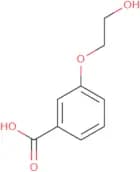
3-(2-Hydroxy-ethoxy)-benzoic acid
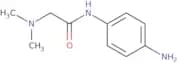
CAS:3-(2-Hydroxy-ethoxy)-benzoic acid (3HBA) is a deprotonating agent that reacts with organolithiums, organomercurials, and mercuric halides to form their corresponding Grignard reagents. 3HBA also reacts with benzophenone to form benzonitrile. 3HBA can be used for the synthesis of various organic compounds, such as chlorides, yields, and methylcyclohexane. 3HBA has been shown to have a crystallographic structure of C20H22O4Cl. The chloride anion in the crystal lattice is coordinated by two magnesium ions. Mercuric chloride can be prepared from 3HBA by treatment with chlorine gas at elevated temperatures.Formula:C9H10O4Purity:Min. 95%Molecular weight:182.17 g/molN-(4-Aminophenyl)-2-(dimethylamino)acetamide
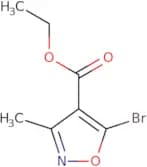
CAS:Versatile small molecule scaffoldFormula:C10H15N3OPurity:Min. 95%Molecular weight:193.25 g/molEthyl 5-Bromo-3-methyl-1,2-oxazole-4-carboxylate
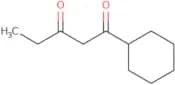
CAS:Versatile small molecule scaffoldFormula:C7H8NO3BrPurity:Min. 95%Molecular weight:234.05 g/mol1-Cyclohexylpentane-1,3-dione
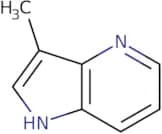
CAS:Versatile small molecule scaffoldFormula:C11H18O2Purity:Min. 95%Molecular weight:182.26 g/mol3-Methyl-4-azaindole
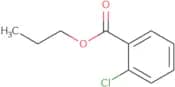
CAS:Versatile small molecule scaffoldFormula:C8H8N2Purity:Min. 95%Molecular weight:132.16 g/molPropyl 2-chlorobenzoate
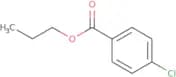
CAS:Versatile small molecule scaffoldFormula:C10H11ClO2Purity:Min. 95%Molecular weight:198.64 g/molPropyl 4-chlorobenzoate
CAS:Versatile small molecule scaffold
Formula:C10H11ClO2Purity:Min. 95%Molecular weight:198.64 g/moltert-Butyl 4-hydroxybenzoate
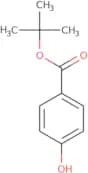
CAS:Tert-butyl 4-hydroxybenzoate is a tyrosine kinase inhibitor. It inhibits the activity of tyrosine kinases, which play a role in cell proliferation and differentiation. The compound has been evaluated for its ability to inhibit vascular endothelial growth factor receptor 2 (VEGFR-2) and Azd2932, two proteins that are involved in tumor angiogenesis. Tert-butyl 4-hydroxybenzoate also has an affinity for reductive cleavage of esters and reductive arylsulfonates.Formula:C11H14O3Purity:Min. 95%Molecular weight:194.23 g/molN-[1-(1H-1,3-Benzodiazol-2-yl)ethyl]benzamide
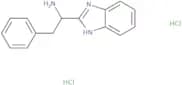
CAS:Versatile small molecule scaffoldFormula:C16H15N3OPurity:Min. 95%Molecular weight:265.31 g/mol1-(1H-1,3-Benzodiazol-2-yl)-2-phenylethan-1-amine dihydrochloride
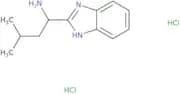
CAS:Versatile small molecule scaffoldFormula:C15H17Cl2N3Purity:Min. 95%Molecular weight:310.2 g/mol1-(1H-1,3-Benzodiazol-2-yl)-3-methylbutan-1-amine dihydrochloride
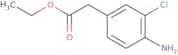
CAS:Versatile small molecule scaffoldFormula:C12H19Cl2N3Purity:Min. 95%Molecular weight:276.2 g/molEthyl 2-(4-amino-3-chlorophenyl)acetate
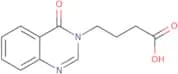
CAS:Versatile small molecule scaffoldFormula:C10H12ClNO2Purity:Min. 95%Molecular weight:213.66 g/mol4-(4-Oxoquinazolin-3(4H)-yl)butanoic acid
CAS:Versatile small molecule scaffoldFormula:C12H12N2O3Purity:Min. 95%Molecular weight:232.24 g/mol2H,3H,5H,6H-Benzo[H]cinnolin-3-one
CAS:Versatile small molecule scaffoldFormula:C12H10N2OPurity:Min. 95%Molecular weight:198.22 g/mol5-Chloro-3,4-diazatricyclo[9.4.0.0,2,7]pentadeca-1(15),2(7),3,5,11,13-hexaene
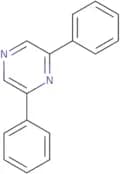
CAS:Versatile small molecule scaffoldFormula:C13H11ClN2Purity:Min. 95%Molecular weight:230.69 g/mol2,6-Diphenylpyrazine
CAS:2,6-Diphenylpyrazine (2,6-DPP) is a cross-linked complex that contains 4-methoxyphenylboronic acid. It has been shown to react with anions and form coordination complexes with imidazoline ligands. The coordination chemistry of 2,6-DPP is dependent on the structure of the anion. For example, in acetonitrile or nitrate solutions, 2,6-DPP coordinates to the negative charge through two nitrogen atoms and two carbon atoms. In aqueous solutions containing halides such as chloride or fluoride ions, 2,6-DPP coordinates through three nitrogen atoms and one carbon atom.Formula:C16H12N2Purity:Min. 95%Molecular weight:232.28 g/mol2-Amino-N-phenylethane-1-sulfonamide
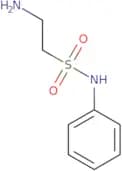
CAS:Versatile small molecule scaffold
Formula:C8H12N2O2SPurity:Min. 95%Molecular weight:200.26 g/mol2-Methanesulfonyl-2-methylpropan-1-ol
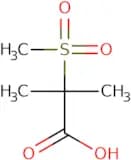
CAS:Versatile small molecule scaffoldFormula:C5H12O3SPurity:Min. 95%Molecular weight:152.21 g/mol2-Methanesulfonyl-2-methylpropanoic acid
CAS:Versatile small molecule scaffoldFormula:C5H10O4SPurity:Min. 95%Molecular weight:166.2 g/mol2-Chloro-5-phenylpyrazine
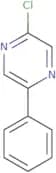
CAS:2-Chloro-5-phenylpyrazine (2CPP) is an amide nucleophile that reacts with diphenyl to form the corresponding diphenyl amide. 2CPP is a nucleophilic compound that yields the product in high yields. The attack of the nucleophile on the electrophilic carbon atom generates a new carbon-nucleus bond, and another molecule of 2CPP or other nucleophile can attack the same carbon atom to produce a second product. 2CPP reacts with potassium to form a white solid, which is then heated to release hydrogen chloride gas.Formula:C10H7ClN2Purity:Min. 95%Molecular weight:190.63 g/mol

![N-[1-(1H-1,3-Benzodiazol-2-yl)ethyl]benzamide](/_next/image/?url=https%3A%2Fstatic.cymitquimica.com%2Fproducts%2F3D%2Fthumb-webp%2FABA81058.webp&w=3840&q=75)
![2H,3H,5H,6H-Benzo[H]cinnolin-3-one](/_next/image/?url=https%3A%2Fstatic.cymitquimica.com%2Fproducts%2F3D%2Fthumb-webp%2FABA82349.webp&w=3840&q=75)
![5-Chloro-3,4-diazatricyclo[9.4.0.0,2,7]pentadeca-1(15),2(7),3,5,11,13-hexaene](/_next/image/?url=https%3A%2Fstatic.cymitquimica.com%2Fproducts%2F3D%2Fthumb-webp%2FABA82353.webp&w=3840&q=75)