


Building Blocks
Subcategories of "Building Blocks"
- Boronic Acids & Boronic Acid Derivatives(5,781 products)
- Chiral Building Blocks(1,242 products)
- Hydrocarbon Building Blocks(6,101 products)
- Organic Building Blocks(61,033 products)
Found 205320 products of "Building Blocks"
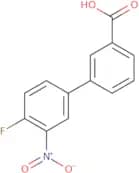
4'-Fluoro-3'-nitrobiphenyl-3-carboxylic acid
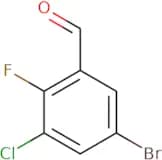
CAS:Versatile small molecule scaffoldFormula:C13H8FNO4Purity:Min. 95%Molecular weight:261.21 g/mol5-bromo-3-chloro-2-fluorobenzaldehyde
CAS:Versatile small molecule scaffoldFormula:C7H3BrClFOPurity:Min. 95%Molecular weight:237.5 g/mol6-[(3-Methoxyphenyl)methyl]-4-methyl-5H,6H-[1,2]diazolo[3,4-c]pyrazol-3-amine
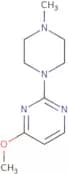
CAS:Versatile small molecule scaffoldFormula:C13H15N5OPurity:Min. 95%Molecular weight:257.29 g/mol4-Methoxy-2-(4-methylpiperazin-1-yl)pyrimidine
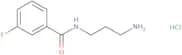
CAS:Versatile small molecule scaffoldFormula:C10H16N4OPurity:Min. 95%Molecular weight:208.26 g/molN-(3-Aminopropyl)-3-fluorobenzamide hydrochloride
CAS:Versatile small molecule scaffoldFormula:C10H14ClFN2OPurity:Min. 95%Molecular weight:232.68 g/mol5-Chloro-1H-imidazo[4,5-b]pyridin-2(3H)-one
CAS:5-Chloro-1H-imidazo[4,5-b]pyridin-2(3H)-one is a chemical compound that is used in analytical chemistry as an insecticide. It has been shown to cause genotoxic activity in weevils exposed to light. The compound has also been shown to have long term efficacy in plants and toxicity studies on animals. 5-Chloro-1H-imidazo[4,5-b]pyridin-2(3H)-one is metabolized by detoxification enzymes and excreted through the urine.Purity:Min. 95%6-Chloro-1-methylpyridin-2(1H)-one
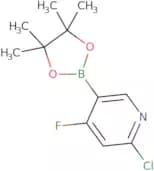
CAS:6-Chloro-1-methylpyridin-2(1H)-one is an insecticide and a heterocyclic compound. It is used to kill insects such as mites, ticks, and fleas. 6-Chloro-1-methylpyridin-2(1H)-one is also known as chlorantraniliprole, which has been shown to be effective against arthropods that are resistant to other compounds. This compound has an n-oxide group on the pyridine ring, which makes it more toxic than other compounds that have only one nitro group.Purity:Min. 95%2-Chloro-4-fluoropyridine-5-boronic acid, pinacol ester
CAS:Please enquire for more information about 2-Chloro-4-fluoropyridine-5-boronic acid, pinacol ester including the price, delivery time and more detailed product information at the technical inquiry form on this pageFormula:C11H14BClFNO2Purity:Min. 95%Molecular weight:257.5 g/mol4-Chloro-2,3-dimethylpyridine N-oxide
CAS:4-Chloro-2,3-dimethylpyridine N-oxide is a chemical compound that belongs to the class of medicines. It is used in the manufacture of hydrogen peroxide, which is an oxidizing agent and a bleaching agent. 4-Chloro-2,3-dimethylpyridine N-oxide has been used as a reagent for organic synthesis and as a catalyst in organic reactions. This compound also has the ability to inhibit proton pumps, which are membrane proteins that pump protons across biological membranes. The presence of sodium impurities can lead to scaling problems because it affects the solubility of 4-chloro-2,3-dimethylpyridine N-oxide. The exothermic reaction with chlorine leads to the formation of chloride, sulfoxide, and chloride ions. These products are more soluble than 4-chloro-2,3-dimethylpyridine N-oxide itself.
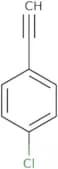
Formula:C7H8ClNOPurity:Min. 95%Color and Shape:Off-White PowderMolecular weight:157.6 g/mol4-Chlorophenylacetylene
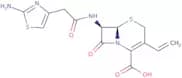
CAS:4-Chlorophenylacetylene is a compound that is created by the reaction of chloroform and acetylene. The reaction yield can be increased by using a catalytic amount of silicon, which increases the rate of hydration. Terminal alkynes react with 4-chlorophenylacetylene to form polymers, which are insoluble in most solvents. 4-Chlorophenylacetylene has been shown to have inhibitory activity against the growth of bacteria and fungi when tested in model species such as Escherichia coli and Saccharomyces cerevisiae.Formula:C8H5ClPurity:Min. 95%Color and Shape:PowderMolecular weight:136.58 g/molCefdinir related compound B
CAS:Please enquire for more information about Cefdinir related compound B including the price, delivery time and more detailed product information at the technical inquiry form on this pageFormula:C14H14N4O4S2Purity:Min. 95%Molecular weight:366.42 g/mol1-Cyclopropylpiperazine
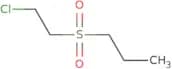
CAS:1-Cyclopropylpiperazine is a nitrogen-containing organic compound that is part of a class of compounds called cyclopropylamines. It has been shown to have neuroprotective effects in animal models of Parkinson's disease and Alzheimer's disease. It also has anti-inflammatory effects and shows promise as an anticancer agent. 1-Cyclopropylpiperazine interacts with phosphatidylinositol-3 kinase (PI3K) and inhibits the formation of fatty acid molecules, which are involved in degenerative diseases and inflammatory diseases, such as cancer.Formula:C7H14N2Purity:Min. 95%Molecular weight:126.2 g/mol1-(2-Chloroethanesulfonyl)propane
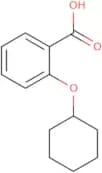
CAS:Versatile small molecule scaffoldFormula:C5H11ClO2SPurity:Min. 95%Molecular weight:170.66 g/mol2-(Cyclohexyloxy)benzoic acid
CAS:2-(Cyclohexyloxy)benzoic acid is a polyvalent organic compound that is used as a binding agent and polymerization initiator in the production of polyvinyl alcohol. It can also be used to make condensation products with salicylic acid and aziridine, which are used in the manufacture of microcapsules. 2-(Cyclohexyloxy)benzoic acid is soluble in water, ethanol, acetone, and ether. This compound shows turbidity at concentrations of 0.1% (10 g/L) or greater and has an absorption maximum at 215 nm. 2-(Cyclohexyloxy)benzoic acid is not soluble in hexane or heptane.
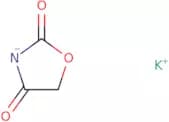
2-(Cyclohexyloxy)benzoic acid has been shown to bind ammonium ions with high affinity, which may be due to its ability to form hydrogen bonds with amine groups on proteins.Formula:C13H16O3Purity:Min. 95%Molecular weight:220.26 g/molPotassium 2,4-dioxo-1,3-oxazolidin-3-ide
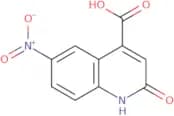
CAS:Versatile small molecule scaffoldFormula:C3H2KNO3Purity:Min. 95%Molecular weight:139.15 g/mol6-Nitro-2-oxo-1,2-dihydroquinoline-4-carboxylic acid
CAS:Versatile small molecule scaffold
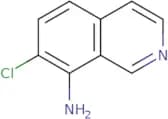
Formula:C10H6N2O5Purity:Min. 95%Molecular weight:234.16 g/mol7-Chloroisoquinolin-8-amine
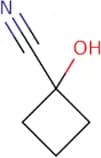
CAS:Versatile small molecule scaffoldFormula:C9H7N2ClPurity:Min. 95%Molecular weight:178.61 g/mol1-Hydroxycyclobutanecarbonitrile
CAS:Versatile small molecule scaffoldFormula:C5H7NOPurity:Min. 95%Molecular weight:97.12 g/mol2-(3-Chlorophenyl)-3-methylbutanoic acid
CAS:Versatile small molecule scaffoldFormula:C11H13ClO2Purity:Min. 95%Molecular weight:212.67 g/mol2-[4-(Propan-2-yloxy)phenyl]acetic acid
CAS:Versatile small molecule scaffold
Formula:C11H14O3Purity:Min. 95%Molecular weight:194.23 g/mol

![6-[(3-Methoxyphenyl)methyl]-4-methyl-5H,6H-[1,2]diazolo[3,4-c]pyrazol-3-amine](/_next/image/?url=https%3A%2Fstatic.cymitquimica.com%2Fproducts%2F3D%2Fthumb-webp%2FFBC80428.webp&w=3840&q=75)
![5-Chloro-1H-imidazo[4,5-b]pyridin-2(3H)-one](/_next/image/?url=https%3A%2Fstatic.cymitquimica.com%2Fproducts%2F3D%2Fthumb-webp%2FFC142316.webp&w=3840&q=75)




![2-[4-(Propan-2-yloxy)phenyl]acetic acid](/_next/image/?url=https%3A%2Fstatic.cymitquimica.com%2Fproducts%2F3D%2Fthumb-webp%2FFCA78407.webp&w=3840&q=75)