Building Blocks
This section contains fundamental products for the synthesis of organic and biological compounds. Building blocks are the essential starting materials used to construct complex molecules through various chemical reactions. They play a critical role in drug discovery, material science, and chemical research. At CymitQuimica, we offer a diverse range of high-quality building blocks to support your innovative research and industrial projects, ensuring you have the essential components for successful synthesis.
Subcategories of "Building Blocks"
- Boronic Acids & Boronic Acid Derivatives(5,756 products)
- Chiral Building Blocks(1,242 products)
- Hydrocarbon Building Blocks(6,095 products)
- Organic Building Blocks(61,055 products)
Found 199650 products of "Building Blocks"
Sort by
Purity (%)
0
100
|
0
|
50
|
90
|
95
|
100
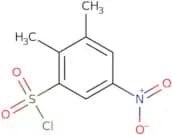
2,3-Dimethyl-5-nitrobenzene-1-sulfonyl chloride
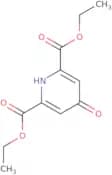
CAS:<p>Versatile small molecule scaffold</p>Formula:C8H8ClNO4SPurity:Min. 95%Molecular weight:249.67 g/mol4-Hydroxy-pyridine-2,6-dicarboxylic acid diethyl ester
CAS:<p>4-Hydroxy-pyridine-2,6-dicarboxylic acid diethyl ester is a multifunctional compound that can be used as an intermediate for the synthesis of a wide variety of organic compounds. It has been shown to be able to hydrolyze under acidic conditions to give ethoxycarbonyl groups, which are useful in organic chemistry. This compound also shows reactivity with dendrimers and other polymers, which can be used in various techniques. 4-Hydroxy-pyridine-2,6-dicarboxylic acid diethyl ester is also trifunctional and can be used as a coupling agent in reactions involving three different reagents. The multifunctionality of this compound makes it useful for many different applications.</p>Formula:C11H13NO5Purity:Min. 95%Molecular weight:239.22 g/mol2-(Aminomethyl)-5-hydroxy-4H-pyran-4-one
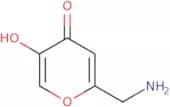
CAS:<p>2-(Aminomethyl)-5-hydroxy-4H-pyran-4-one is an amide that inhibits the uptake of dopamine and gamma-aminobutyric acid (GABA) by nerve cells in the brain. It has antinociceptive properties and has been shown to have antinociceptive effects in vivo. 2-(Aminomethyl)-5-hydroxy-4H-pyran-4-one binds to receptors for neurotransmitters, including GABA, dopamine, and acetylcholine. The amide also binds to fatty acids such as oleic acid and palmitic acid, which are important for cell membrane function. This drug can be used in conjunction with other drugs that act on GABA receptors, such as benzodiazepines or barbiturates.</p>Formula:C6H7NO3Purity:Min. 95%Molecular weight:141.12 g/mol2-Ethyl-6-(hydroxymethyl)phenol
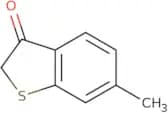
CAS:<p>Versatile small molecule scaffold</p>Formula:C9H12O2Purity:Min. 95%Molecular weight:152.2 g/mol6-Methyl-2,3-dihydro-1-benzothiophen-3-one
CAS:<p>Versatile small molecule scaffold</p>Formula:C9H8OSPurity:Min. 95%Molecular weight:164.23 g/mol{[4-Amino-3-(trifluoromethyl)phenyl]sulfanyl}formonitrile
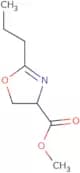
CAS:<p>Versatile small molecule scaffold</p>Formula:C8H5F3N2SPurity:Min. 95%Molecular weight:218.2 g/molMethyl 2-propyl-4,5-dihydro-1,3-oxazole-4-carboxylate
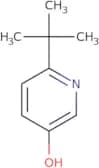
CAS:<p>Versatile small molecule scaffold</p>Formula:C8H13NO3Purity:Min. 95%Molecular weight:171.19 g/mol6-(tert-Butyl)pyridin-3-ol
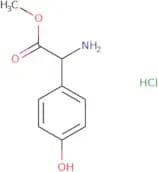
CAS:<p>Versatile small molecule scaffold</p>Formula:C9H13NOPurity:Min. 95%Molecular weight:151.2 g/molMethyl DL-4-hydroxyphenylglycine HCl
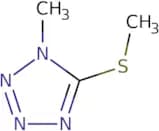
CAS:<p>Versatile small molecule scaffold</p>Formula:C9H12ClNO3Purity:Min. 95%Molecular weight:217.65 g/mol1-Methyl-5-(methylsulfanyl)-1H-1,2,3,4-tetrazole
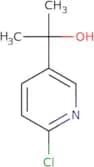
CAS:<p>Versatile small molecule scaffold</p>Formula:C3H6N4SPurity:Min. 95%Molecular weight:130.17 g/mol2-(6-Chloropyridin-3-yl)propan-2-ol
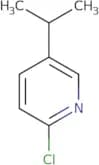
CAS:<p>Versatile small molecule scaffold</p>Formula:C8H10ClNOPurity:Min. 95%Molecular weight:161.63 g/mol2-Chloro-5-(propan-2-yl)pyridine
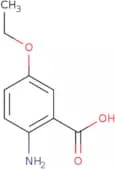
CAS:<p>Versatile small molecule scaffold</p>Formula:C8H10ClNPurity:Min. 95%Molecular weight:155.62 g/mol2-Amino-5-ethoxybenzoic acid
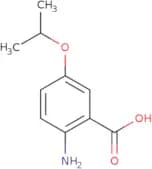
CAS:<p>Versatile small molecule scaffold</p>Formula:C9H11NO3Purity:Min. 95%Molecular weight:181.19 g/mol2-Amino-5-(propan-2-yloxy)benzoic acid
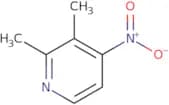
CAS:<p>Versatile small molecule scaffold</p>Formula:C10H13NO3Purity:Min. 95%Molecular weight:195.21 g/mol2,3-Dimethyl-4-nitropyridine
CAS:<p>2,3-Dimethyl-4-nitropyridine is a nucleophilic compound that reacts with amines to form the corresponding nitrosoamines. It has been shown that the reaction yield depends on the concentration of thiosemicarbazide and the pH of the solution. 2,3-Dimethyl-4-nitropyridine has been used as a model system to study coordination chemistry and its effect on mutation frequency in mice. The n-oxide derivative of this molecule is an environmental pollutant found in soil samples in Europe and China. This molecule has been shown to cause mutations in cancer cells and can be used for research into cancer treatment.</p>Formula:C7H8N2O2Purity:Min. 95%Molecular weight:152.15 g/mol2,3-Dimethyl-5-nitropyridin-4-ol
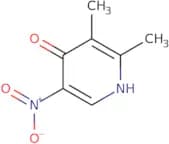
CAS:<p>Versatile small molecule scaffold</p>Formula:C7H8N2O3Purity:Min. 95%Molecular weight:168.15 g/mol4-Chloro-2,3-dimethyl-5-nitropyridine
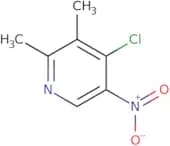
CAS:<p>Versatile small molecule scaffold</p>Formula:C7H7ClN2O2Purity:Min. 95%Molecular weight:186.59 g/mol1-(Adamantan-1-yl)-2-methylpropan-1-one
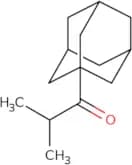
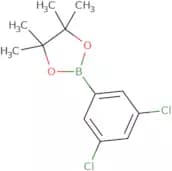
CAS:<p>Versatile small molecule scaffold</p>Formula:C14H22OPurity:Min. 95%Molecular weight:206.3 g/mol3,5-Dichlorophenylboronic acid, pinacol ester
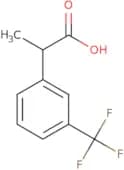
CAS:<p>Versatile small molecule scaffold</p>Formula:C12H15BCl2O2Purity:Min. 95%Molecular weight:272.96 g/mol2-(3-(Trifluoromethyl)phenyl)propanoic acid
CAS:<p>Versatile small molecule scaffold</p>Formula:C10H9F3O2Purity:Min. 95%Molecular weight:218.17 g/mol

![{[4-Amino-3-(trifluoromethyl)phenyl]sulfanyl}formonitrile](/_next/image/?url=https%3A%2Fstatic.cymitquimica.com%2Fproducts%2F3D%2Fthumb-webp%2FTCA67237.webp&w=3840&q=75)