Building Blocks
This section contains fundamental products for the synthesis of organic and biological compounds. Building blocks are the essential starting materials used to construct complex molecules through various chemical reactions. They play a critical role in drug discovery, material science, and chemical research. At CymitQuimica, we offer a diverse range of high-quality building blocks to support your innovative research and industrial projects, ensuring you have the essential components for successful synthesis.
Subcategories of "Building Blocks"
- Boronic Acids & Boronic Acid Derivatives(5,756 products)
- Chiral Building Blocks(1,242 products)
- Hydrocarbon Building Blocks(6,095 products)
- Organic Building Blocks(61,038 products)
Found 196817 products of "Building Blocks"
Sort by
Purity (%)
0
100
|
0
|
50
|
90
|
95
|
100
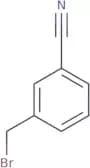
α-Bromo-m-tolunitrile
CAS:<p>Silver trifluoromethanesulfonate (AgOTf) is a precursor in the synthesis of alpha-bromo-m-tolunitrile. It is a colorless, odorless solid that can be prepared by the reaction of silver ions with bromine and toluene in an aqueous medium. The profile of AgOTf has been studied by titration method and it has been shown to have an oxadiazole group. This molecule also has anticancer activity against cancer cells. Alpha-Bromo-m-tolunitrile is currently being investigated for its potential use as a drug candidate for the treatment of cancer, with particular interest in the inhibition of angiogenesis and metastasis.</p>Formula:C8H6BrNPurity:Min. 95%Color and Shape:PowderMolecular weight:196.04 g/mol3-Bromoquinoline
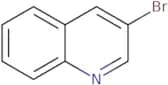
CAS:<p>3-Bromoquinoline is a brominated quinoline derivative that can be synthesized by cross-coupling reactions. The compound's chemical structure is similar to the 3-azidoquinoline, which was studied in quantum theory and molecular modeling. The 3-bromoquinoline molecule has been shown to exist in two different coordination geometries: octahedral and trigonal bipyramidal. In the octahedral geometry, the 3-bromoquinoline molecule is bound to three bromine atoms and one nitrogen atom, with an intramolecular hydrogen bond between the nitrogen atom and the quinoline ring system. The trigonal bipyramidal geometry also features an intramolecular hydrogen bond between the nitrogen atom and quinoline ring system, as well as a halogen bonding interaction with one of the three bromine atoms.</p>Formula:C9H6BrNPurity:Min. 95%Color and Shape:Yellow PowderMolecular weight:208.05 g/molBis(ethylamino)-1,3,5-triazin-2-ol hydrochloride
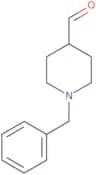
CAS:<p>Please enquire for more information about Bis(ethylamino)-1,3,5-triazin-2-ol hydrochloride including the price, delivery time and more detailed product information at the technical inquiry form on this page</p>Formula:C7H13N5O•HClPurity:Min. 95%Molecular weight:219.67 g/mol1-Benzyl-4-piperidine-carboxaldehyde
CAS:<p>1-Benzyl-4-piperidine-carboxaldehyde is a polymorphic compound with two crystalline forms: the α form and β form. The α form has a molecular weight of 174.2 g/mol and the β form has a molecular weight of 178.3 g/mol. Both forms are soluble in organic solvents but not in water. It is insoluble in hydrochloric acid, n-hexane, and acetonitrile. It is stable at room temperature but unstable at temperatures above 60°C. 1-Benzyl-4-piperidinecarboxaldehyde is an inhibitor of liver function, which may be due to its inhibition of CYP450 enzymes or other unknown mechanisms that lead to haemodynamic effects such as hypotension and tachycardia.</p>Formula:C13H17NOPurity:Min. 95%Color and Shape:Yellow PowderMolecular weight:203.28 g/moltrans-1-Boc-4-amino-piperidine-3-carboxylic acid ethyl ester hydrochloride
CAS:<p>Please enquire for more information about trans-1-Boc-4-amino-piperidine-3-carboxylic acid ethyl ester hydrochloride including the price, delivery time and more detailed product information at the technical inquiry form on this page</p>Formula:C13H24N2O4•HClPurity:Min. 95%Molecular weight:308.8 g/molN-[(2-Bromo-4,5-dimethoxyphenyl)methyl]-N-(2-chloroethyl)morpholine bromide
<p>Please enquire for more information about N-[(2-Bromo-4,5-dimethoxyphenyl)methyl]-N-(2-chloroethyl)morpholine bromide including the price, delivery time and more detailed product information at the technical inquiry form on this page</p>Formula:C15H22Br2ClNO3Purity:Min. 95%Molecular weight:459.6 g/mol(3R,4R)-1-((2S)-2-Benzyl-2-carboxyethyl)-4-(3-hydroxyphenyl)-3,4-dimethylpiperidine hydrochloride
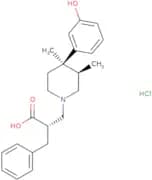
CAS:<p>Please enquire for more information about (3R,4R)-1-((2S)-2-Benzyl-2-carboxyethyl)-4-(3-hydroxyphenyl)-3,4-dimethylpiperidine hydrochloride including the price, delivery time and more detailed product information at the technical inquiry form on this page</p>Formula:C23H29NO3•HClPurity:Min. 95%Molecular weight:403.94 g/molBenzamide adenine dinucleotide triethylamine
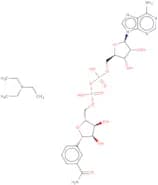
CAS:<p>Please enquire for more information about Benzamide adenine dinucleotide triethylamine including the price, delivery time and more detailed product information at the technical inquiry form on this page</p>Formula:C22H28N6O14P2•C6H15NPurity:Min. 95%Molecular weight:763.63 g/molBromoacetaldehyde diethyl acetal
CAS:<p>Bromoacetaldehyde diethyl acetal (BDAE) is an organic compound that has been shown to have receptor binding activity. BDAE binds to the ethylene diamine receptor and competes with ethylene diamine for binding sites. It also forms acid from sodium carbonate and hydrochloric acid, which may be due to its ability to act as a solid catalyst. BDAE has shown activity in hiv infection, with a potency comparable to that of dimethyl fumarate. The synthesis of BDAE can be accomplished by reacting monosodium malonate ester hydrochloride with adenine nucleotide and malonic acid. The reaction solution is heated until the desired product crystallizes out of solution.</p>Formula:C6H13BrO2Purity:Min. 95%Molecular weight:197.07 g/mol8-Bromoisoquinoline
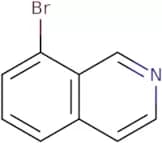
CAS:<p>8-Bromoisoquinoline is a bifunctional alkylating agent that is used to synthesize esters and amides. It is commonly used for the synthesis of amino acids, peptides, and other biologically active molecules. 8-Bromoisoquinoline has been shown to have a synergistic effect with hydroxyalkyl carbamates, which may be due to its ability to form an ionic bond with the carboxylic acid in these compounds. This chemical can also react with nitro groups and serve as a chlorinating agent, as well as react with anions such as phosphate and acetate. 8-Bromoisoquinoline can be synthesized by reacting ethyl bromoacetate with tetrahydroisoquinolinium chloride in hydrochloric acid or isopropyl alcohol.</p>Formula:C9H6BrNPurity:Min. 95%Color and Shape:PowderMolecular weight:208.05 g/mol2-Bromo-1,3,5-triisopropylbenzene
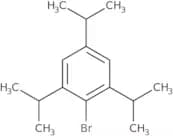
CAS:<p>2-Bromo-1,3,5-triisopropylbenzene is an ethylene acetal that is prepared by the catalyzed reaction of aryl chlorides and anhydrous zinc bromide in the presence of triethylamine. The selectivities of this method are high because it can produce mainly a single isomer. The stereoselectivity is also high because the reaction proceeds with the formation of only one stereoisomer. The mechanism for this reaction involves a nucleophilic substitution of the halogenated aryl chloride with the trialkylborane, which generates two different products. This product has been used in the synthesis of biphenyls and nitro compounds.</p>Formula:C15H23BrPurity:Min. 95%Color and Shape:Colorless Clear LiquidMolecular weight:283.25 g/mol4-tert-Butylbenzaldehyde
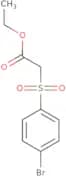
CAS:<p>4-tert-Butylbenzaldehyde is an organic compound with the molecular formula CH3COCH2C6H5. It is a viscous liquid that is insoluble in water and has a boiling point of 146 °C. 4-tert-Butylbenzaldehyde reacts with cationic surfactants to form polymeric micelles, which are spherical structures composed of many small spherical subunits. These polymeric micelles are used as model systems for studying the properties of surfactant aggregates in solution. The reaction mechanism for this polymerization process involves the oxidation of 4-tert-butylbenzaldehyde by hydrogen peroxide and the subsequent condensation of 4-tert-butylbenzoic acid with malonic acid or other cinnamic acid derivatives to form the corresponding esters. The oxidized product, 4-tert-butylbenzoic acid, can be regenerated by boiling a mixture containing it</p>Formula:C11H14OPurity:Min. 96.5%Color and Shape:Colorless Clear LiquidMolecular weight:162.23 g/molEthyl 2-(4-bromobenzenesulfonyl)acetate
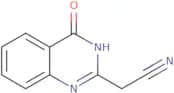
CAS:<p>Versatile small molecule scaffold</p>Formula:C10H11BrO4SPurity:Min. 95%Molecular weight:307.16 g/mol2-(4-Oxo-3,4-dihydroquinazolin-2-yl)acetonitrile
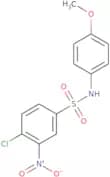
CAS:<p>Versatile small molecule scaffold</p>Formula:C10H7N3OPurity:Min. 95%Molecular weight:185.18 g/mol4-Chloro-N-(4-methoxyphenyl)-3-nitrobenzene-1-sulfonamide
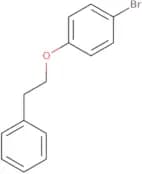
CAS:<p>Versatile small molecule scaffold</p>Formula:C13H11ClN2O5SPurity:Min. 95%Molecular weight:342.76 g/mol1-Bromo-4-(2-phenylethoxy)benzene
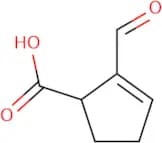
CAS:<p>Versatile small molecule scaffold</p>Formula:C14H13BrOPurity:Min. 95%Molecular weight:277.16 g/mol2-Formylcyclopent-2-ene-1-carboxylic acid
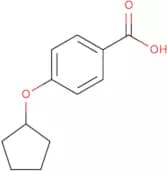
CAS:<p>2-Formylcyclopent-2-ene-1-carboxylic acid is a synthetic, ring-opening reaction that can be used to produce cyclopentenones. It has been optimized for use with a temperature of 100 degrees Celsius and in the presence of solvents such as dichloromethane or benzene. The ring opening and hydrolysis are efficient, with an optimized reaction temperature of 100 C.</p>Formula:C7H8O3Purity:Min. 95%Molecular weight:140.14 g/mol4-(Cyclopentyloxy)-benzoic acid
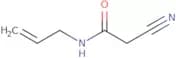
CAS:<p>Versatile small molecule scaffold</p>Formula:C12H14O3Purity:Min. 95%Molecular weight:206.24 g/mol2-Cyano-N-(prop-2-en-1-yl)acetamide
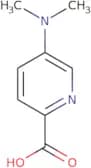
CAS:<p>Versatile small molecule scaffold</p>Formula:C6H8N2OPurity:Min. 95%Molecular weight:124.14 g/mol5-(Dimethylamino)pyridine-2-carboxylic acid
CAS:<p>Versatile small molecule scaffold</p>Formula:C8H10N2O2Purity:Min. 95%Molecular weight:166.18 g/mol


![N-[(2-Bromo-4,5-dimethoxyphenyl)methyl]-N-(2-chloroethyl)morpholine bromide](/_next/image/?url=https%3A%2Fstatic.cymitquimica.com%2Fproducts%2F3D%2Fthumb-webp%2FFB183793.webp&w=3840&q=75)