Building Blocks
Subcategories of "Building Blocks"
- Boronic Acids & Boronic Acid Derivatives(5,780 products)
- Chiral Building Blocks(1,240 products)
- Hydrocarbon Building Blocks(6,100 products)
- Organic Building Blocks(61,009 products)
Found 205248 products of "Building Blocks"
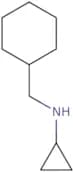
N-(Cyclohexylmethyl)cyclopropanamine
CAS:Versatile small molecule scaffold
Formula:C10H19NPurity:Min. 95%Molecular weight:153.26 g/mol1-Bromo-2-(2-bromoethanesulfonyl)ethane
CAS:Versatile small molecule scaffold
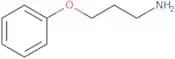
Formula:C4H8Br2O2SPurity:Min. 95%Molecular weight:279.98 g/mol(3-Phenoxy)propylamine
CAS:Phenoxypropylamine is an alkylthio-substituted phenethylamine with a hydroxy group that is used in the synthesis of nitro, quinoline derivatives. It binds to the 5-hydroxytryptamine 1A receptor and inhibits serotonin reuptake. Phenoxypropylamine also has pharmacokinetic properties and is a transport inhibitor. This drug can be hydrolyzed by hydrochloric acid to form phenol and propranolol. In addition, it has been shown that phenoxypropylamine has a magnetic resonance spectroscopy binding site on human brain tissue. Furthermore, this drug has been shown to have an anti-inflammatory effect by inhibiting malic acid production in rats.Formula:C9H13NOPurity:Min. 95%Molecular weight:151.21 g/mol5-Amino-2-(4-aminophenyl)benzimidazole
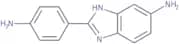
CAS:5-Amino-2-(4-aminophenyl)benzimidazole is a chemical compound that is used in the synthesis of other compounds. It can be prepared by the reaction of 4-aminophenol with 2,5-dichlorobenzene imidazole followed by hydrogenation and purification. 5-Amino-2-(4-aminophenyl)benzimidazole has a high resistance to both UV and thermal degradation. It has been shown to have low solubility in water, but high solubility in organic solvents such as chloroform, ethyl acetate, and cyclohexane. This compound shows an orthorhombic crystal structure and reacts with proton (H+) or chloride ion. 5-Amino-2-(4-aminophenyl)benzimidazole is also used as a reagent for gel permeation chromatography in order toFormula:C13H12N4Purity:Min. 95%Molecular weight:224.27 g/mol1-Methoxy-1-phenylpropan-2-one
CAS:1-Methoxy-1-phenylpropan-2-one is a carbonyl compound that has been shown to have anti-aging properties. It is used in the synthesis of other organic compounds, such as hyaluronic acid and benzyl benzoate, with the involvement of amination reaction or organometallic reactions. This chemical can be found in human urine as a metabolite of benzyl alcohol. The symptoms and signs of nervous system diseases may be due to the effects of 1-methoxy-1-phenylpropan-2-one on the human brain. The asymmetric synthesis of this compound is a new process that has been developed by chemists.Formula:C10H12O2Purity:Min. 95%Molecular weight:164.2 g/mol1-(Propan-2-yl)-1H-1,2,3,4-tetrazole-5-thiol
CAS:Versatile small molecule scaffoldFormula:C4H8N4SPurity:Min. 95%Molecular weight:144.2 g/molMethyl 2-[(2S)-2-{[(tert-butoxy)carbonyl]amino}-3-phenylpropanamido]acetate
CAS:Methyl 2-[(2S)-2-{[(tert-butoxy)carbonyl]amino}-3-phenylpropanamido]acetate is an antimalarial drug that has been shown to be effective against the parasite Plasmodium falciparum. It is a heptapeptide with a cyclic structure. This compound has been isolated from the fungus Penicillium griseofulvum and exhibits antimalarial activity in vitro. The chemical structure of Methyl 2-[(2S)-2-{[(tert-butoxy)carbonyl]amino}-3-phenylpropanamido]acetate was determined by spectrometry. Methyl 2-[(2S)-2-{[(tert-butoxy)carbonyl]amino}-3-phenylpropanamido]acetate can be synthesized by coupling of theFormula:C17H24N2O5Purity:Min. 95%Molecular weight:336.4 g/molMethyl 2-[(2S)-2-amino-3-phenylpropanamido]acetate hydrochloride
CAS:Versatile small molecule scaffoldFormula:C12H17ClN2O3Purity:Min. 95%Molecular weight:272.73 g/mol1-Nitroso-2,3-dihydro-1H-indole
CAS:1-Nitroso-2,3-dihydro-1H-indole is a heterocyclic compound that contains a nitrogen atom with a primary amino group. It can be used as an oxidant in organic chemistry and has been shown to yield good yields. This compound is also reactive towards other compounds containing carbon-hydrogen bonds and can be used as a nitrosoamine to form amides.Formula:C8H8N2OPurity:Min. 95%Molecular weight:148.16 g/molN-Acetyl-L-cysteine methyl ester
CAS:N-Acetyl-L-cysteine methyl ester (NACME) is a reactive compound that is the methyl ester of cysteine. It belongs to the group of amides and is an important component of human serum. NACME has been shown to be effective in inhibiting the growth of bacteria such as Staphylococcus aureus, Salmonella enterica, Escherichia coli, and Pseudomonas aeruginosa. The mechanism by which NACME inhibits bacterial growth is not yet known, but it may involve oxidative reactions or irreversible inhibition of enzymes.
Formula:C6H11NO3SPurity:Min. 95%Molecular weight:177.22 g/mol1-(4,5-Dimethoxy-2-methylphenyl)propan-2-one
CAS:Versatile small molecule scaffoldFormula:C12H16O3Purity:Min. 95%Molecular weight:208.25 g/mol2-Chloro-N-(5-phenyl-1,3,4-oxadiazol-2-yl)acetamide
CAS:Versatile small molecule scaffoldFormula:C10H8ClN3O2Purity:Min. 95%Molecular weight:237.64 g/molOR-486
CAS:OR-486 is a basic dye with pharmacological properties. It has been shown to have low-energy fluorescence, and it can be used for the detection of dopamine. OR-486 can also inhibit catechol-o-methyltransferase (COMT), an enzyme that catalyzes the methylation of catecholamines, including dopamine and epinephrine. In addition, OR-486 inhibits xanthine oxidase (XO) in vitro and in vivo. It has been shown to be effective against diabetic neuropathy in Sprague-Dawley rats as well as deficient mice. OR-486 has also been shown to increase the uptake of glucose by cells in a plate test.Formula:C6H4N2O6Purity:Min. 95%Molecular weight:200.11 g/mol3-Bromo-N-(4-methoxyphenyl)propanamide
CAS:Versatile small molecule scaffoldFormula:C10H12BrNO2Purity:Min. 95%Molecular weight:258.11 g/mol1-(4-Bromophenyl)azetidin-2-one
CAS:1-(4-Bromophenyl)azetidin-2-one is a β-lactam antibiotic that is used in the treatment of bacterial infections. It has a torsion angle of 180°, which is the same as other β-lactams, and it crystallizes in the monoclinic system with crystals that are planar. The molecular structure of 1-(4-bromophenyl)azetidin-2-one was determined using X-ray diffraction techniques.
Formula:C9H8BrNOPurity:Min. 95%Molecular weight:226.07 g/mol1-(4-Aminophenyl)-2-[(propan-2-yl)amino]ethan-1-ol
CAS:Versatile small molecule scaffoldFormula:C11H18N2OPurity:Min. 95%Molecular weight:194.27 g/mol[4-(Trimethylsilyl)phenyl]methanamine
CAS:4-(Trimethylsilyl)phenyl]methanamine is a pharmacological molecule that has been synthesized to have fluorine atoms. 4-(Trimethylsilyl)phenyl]methanamine is used in bioconjugate chemistry, which is the process of attaching two molecules together. In this case, the molecule attaches itself to a nucleotide. The fluorine atom helps stabilize the bond between the nucleotide and the molecule by increasing its electron affinity. This radiolabeled molecule can be used as a radioactive isotope in radiotracer studies to study how cells metabolize drugs and other agents.Formula:C10H17NSiPurity:Min. 95%Molecular weight:179.33 g/mol(2S)-3-Hydroxy-2-(4-methylbenzenesulfonamido)propanoic acid
CAS:The chemical formula for 2-amino-3-(methylsulfonamido)propanoic acid is C6H12N2O4S. It has a molecular weight of 218.25, and the molecular formula is CH3N(SO2CH3)COOH. This product is a white crystalline powder that can be dissolved in water or ethanol.Formula:C10H13NO5SPurity:Min. 95%Molecular weight:259.28 g/mol1-Propyl-1H-1,3-benzodiazole
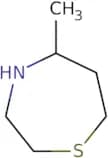
CAS:1-Propyl-1H-1,3-benzodiazole is a nitro derivative of the benzimidazole compounds. It is used in the preparation of azo dyes and as a dye intermediate. 1-Propyl-1H-1,3-benzodiazole is metabolized through oxidative or reductive pathways to form reactive intermediates that bind to DNA and protein substrates. This compound also inhibits fatty acid synthesis by forming ternary complexes with enzyme acyl carrier protein (ACP) and coenzyme A (CoA). The metabolism of 1-propyl-1H-1,3-benzodiazole leads to the formation of reactive metabolites that can cause congestive heart failure in mammals.Formula:C10H12N2Purity:Min. 95%Molecular weight:160.22 g/mol5-Methyl-1,4-thiazepane
CAS:Versatile small molecule scaffoldFormula:C6H13NSPurity:Min. 95%Molecular weight:131.24 g/mol




![Methyl 2-[(2S)-2-{[(tert-butoxy)carbonyl]amino}-3-phenylpropanamido]acetate](/_next/image/?url=https%3A%2Fstatic.cymitquimica.com%2Fproducts%2F3D%2Fthumb-webp%2FHAA62557.webp&w=3840&q=75)
![Methyl 2-[(2S)-2-amino-3-phenylpropanamido]acetate hydrochloride](/_next/image/?url=https%3A%2Fstatic.cymitquimica.com%2Fproducts%2F3D%2Fthumb-webp%2FHAA62559.webp&w=3840&q=75)


![1-(4-Aminophenyl)-2-[(propan-2-yl)amino]ethan-1-ol](/_next/image/?url=https%3A%2Fstatic.cymitquimica.com%2Fproducts%2F3D%2Fthumb-webp%2FHAA66224.webp&w=3840&q=75)
![[4-(Trimethylsilyl)phenyl]methanamine](/_next/image/?url=https%3A%2Fstatic.cymitquimica.com%2Fproducts%2F3D%2Fthumb-webp%2FHAA66283.webp&w=3840&q=75)