Building Blocks
This section contains fundamental products for the synthesis of organic and biological compounds. Building blocks are the essential starting materials used to construct complex molecules through various chemical reactions. They play a critical role in drug discovery, material science, and chemical research. At CymitQuimica, we offer a diverse range of high-quality building blocks to support your innovative research and industrial projects, ensuring you have the essential components for successful synthesis.
Subcategories of "Building Blocks"
- Boronic Acids & Boronic Acid Derivatives(5,756 products)
- Chiral Building Blocks(1,242 products)
- Hydrocarbon Building Blocks(6,095 products)
- Organic Building Blocks(61,037 products)
Found 196200 products of "Building Blocks"
Sort by
Purity (%)
0
100
|
0
|
50
|
90
|
95
|
100
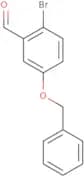
5-Benzyloxy-2-bromobenzaldehyde
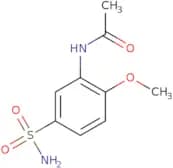
CAS:<p>5-Benzyloxy-2-bromobenzaldehyde is a polyphenolic compound. It has been shown to have antioxidant activity and inhibit the production of proinflammatory cytokines such as TNF-α, IL-1β, and IL-6. This compound also inhibits the production of inflammatory mediators such as COX-2, lipoxygenase, nitric oxide synthase, and inducible nitric oxide synthase. 5-Benzyloxy-2-bromobenzaldehyde has also been shown to be effective in reducing inflammation in animal studies.</p>Formula:C14H11BrO2Purity:Min. 95%Molecular weight:291.14 g/molN-(2-Methoxy-5-sulfamoylphenyl)acetamide
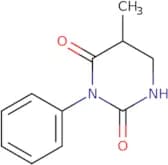
CAS:<p>Versatile small molecule scaffold</p>Formula:C9H12N2O4SPurity:Min. 95%Molecular weight:244.27 g/mol5-Methyl-3-phenyl-1,3-diazinane-2,4-dione
CAS:<p>Versatile small molecule scaffold</p>Formula:C11H12N2O2Purity:Min. 95%Molecular weight:204.22 g/mol6-Methyl-3-phenyl-1,3-diazinane-2,4-dione
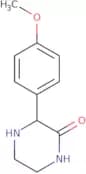
CAS:<p>Versatile small molecule scaffold</p>Formula:C11H12N2O2Purity:Min. 95%Molecular weight:204.22 g/mol3-(4-Methoxyphenyl)piperazin-2-one
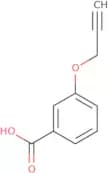
CAS:<p>Versatile small molecule scaffold</p>Formula:C11H14N2O2Purity:Min. 95%Molecular weight:206.24 g/mol3-(Prop-2-yn-1-yloxy)benzoic acid
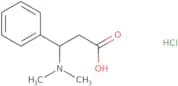
CAS:<p>Versatile small molecule scaffold</p>Formula:C10H8O3Purity:Min. 95%Molecular weight:176.17 g/mol3-(Dimethylamino)-3-phenylpropanoic acid hydrochloride
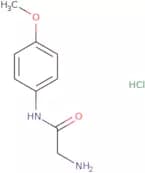
CAS:<p>Versatile small molecule scaffold</p>Formula:C11H16ClNO2Purity:Min. 95%Molecular weight:229.7 g/mol2-Amino-N-(4-methoxyphenyl)acetamide hydrochloride
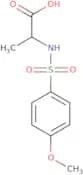
CAS:<p>Versatile small molecule scaffold</p>Formula:C9H13ClN2O2Purity:Min. 95%Molecular weight:216.66 g/mol2-(4-Methoxybenzenesulfonamido)propanoic acid
CAS:<p>2-(4-Methoxybenzenesulfonamido)propanoic acid is a pyrimidine derivative that has been shown to have pathological effects on the cornea and retina. It has been shown that 2-(4-methoxybenzenesulfonamido)propanoic acid inhibits angiogenesis, which may be due to its effect on vascular endothelial growth factor (VEGF). The crystal form of this compound is orthorhombic with space group P2(1)/c. The x-ray powder diffraction pattern of this compound shows peaks at 8.8, 10.6, 12.0, 13.3, 14.8, 18.1 degrees 2θ and the X-ray powder diffraction spectrum shows peaks at 7.5, 11.2 degrees 2θ in the range of 3 - 50 keV with an intensity ratio of 1:1:1:1:1:1:1 respectively</p>Formula:C10H13NO5SPurity:Min. 95%Molecular weight:259.28 g/mol3-Benzyl-4-oxo-3H,4H-imidazo[4,3-d][1,2,3,5]tetrazine-8-carboxamide
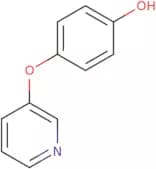
CAS:<p>Versatile small molecule scaffold</p>Formula:C12H10N6O2Purity:Min. 95%Molecular weight:270.25 g/mol4-(Pyridin-3-yloxy)phenol
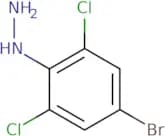
CAS:<p>Versatile small molecule scaffold</p>Formula:C11H9NO2Purity:Min. 95%Molecular weight:187.19 g/mol(4-Bromo-2,6-dichlorophenyl)hydrazine
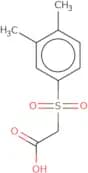
CAS:<p>Versatile small molecule scaffold</p>Formula:C6H5BrCl2N2Purity:Min. 95%Molecular weight:255.92 g/mol2-(3,4-Dimethylbenzenesulfonyl)acetic acid
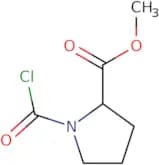
CAS:<p>Versatile small molecule scaffold</p>Formula:C10H12O4SPurity:Min. 95%Molecular weight:228.3 g/mol(S)-Methyl 1-(chlorocarbonyl)pyrrolidine-2-carboxylate
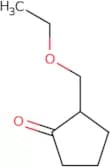
CAS:<p>Versatile small molecule scaffold</p>Formula:C7H10ClNO3Purity:Min. 95%Molecular weight:191.61 g/mol2-(Ethoxymethyl)cyclopentan-1-one
CAS:<p>Versatile small molecule scaffold</p>Formula:C8H14O2Purity:Min. 95%Molecular weight:142.2 g/mol2-[(3-Methoxyphenyl)amino]acetic acid
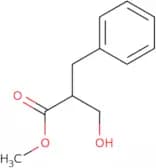
CAS:<p>2-[(3-Methoxyphenyl)amino]acetic acid is a potent inhibitor of 3clpro. 2-[(3-Methoxyphenyl)amino]acetic acid has been shown to inhibit the activity of the enzymes with nanomolar potency in the micromolar range. This compound has been shown to have a high affinity for 3clpro and potent inhibitory activity against other proteases such as papain, subtilisin, and trypsin. The inhibition mechanism of 2-[(3-methoxyphenyl)amino]acetic acid is not fully understood but it has been hypothesized that this compound can bind to the active site of 3clpro via its moiety group. Modifications on the molecule have been shown to increase its inhibitory potency and affinity for 3clpro. Optimization studies have also been carried out by titration calorimetry experiments, which show that 2-[(3-</p>Formula:C9H11NO3Purity:Min. 95%Molecular weight:181.19 g/molMethyl 2-benzyl-3-hydroxypropanoate
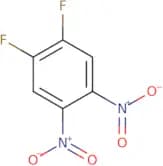
CAS:<p>Versatile small molecule scaffold</p>Formula:C11H14O3Purity:Min. 95%Molecular weight:194.23 g/mol1,2-difluoro-4,5-dinitrobenzene
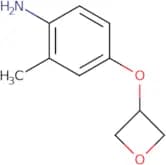
CAS:<p>1,2-Difluoro-4,5-dinitrobenzene is a nitro compound that has been used extensively in supramolecular chemistry. The cavity of the molecule is able to bind with fatty esters and other molecules with lipophilic properties. This property can be exploited for the encapsulation of biomolecules and other organic compounds. 1,2-Difluoro-4,5-dinitrobenzene has also been found to be reactive towards carboxylic acid groups at room temperature and higher temperatures. The nature of this molecule is reactive as it reacts with carbodiimides to form cyclic urea derivatives.</p>Formula:C6H2F2N2O4Purity:Min. 95%Molecular weight:204.09 g/mol2-Methyl-4-(oxetan-3-yloxy)aniline
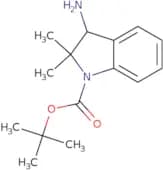
CAS:<p>Versatile small molecule scaffold</p>Formula:C10H13NO2Purity:Min. 95%Molecular weight:179.22 g/moltert-Butyl 3-amino-2,2-dimethyl-2,3-dihydro-1H-indole-1-carboxylate
CAS:<p>Versatile small molecule scaffold</p>Formula:C15H22N2O2Purity:Min. 95%Molecular weight:262.35 g/mol


![3-Benzyl-4-oxo-3H,4H-imidazo[4,3-d][1,2,3,5]tetrazine-8-carboxamide](/_next/image/?url=https%3A%2Fstatic.cymitquimica.com%2Fproducts%2F3D%2Fthumb-webp%2FKDA62302.webp&w=3840&q=75)
![2-[(3-Methoxyphenyl)amino]acetic acid](/_next/image/?url=https%3A%2Fstatic.cymitquimica.com%2Fproducts%2F3D%2Fthumb-webp%2FKDA67652.webp&w=3840&q=75)