Building Blocks
This section contains fundamental products for the synthesis of organic and biological compounds. Building blocks are the essential starting materials used to construct complex molecules through various chemical reactions. They play a critical role in drug discovery, material science, and chemical research. At CymitQuimica, we offer a diverse range of high-quality building blocks to support your innovative research and industrial projects, ensuring you have the essential components for successful synthesis.
Subcategories of "Building Blocks"
- Boronic Acids & Boronic Acid Derivatives(5,774 products)
- Chiral Building Blocks(1,237 products)
- Hydrocarbon Building Blocks(6,098 products)
- Organic Building Blocks(60,970 products)
Found 205134 products of "Building Blocks"
Sort by
Purity (%)
0
100
|
0
|
50
|
90
|
95
|
100
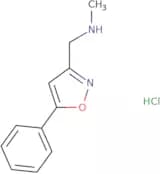
N-Methyl-1-(5-phenylisoxazol-3-yl)methanamine hydrochloride
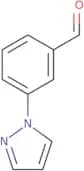
CAS:Versatile small molecule scaffoldFormula:C11H13ClN2OPurity:Min. 95%Molecular weight:224.69 g/mol3-(1H-Pyrazol-1-yl)benzaldehyde
CAS:3-(1H-Pyrazol-1-yl)benzaldehyde is an oxime that is used as a ligand in coordination chemistry. It has been shown to catalyze the coupling of piperidine and aryl halides, yielding carboxylic acid derivatives. 3-(1H-Pyrazol-1-yl)benzaldehyde also efficiently catalyzes the synthesis of pharmaceuticals containing pyrrolidines, such as amino acids or nucleophiles. 3-(1H-Pyrazol-1-yl)benzaldehyde is a good ligand for metal ions due to its ability to form strong bonds with them. In addition, it can be used as an additive in the synthesis of amines and imines due to its ability to chelate metals.
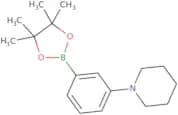
Formula:C10H8N2OPurity:Min. 95%Molecular weight:172.19 g/mol3-(Piperidin-1-yl)benzeneboronic acid, pinacol ester
CAS:Versatile small molecule scaffold
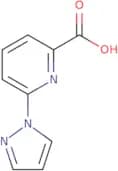
Formula:C17H26BNO2Purity:Min. 95%Molecular weight:287.2 g/mol6-(1H-Pyrazol-1-yl)pyridine-2-carboxylic acid
CAS:Versatile small molecule scaffoldFormula:C9H7N3O2Purity:Min. 95%Molecular weight:189.17 g/molML-031
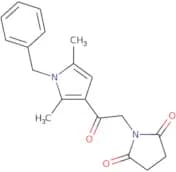
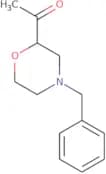
CAS:ML-031 is a molecule that acts as an anti-apoptotic agent by binding to and activating the apolipoprotein (Apo) E receptor. ApoE receptors are responsible for the clearance of lipid molecules from cells, which can prevent cell death. ML-031 also decreases endothelial dysfunction and apoptosis in cultured endothelial cells. The mechanism involves a decrease in lipoproteins, which leads to less oxidative stress in the cells, as well as an increase in bioactive lipids (e.g., ketones). This molecule activates a growth factor known as endothelial cell growth factor, which protects against apoptosis in endothelial cells. The molecule has been shown to have therapeutic effects on the brain and heart when administered orally or intravenously. ML-031 is structurally similar to EPA, an omega 3 fatty acid found typically in fish oils. It is believed that this similarity may be one of the reasons why ML-031 has such potent anti-apoptFormula:C19H20N2O3Purity:Min. 95%Molecular weight:324.4 g/mol1-(4-benzylmorpholin-2-yl)ethan-1-one
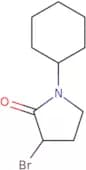
CAS:Versatile small molecule scaffoldFormula:C13H17NO2Purity:Min. 95%Molecular weight:219.28 g/mol3-Bromo-1-cyclohexylpyrrolidin-2-one
CAS:Versatile small molecule scaffold
Formula:C10H16BrNOPurity:Min. 95%Molecular weight:246.14 g/mol5-Methyl-3,6-diphenyl-2-sulfanyl-3H,4H-thieno[2,3-d]pyrimidin-4-one
CAS:Versatile small molecule scaffoldFormula:C19H14N2OS2Purity:Min. 95%Molecular weight:350.5 g/mol2-Chloro-1-{2,5-dimethyl-1-[2-(thiophen-2-yl)ethyl]-1H-pyrrol-3-yl}ethan-1-one
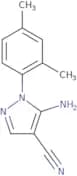
CAS:Versatile small molecule scaffoldFormula:C14H16ClNOSPurity:Min. 95%Molecular weight:281.8 g/mol5-Amino-1-(2,4-dimethylphenyl)-1H-pyrazole-4-carbonitrile
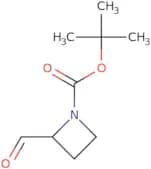
CAS:Versatile small molecule scaffoldFormula:C12H12N4Purity:Min. 95%Molecular weight:212.25 g/mol1-Boc-2-Formylazetidine
CAS:Versatile small molecule scaffoldFormula:C9H15NO3Purity:Min. 95%Molecular weight:185.22 g/mol4-[(Butan-2-yl)amino]-3-nitrobenzamide
CAS:Versatile small molecule scaffold
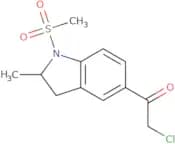
Formula:C11H15N3O3Purity:Min. 95%Molecular weight:237.25 g/mol2-Chloro-1-(1-methanesulfonyl-2-methyl-2,3-dihydro-1H-indol-5-yl)ethan-1-one
CAS:Versatile small molecule scaffoldFormula:C12H14ClNO3SPurity:Min. 95%Molecular weight:287.76 g/molN-{[5-(2-Chloroacetyl)thiophen-2-yl]methyl}-2,2-dimethylpropanamide
CAS:Versatile small molecule scaffoldFormula:C12H16ClNO2SPurity:Min. 95%Molecular weight:273.78 g/mol5-Phenyl-2-(piperidin-1-yl)-[1,3]thiazolo[4,5-b]pyridine-7-carboxylic acid
CAS:Versatile small molecule scaffoldFormula:C18H17N3O2SPurity:Min. 95%Molecular weight:339.4 g/mol4-(2-Chlorophenyl)-N-[(4-fluorophenyl)methyl]-1,3-thiazol-2-amine
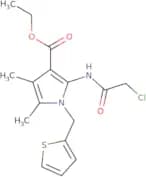
CAS:Controlled Product4-(2-Chlorophenyl)-N-[(4-fluorophenyl)methyl]-1,3-thiazol-2-amine is a research tool used in the study of protein interactions. It is an inhibitor that binds to ion channels, and alters their function. 4-(2-Chlorophenyl)-N-[(4-fluorophenyl)methyl]-1,3-thiazol-2-amine binds to ligands on the receptor and blocks the binding of these ligands to the receptor. It has been shown to activate certain receptors by binding with high affinity. This compound is also used as a fluorescent substrate for peptide mapping studies. 4-(2-Chlorophenyl)-N-[(4-fluorophenyl)methyl]-1,3-thiazol-2-amine can be used as a high purity reagent for life science research and cell biology.END>>Formula:C16H12ClFN2SPurity:Min. 95%Molecular weight:318.8 g/molEthyl 2-(2-chloroacetamido)-4,5-dimethyl-1-(thiophen-2-ylmethyl)-1H-pyrrole-3-carboxylate
CAS:Versatile small molecule scaffoldFormula:C16H19ClN2O3SPurity:Min. 95%Molecular weight:354.9 g/mol2-Sulfanyl-1-[2-(trifluoromethyl)phenyl]-4,5-dihydro-1H-imidazol-5-one
CAS:Versatile small molecule scaffoldFormula:C10H7F3N2OSPurity:Min. 95%Molecular weight:260.24 g/mol2-Chloro-N-{1,7-dimethyl-4-oxo-3H,4H-furo[3,4-d]pyridazin-5-yl}acetamide
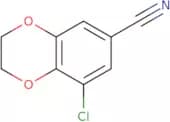
CAS:Versatile small molecule scaffoldFormula:C10H10ClN3O3Purity:Min. 95%Molecular weight:255.66 g/mol8-Chloro-2,3-dihydro-1,4-benzodioxine-6-carbonitrile
CAS:Versatile small molecule scaffold
Formula:C9H6ClNO2Purity:Min. 95%Molecular weight:195.6 g/mol

![5-Methyl-3,6-diphenyl-2-sulfanyl-3H,4H-thieno[2,3-d]pyrimidin-4-one](/_next/image/?url=https%3A%2Fstatic.cymitquimica.com%2Fproducts%2F3D%2Fthumb-webp%2FCJB29688.webp&w=3840&q=75)
![2-Chloro-1-{2,5-dimethyl-1-[2-(thiophen-2-yl)ethyl]-1H-pyrrol-3-yl}ethan-1-one](/_next/image/?url=https%3A%2Fstatic.cymitquimica.com%2Fproducts%2F3D%2Fthumb-webp%2FCJB29689.webp&w=3840&q=75)
![4-[(Butan-2-yl)amino]-3-nitrobenzamide](/_next/image/?url=https%3A%2Fstatic.cymitquimica.com%2Fproducts%2F3D%2Fthumb-webp%2FCJB38566.webp&w=3840&q=75)
![N-{[5-(2-Chloroacetyl)thiophen-2-yl]methyl}-2,2-dimethylpropanamide](/_next/image/?url=https%3A%2Fstatic.cymitquimica.com%2Fproducts%2F3D%2Fthumb-webp%2FCJB38874.webp&w=3840&q=75)
![5-Phenyl-2-(piperidin-1-yl)-[1,3]thiazolo[4,5-b]pyridine-7-carboxylic acid](/_next/image/?url=https%3A%2Fstatic.cymitquimica.com%2Fproducts%2F3D%2Fthumb-webp%2FCJB38880.webp&w=3840&q=75)
![4-(2-Chlorophenyl)-N-[(4-fluorophenyl)methyl]-1,3-thiazol-2-amine](/_next/image/?url=https%3A%2Fstatic.cymitquimica.com%2Fproducts%2F3D%2Fthumb-webp%2FCJB38896.webp&w=3840&q=75)
![2-Sulfanyl-1-[2-(trifluoromethyl)phenyl]-4,5-dihydro-1H-imidazol-5-one](/_next/image/?url=https%3A%2Fstatic.cymitquimica.com%2Fproducts%2F3D%2Fthumb-webp%2FCJB38902.webp&w=3840&q=75)
![2-Chloro-N-{1,7-dimethyl-4-oxo-3H,4H-furo[3,4-d]pyridazin-5-yl}acetamide](/_next/image/?url=https%3A%2Fstatic.cymitquimica.com%2Fproducts%2F3D%2Fthumb-webp%2FCJB38906.webp&w=3840&q=75)