Building Blocks
This section contains fundamental products for the synthesis of organic and biological compounds. Building blocks are the essential starting materials used to construct complex molecules through various chemical reactions. They play a critical role in drug discovery, material science, and chemical research. At CymitQuimica, we offer a diverse range of high-quality building blocks to support your innovative research and industrial projects, ensuring you have the essential components for successful synthesis.
Subcategories of "Building Blocks"
- Boronic Acids & Boronic Acid Derivatives(5,756 products)
- Chiral Building Blocks(1,242 products)
- Hydrocarbon Building Blocks(6,095 products)
- Organic Building Blocks(61,038 products)
Found 196817 products of "Building Blocks"
Sort by
Purity (%)
0
100
|
0
|
50
|
90
|
95
|
100
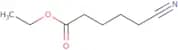
Ethyl 5-cyanopentanoate
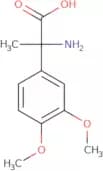
CAS:<p>Ethyl 5-cyanopentanoate is a carbanionic compound that is used as a catalyst in the synthesis of amides, pyridines, and dieckmann condensation products. It can also be used to catalyze the conversion of five-membered heterocycles to six-membered ones. This product yields high yields in reactions involving pressure or temperatures up to 100°C.</p>Formula:C8H13NO2Purity:Min. 95%Molecular weight:155.19 g/mol2-Amino-2-(3,4-dimethoxyphenyl)propanoic acid
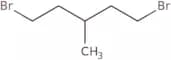
CAS:<p>Versatile small molecule scaffold</p>Formula:C11H15NO4Purity:Min. 95%Molecular weight:225.24 g/mol1,5-dibromo-3-methylpentane
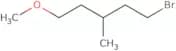
CAS:<p>1,5-Dibromo-3-methylpentane is an organic compound that contains a pyridine ring. It is used in biocontrol to control insects and has been found to be useful against virus, fungi, and protozoa. 1,5-Dibromo-3-methylpentane can act as an antibiotic and antifungal agent by inhibiting the synthesis of fatty acids. The chemical structure of 1,5-dibromo-3-methylpentane is very similar to that of natural pheromones in insects. This similarity allows the chemical to be used for insect biocontrol because it disrupts the reproductive cycle of the insect population.<br>1,5-Dibromo-3-methylpentane also has a conformation that prevents formation of hydrogen bonds with amino groups on other molecules and therefore inhibits biological activity.</p>Formula:C6H12Br2Purity:Min. 95%Molecular weight:243.97 g/mol1-Bromo-5-methoxy-3-methylpentane
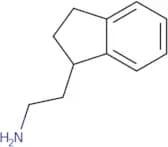
CAS:<p>Versatile small molecule scaffold</p>Formula:C7H15BrOPurity:Min. 95%Molecular weight:195.1 g/mol2-(2,3-Dihydro-1H-inden-1-yl)ethan-1-amine
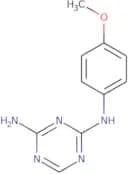
CAS:<p>Versatile small molecule scaffold</p>Formula:C11H15NPurity:Min. 95%Molecular weight:161.24 g/mol2-N-(4-Methoxyphenyl)-1,3,5-triazine-2,4-diamine
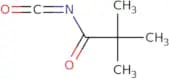
CAS:<p>Versatile small molecule scaffold</p>Formula:C10H11N5OPurity:Min. 95%Molecular weight:217.23 g/mol2,2-Dimethylpropanecarbonyl isocyanate
CAS:<p>2,2-Dimethylpropanecarbonyl isocyanate (DMPC) is a metabolite of 2,2-dimethylpropane-1,3-dicarboxylic acid (DMPDCA) that has been shown to have anti-inflammatory properties. DMPC is an oxalyl and may be useful for the treatment of intestinal diseases. It also inhibits chloride secretion in the intestine. DMPC has been shown to exhibit strong inhibitory effects on cycloaliphatic metabolism and to form oxindole derivatives with sulphates. This compound also inhibits nitric oxide synthesis by c1-6 alkyl radicals, and it has been used as an amide precursor in the synthesis of amino acid esters.</p>Formula:C6H9NO2Purity:Min. 95%Molecular weight:127.14 g/mol4-Methanesulfonylbenzamide
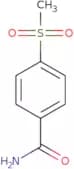
CAS:<p>4-Methanesulfonylbenzamide is an irreversible cross-coupling agent that has been used in the synthesis of a variety of organic molecules. It has shown to have affinity for the adenosine A1 receptor and interaction with nitro compounds. 4-Methanesulfonylbenzamide has also been synthesised with organometallic reagents and showed receptor-mediated nitro group displacement activity, which may be due to its ability to bind irreversibly to the receptor.</p>Formula:C8H9NO3SPurity:Min. 95%Molecular weight:199.23 g/mol3-Oxabicyclo[3.1.1]heptane-2,4-dione
CAS:<p>Versatile small molecule scaffold</p>Formula:C6H6O3Purity:Min. 95%Molecular weight:126.11 g/mol1-(Chloromethyl)-4-cyclohexylbenzene
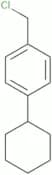
CAS:<p>Versatile small molecule scaffold</p>Formula:C13H17ClPurity:Min. 95%Molecular weight:208.72 g/molMethyl 4-methyl-2-oxocyclopentane-1-carboxylate
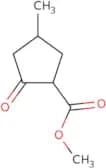
CAS:<p>Versatile small molecule scaffold</p>Formula:C8H12O3Purity:Min. 95%Molecular weight:156.18 g/mol1,2-Bis(2-furanyl)ethane-1,2-diol
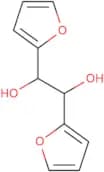
CAS:<p>1,2-Bis(furan-2-yl)ethane-1,2-diol, meso is a chemical compound that is used as a reagent in the preparation of other compounds. It has been shown to be a highly efficient electrocatalyst for the reduction of chloride ions. 1,2-Bis(furan-2-yl)ethane-1,2-diol, meso can also be used in photolytic processes and chlorination reactions. This chemical has been shown to have a number of functional groups including carboxylic acid and ether.</p>Formula:C10H10O4Purity:Min. 95%Color and Shape:PowderMolecular weight:194.18 g/mol2-Methyl-3-oxobutanenitrile
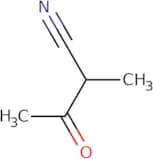
CAS:<p>Versatile small molecule scaffold</p>Formula:C5H7NOPurity:Min. 95%Molecular weight:97.12 g/mol1,5-Dimethyl 2,2-dimethoxypentanedioate
CAS:<p>Versatile small molecule scaffold</p>Formula:C9H16O6Purity:Min. 95%Molecular weight:220.2 g/mol3-Propoxy-phenylamine
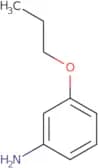
CAS:<p>Versatile small molecule scaffold</p>Formula:C9H13NOPurity:Min. 95%Molecular weight:151.21 g/mol1-Phenyl-1-hexanol
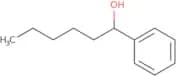
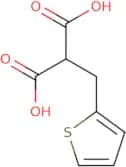
CAS:<p>1-Phenyl-1-hexanol is a detergent composition that contains a hydrocarbon, an alcohol, and a phenol. 1-Phenyl-1-hexanol has been shown to be effective in removing oils and fats from surfaces by dissolving them. It has also been shown to have a conditioning effect on hair and skin. The 1-phenyl-1 hexanol is used as a solvent for hydrochloric acid, carbonic acid, and other substances; as a hydrogenation catalyst; as an intermediate in the synthesis of glycol ethers; as an antioxidant in metal polishes; and as an agent in microcapsules.</p>Formula:C12H18OPurity:Min. 95%Molecular weight:178.27 g/mol2-(Thiophen-2-ylmethyl)propanedioic acid
CAS:<p>Versatile small molecule scaffold</p>Formula:C8H8O4SPurity:Min. 95%Molecular weight:200.21 g/mol3-Ethyl-[1,2]oxathiane 2,2-dioxide
CAS:<p>Versatile small molecule scaffold</p>Formula:C6H12O3SPurity:Min. 95%Molecular weight:164.22 g/mol4-Isopropylphenylacetic acid
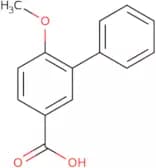
CAS:<p>4-Isopropylphenylacetic acid is a molecule that belongs to the group of phenylpropionic acids. It has a constant inhibitory effect on the aggregation of an enzyme called chymotrypsin and can be used as an anti-inflammatory compound. 4-Isopropylphenylacetic acid interacts with metal ions such as copper, iron, and zinc, which are necessary for the activation of chymotrypsin. The interaction also inhibits the activity of this enzyme by binding to its active site.</p>Formula:C11H14O2Purity:Min. 95%Molecular weight:178.23 g/mol4-Methoxy-3-phenylbenzoic acid
CAS:<p>Versatile small molecule scaffold</p>Formula:C14H12O3Purity:Min. 95%Molecular weight:228.24 g/mol

![3-Oxabicyclo[3.1.1]heptane-2,4-dione](/_next/image/?url=https%3A%2Fstatic.cymitquimica.com%2Fproducts%2F3D%2Fthumb-webp%2FEAA46297.webp&w=3840&q=75)
![3-Ethyl-[1,2]oxathiane 2,2-dioxide](/_next/image/?url=https%3A%2Fstatic.cymitquimica.com%2Fproducts%2F3D%2Fthumb-webp%2FEAA47621.webp&w=3840&q=75)