


Building Blocks
This section contains fundamental products for the synthesis of organic and biological compounds. Building blocks are the essential starting materials used to construct complex molecules through various chemical reactions. They play a critical role in drug discovery, material science, and chemical research. At CymitQuimica, we offer a diverse range of high-quality building blocks to support your innovative research and industrial projects, ensuring you have the essential components for successful synthesis.
Subcategories of "Building Blocks"
- Boronic Acids & Boronic Acid Derivatives(5,774 products)
- Chiral Building Blocks(1,237 products)
- Hydrocarbon Building Blocks(6,098 products)
- Organic Building Blocks(60,970 products)
Found 205134 products of "Building Blocks"
Sort by
Purity (%)
0
100
|
0
|
50
|
90
|
95
|
100
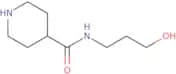
N-(3-Hydroxypropyl)piperidine-4-carboxamide
CAS:Versatile small molecule scaffoldFormula:C9H18N2O2Purity:Min. 95%Molecular weight:186.25 g/molN-[8-(Propan-2-yl)-8-azabicyclo[3.2.1]octan-3-ylidene]hydroxylamine
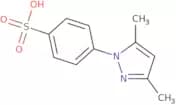
CAS:Versatile small molecule scaffoldFormula:C10H18N2OPurity:Min. 95%Molecular weight:182.3 g/mol4-(3,5-Dimethyl-1H-pyrazol-1-yl)benzene-1-sulfonic acid
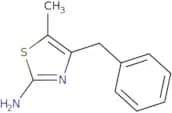
CAS:Versatile small molecule scaffoldFormula:C11H12N2O3SPurity:Min. 95%Molecular weight:252.29 g/mol4-Benzyl-5-methyl-1,3-thiazol-2-amine
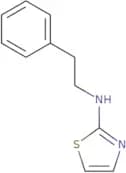
CAS:Versatile small molecule scaffoldFormula:C11H12N2SPurity:Min. 95%Molecular weight:204.29 g/molN-(2-Phenylethyl)-1,3-thiazol-2-amine
CAS:Versatile small molecule scaffold
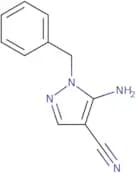
Formula:C11H12N2SPurity:Min. 95%Molecular weight:204.29 g/mol5-Amino-1-benzyl-1H-pyrazole-4-carbonitrile
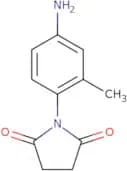
CAS:5-Amino-1-benzyl-1H-pyrazole-4-carbonitrile is a receptor antagonist that belongs to the group of diazonium salts. It has been shown to bind selectively to high levels of purine receptors in the heart, lungs, and kidneys. This drug has also been shown to be an effective inhibitor of smooth muscle cell proliferation, which can reduce the risk of pulmonary hypertension. 5-Amino-1-benzyl-1H-pyrazole-4-carbonitrile has been synthesized and tested for clinical studies. The compound has shown potency against diazotization reactions with biological activity.Formula:C11H10N4Purity:Min. 95%Molecular weight:198.22 g/mol1-(4-Amino-2-methylphenyl)pyrrolidine-2,5-dione
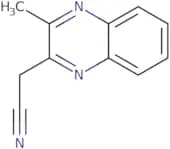
CAS:Versatile small molecule scaffoldFormula:C11H12N2O2Purity:Min. 95%Molecular weight:204.22 g/mol2-(3-Methylquinoxalin-2-yl)acetonitrile
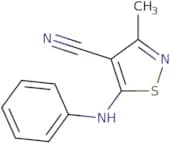
CAS:Versatile small molecule scaffoldFormula:C11H9N3Purity:Min. 95%Molecular weight:183.21 g/mol3-Methyl-5-(phenylamino)-1,2-thiazole-4-carbonitrile
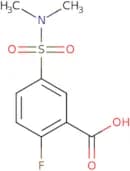
CAS:Versatile small molecule scaffoldFormula:C11H9N3SPurity:Min. 95%Molecular weight:215.28 g/mol5-Dimethylsulfamoyl-2-fluoro-benzoic acid
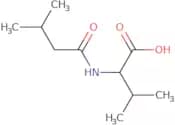
CAS:Versatile small molecule scaffoldFormula:C9H10FNO4SPurity:Min. 95%Molecular weight:247.25 g/mol3-Methyl-2-(3-methylbutanamido)butanoic acid
CAS:Versatile small molecule scaffoldFormula:C10H19NO3Purity:Min. 95%Molecular weight:201.26 g/mol2-[(2-Methoxy-2-oxoethyl)sulfanyl]acetic acid
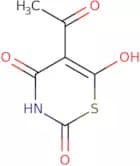
CAS:Versatile small molecule scaffoldFormula:C5H8O4SPurity:Min. 95%Molecular weight:164.18 g/mol5-Acetyl-4-hydroxy-3,6-dihydro-2H-1,3-thiazine-2,6-dione
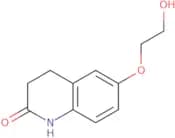
CAS:5-Acetyl-4-hydroxy-3,6-dihydro-2H-1,3-thiazine-2,6-dione is a phenolate which has been shown to have antibacterial activity. It binds to the thiol group of the enzyme hepg2 and inhibits its activity. This leads to a decrease in cell growth and eventually cell death. 5-Acetyl-4-hydroxy-3,6-dihydro-2H-1,3-thiazine - 2,6 - dione has been found to be effective against strains of Staphylococcus and other bacteria that are resistant to penicillin. 5ADHTD has also been shown to have kinetic and thermodynamic properties that make it a good candidate for use as an antibiotic.Formula:C6H5NO4SPurity:Min. 95%Molecular weight:187.18 g/mol6-(2-Hydroxyethoxy)-1,2,3,4-tetrahydroquinolin-2-one
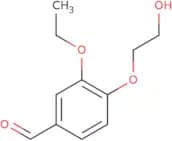
CAS:Versatile small molecule scaffoldFormula:C11H13NO3Purity:Min. 95%Molecular weight:207.23 g/mol3-Ethoxy-4-(2-hydroxy-ethoxy)-benzaldehyde
CAS:Versatile small molecule scaffoldFormula:C11H14O4Purity:Min. 95%Molecular weight:210.23 g/mol5-[(2-Phenylethyl)amino]-1,3,4-thiadiazole-2-thiol
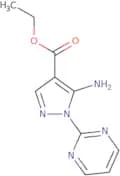
CAS:Versatile small molecule scaffoldFormula:C10H11N3S2Purity:Min. 95%Molecular weight:237.3 g/molethyl 5-amino-1-(pyrimidin-2-yl)-1H-pyrazole-4-carboxylate
CAS:Versatile small molecule scaffoldFormula:C10H11N5O2Purity:Min. 95%Molecular weight:233.2 g/mol2-Chloro-N-[(4-methylphenyl)methyl]propanamide
CAS:Versatile small molecule scaffoldFormula:C11H14ClNOPurity:Min. 95%Molecular weight:211.69 g/mol2-Chloro-N-[1-(4-methoxyphenyl)ethyl]acetamide
CAS:Versatile small molecule scaffoldFormula:C11H14ClNO2Purity:Min. 95%Molecular weight:227.69 g/mol2-Hydroxy-2-[4-(propan-2-yl)phenyl]acetonitrile
CAS:2-Hydroxy-2-[4-(propan-2-yl)phenyl]acetonitrile, or bornyl acetate, is a volatile chemical compound. It is a colorless liquid with a strong odor that is sometimes described as fruity and citrusy. The smell of this chemical is often compared to the scent of oranges or apricots. Bornyl acetate has been found in Hymenoptera (bees and wasps), mandelonitrile, and borneol. This chemical also has a slight acidic taste to it.Formula:C11H13NOPurity:Min. 95%Molecular weight:175.23 g/mol

![N-[8-(Propan-2-yl)-8-azabicyclo[3.2.1]octan-3-ylidene]hydroxylamine](/_next/image/?url=https%3A%2Fstatic.cymitquimica.com%2Fproducts%2F3D%2Fthumb-webp%2FRDA08725.webp&w=3840&q=75)
![2-[(2-Methoxy-2-oxoethyl)sulfanyl]acetic acid](/_next/image/?url=https%3A%2Fstatic.cymitquimica.com%2Fproducts%2F3D%2Fthumb-webp%2FRDA11448.webp&w=3840&q=75)
![5-[(2-Phenylethyl)amino]-1,3,4-thiadiazole-2-thiol](/_next/image/?url=https%3A%2Fstatic.cymitquimica.com%2Fproducts%2F3D%2Fthumb-webp%2FRDA12985.webp&w=3840&q=75)
![2-Chloro-N-[(4-methylphenyl)methyl]propanamide](/_next/image/?url=https%3A%2Fstatic.cymitquimica.com%2Fproducts%2F3D%2Fthumb-webp%2FRDA13115.webp&w=3840&q=75)
![2-Chloro-N-[1-(4-methoxyphenyl)ethyl]acetamide](/_next/image/?url=https%3A%2Fstatic.cymitquimica.com%2Fproducts%2F3D%2Fthumb-webp%2FRDA13130.webp&w=3840&q=75)
![2-Hydroxy-2-[4-(propan-2-yl)phenyl]acetonitrile](/_next/image/?url=https%3A%2Fstatic.cymitquimica.com%2Fproducts%2F3D%2Fthumb-webp%2FRDA13218.webp&w=3840&q=75)