


Building Blocks
This section contains fundamental products for the synthesis of organic and biological compounds. Building blocks are the essential starting materials used to construct complex molecules through various chemical reactions. They play a critical role in drug discovery, material science, and chemical research. At CymitQuimica, we offer a diverse range of high-quality building blocks to support your innovative research and industrial projects, ensuring you have the essential components for successful synthesis.
Subcategories of "Building Blocks"
- Boronic Acids & Boronic Acid Derivatives(5,756 products)
- Chiral Building Blocks(1,242 products)
- Hydrocarbon Building Blocks(6,095 products)
- Organic Building Blocks(61,038 products)
Found 196817 products of "Building Blocks"
Sort by
Purity (%)
0
100
|
0
|
50
|
90
|
95
|
100
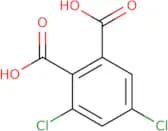
3,5-Dichlorophthalic acid
CAS:<p>3,5-Dichlorophthalic acid is a divalent organic acid that is used as an intermediate in the production of other chemicals. 3,5-Dichlorophthalic acid is used as a regulator of plant growth and development. It can also be used to make different n-substituted compounds, such as naphthalene, phthalic anhydride, and 2,6-dichloro-pyridine.</p>Formula:C8H4Cl2O4Purity:Min. 95%Molecular weight:235.02 g/mol1-Benzyl-1 H -[1,2,4]triazol-3-ylamine
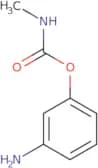
CAS:<p>Versatile small molecule scaffold</p>Formula:C9H10N4Purity:Min. 95%Molecular weight:174.2 g/mol3-Aminophenyl N-methylcarbamate
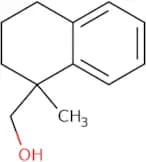
CAS:<p>Versatile small molecule scaffold</p>Formula:C8H10N2O2Purity:Min. 95%Molecular weight:166.18 g/mol(1-Methyl-1,2,3,4-tetrahydronaphthalen-1-yl)methanol
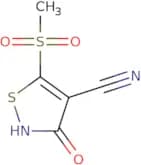
CAS:<p>Versatile small molecule scaffold</p>Formula:C12H16OPurity:Min. 95%Molecular weight:176.25 g/mol3-Hydroxy-5-methanesulfonyl-1,2-thiazole-4-carbonitrile
CAS:<p>Versatile small molecule scaffold</p>Formula:C5H4N2O3S2Purity:Min. 95%Molecular weight:204.2 g/mol4-Bromo-1,2-thiazol-3-ol
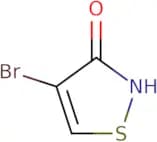
CAS:<p>4-Bromo-1,2-thiazol-3-ol is a palladium acetate catalyst that is used in the palladium-catalyzed synthesis of isothiazoles. It reacts with olefins to form (4-bromo)isothiazoles. 4-Bromo-1,2-thiazol-3-ol has been found to be effective for the synthesis of different types of isothiazoles.</p>Formula:C3H2BrNOSPurity:Min. 95%Molecular weight:180.03 g/molPyrazolo[1,5-a]pyridine-3-carbonitrile
CAS:<p>Pyrazolo[1,5-a]pyridine-3-carbonitrile is a crystalline solid in the form of an amorphous or polymorph. It has been shown to inhibit the kinase activity of protein tyrosine phosphatases and may be useful for the treatment of gastrointestinal disorders. The compound has also been shown to have antioxidant properties, which may be related to its ability to inhibit oxidative phosphorylation by inhibiting the mitochondrial membrane potential. Pyrazolo[1,5-a]pyridine-3-carbonitrile has also been shown to suppress proliferation and induce apoptosis in some types of cancer cells. This compound can serve as a nitrogen source for microbial growth and can inhibit bacterial growth by acting as an inhibitor of indolizine synthesis or nitrogen fixation.</p>Formula:C8H5N3Purity:Min. 95%Molecular weight:143.15 g/mol2-(2,4,6-Trimethylphenyl)aniline
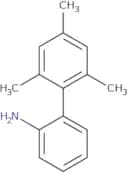
CAS:<p>Versatile small molecule scaffold</p>Formula:C15H17NPurity:Min. 95%Molecular weight:211.3 g/molBis[(6-methylpyridin-2-yl)methyl]amine
CAS:<p>Bis[(6-methylpyridin-2-yl)methyl]amine is a monoxide that is used as an electrocatalyst for the reduction of nitrite to nitric oxide. Bis[(6-methylpyridin-2-yl)methyl]amine is able to catalyze the conversion of an electron from a proton donor to a sulfide substrate, which generates a geometrical change in the molecule. The bis[(6-methylpyridin-2-yl)methyl]amine molecule has acidic properties and can be used in coordination chemistry as it can coordinate with gold electrodes. This compound also has been shown to have nitrite reductase activity, which may be due to its ability to reduce molecular oxygen.</p>Formula:C14H17N3Purity:Min. 95%Molecular weight:227.3 g/mol2-(3-Methoxyphenyl)-3-oxobutanenitrile
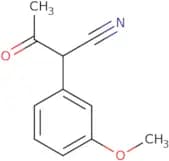
CAS:<p>Versatile small molecule scaffold</p>Formula:C11H11NO2Purity:Min. 95%Molecular weight:189.21 g/mol1-Amino-3-methylbutan-2-ol hydrochloride
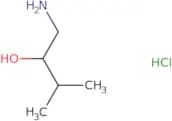
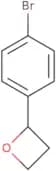
CAS:<p>Versatile small molecule scaffold</p>Formula:C5H14ClNOPurity:Min. 95%Molecular weight:139.62 g/mol2-(4-Bromophenyl)oxetane
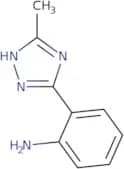
CAS:<p>Versatile small molecule scaffold</p>Formula:C9H9BrOPurity:Min. 95%Molecular weight:213.07 g/mol2-(3-Methyl-1H-1,2,4-triazol-5-yl)aniline
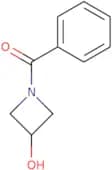
CAS:<p>Versatile small molecule scaffold</p>Formula:C9H10N4Purity:Min. 95%Molecular weight:174.2 g/mol1-Benzoylazetidin-3-ol
CAS:<p>Versatile small molecule scaffold</p>Formula:C10H11NO2Purity:Min. 95%Molecular weight:177.2 g/mol7-Methyl-2-phenylimidazo[1,2-a]pyridine
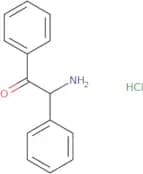
CAS:<p>7-Methyl-2-phenylimidazo[1,2-a]pyridine is a fluorescent compound that has been used as a shift reagent. It is colorless and stable in air and light. The fluorescence of 7-methyl-2-phenylimidazo[1,2-a]pyridine is excited at wavelengths of 315 nm and 380 nm with an emission maximum at 460 nm. This compound can be used to study the conformational changes of proteins and nucleic acids by monitoring the change in fluorescence properties.</p>Formula:C14H12N2Purity:Min. 95%Molecular weight:208.26 g/mol2-Amino-1,2-diphenylethan-1-one hydrochloride
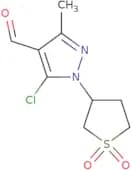
CAS:Controlled Product<p>2-Amino-1,2-diphenylethan-1-one hydrochloride belongs to the class of sulfoxides and is a potent anti-inflammatory agent. It inhibits inflammation by reducing the production of prostaglandins and thiols from arachidonic acid. 2-Amino-1,2-diphenylethan-1-one hydrochloride has been shown to be effective in alleviating inflammatory symptoms caused by arthritis. The compound also has an antagonistic effect on acetylcholine and muscarinic receptors, which may cause side effects such as dry mouth, blurred vision, and difficulty urinating.</p>Formula:C14H14ClNOPurity:Min. 95%Molecular weight:247.72 g/mol5-Chloro-1-(1,1-dioxidotetrahydrothien-3-yl)-3-methyl-1H-pyrazole-4-carbaldehyde
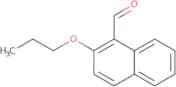
CAS:<p>Versatile small molecule scaffold</p>Formula:C9H11ClN2O3SPurity:Min. 95%Molecular weight:262.71 g/mol2-Propoxynaphthalene-1-carbaldehyde
CAS:<p>Versatile small molecule scaffold</p>Formula:C14H14O2Purity:Min. 95%Molecular weight:214.26 g/mol2-(Propan-2-yloxy)naphthalene-1-carbaldehyde
CAS:<p>Ai Product Descriptions 50 Creative</p>Formula:C14H14O2Purity:Min. 95%Molecular weight:214.26 g/mol1-Phenyl-1H-benzo[d][1,2,3]triazole
CAS:<p>1-Phenyl-1H-benzo[d][1,2,3]triazole is a conformational chiral organometallic compound. It is a sulfide with kinetic, activated and diacetate isomers. The reaction of 1-phenyl-1H-benzo[d][1,2,3]triazole with peroxide leads to the production of an azobenzene and homodimeric products. The product ions are observed by electron ionization mass spectrometry at m/z=141 (M+), 145 (M+−OCH), and 147 (M−OCH). 1-Phenyl-1H-benzo[d][1,2,3]triazole has molecular weight of 194.1881 g/mol and a melting point of 237 ˚C.</p>Formula:C12H9N3Purity:Min. 95%Molecular weight:195.22 g/mol

![1-Benzyl-1 H -[1,2,4]triazol-3-ylamine](/_next/image/?url=https%3A%2Fstatic.cymitquimica.com%2Fproducts%2F3D%2Fthumb-webp%2FABA63743.webp&w=3840&q=75)
![Pyrazolo[1,5-a]pyridine-3-carbonitrile](/_next/image/?url=https%3A%2Fstatic.cymitquimica.com%2Fproducts%2F3D%2Fthumb-webp%2FABA62789.webp&w=3840&q=75)
![Bis[(6-methylpyridin-2-yl)methyl]amine](/_next/image/?url=https%3A%2Fstatic.cymitquimica.com%2Fproducts%2F3D%2Fthumb-webp%2FABA59907.webp&w=3840&q=75)
![7-Methyl-2-phenylimidazo[1,2-a]pyridine](/_next/image/?url=https%3A%2Fstatic.cymitquimica.com%2Fproducts%2F3D%2Fthumb-webp%2FAAA88591.webp&w=3840&q=75)

![1-Phenyl-1H-benzo[d][1,2,3]triazole](/_next/image/?url=https%3A%2Fstatic.cymitquimica.com%2Fproducts%2F3D%2Fthumb-webp%2FAAA88339.webp&w=3840&q=75)