Building Blocks
This section contains fundamental products for the synthesis of organic and biological compounds. Building blocks are the essential starting materials used to construct complex molecules through various chemical reactions. They play a critical role in drug discovery, material science, and chemical research. At CymitQuimica, we offer a diverse range of high-quality building blocks to support your innovative research and industrial projects, ensuring you have the essential components for successful synthesis.
Subcategories of "Building Blocks"
- Boronic Acids & Boronic Acid Derivatives(5,756 products)
- Chiral Building Blocks(1,242 products)
- Hydrocarbon Building Blocks(6,095 products)
- Organic Building Blocks(61,037 products)
Found 196200 products of "Building Blocks"
Sort by
Purity (%)
0
100
|
0
|
50
|
90
|
95
|
100
3-(4-Fluoropiperidin-4-yl)pyridine dihydrochloride
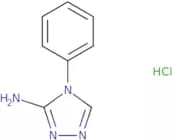
CAS:<p>Versatile small molecule scaffold</p>Formula:C10H15Cl2FN2Purity:Min. 95%Molecular weight:253.14 g/mol4-Phenyl-4H-1,2,4-triazol-3-amine hydrochloride
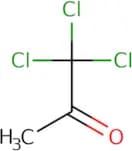
CAS:<p>Versatile small molecule scaffold</p>Formula:C8H9ClN4Purity:Min. 95%Molecular weight:196.64 g/mol1,1,1-Trichloroacetone
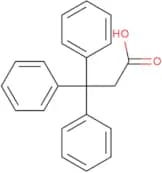
CAS:<p>1,1,1-Trichloroacetone (1,1,1-TCA) is a chemical compound that is used as an industrial solvent. It is produced by the reaction of sodium carbonate and 2,4-dichlorobenzoic acid in the presence of hydrochloric acid. 1,1,1-Trichloroacetone reacts with benzalkonium chloride to form trichloroacetic acid. The rate of this reaction increases with increasing pH values. The formation of 1,1,1-trichloroacetone can be monitored by measuring the concentration of malonic acid over time. This analytical method can also be used to detect the presence of urea nitrogen in a sample.</p>Formula:C3H3Cl3OPurity:Min. 95%Molecular weight:161.41 g/mol3,3,3-Triphenylpropionic Acid
CAS:<p>3,3,3-Triphenylpropionic acid is a molecule that has been found to have potent inhibition of cardiac enzymes. This compound is also able to inhibit the growth of V79 cells and the activity of human liver microsomes. The structure of 3,3,3-Triphenylpropionic acid is believed to be related to its activities in cardiac tissues and in the rat liver. 3,3,3-Triphenylpropionic acid has shown to act as an intramolecular hydrogen bond acceptor and donor. In rat liver microsomes, this compound was observed to bind with water molecules and form bonds with amino acids such as glutamic acid and lysine.</p>Formula:C21H18O2Purity:Min. 95%Molecular weight:302.37 g/molTriethyl 1,3,5-triazine-2,4,6-tricarboxylate
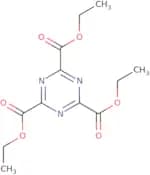
CAS:<p>Triethyl 1,3,5-triazine-2,4,6-tricarboxylate is a conformationally constrained triazine derivative that has been rationalized to have amide and amine moieties. Triethyl 1,3,5-triazine-2,4,6-tricarboxylate has been shown to be an acceptor for chloride modification in the gas phase. This compound may be an optimized molecule for the synthesis of triazines with carboxylic acid substituents by postulating its diffraction pattern. The presence of the azide group is thermally stable and prevents decomposition.</p>Formula:C12H15N3O6Purity:Min. 95%Molecular weight:297.26 g/molN-[Carbamothioyl(phenyl)methyl]benzamide
CAS:<p>Versatile small molecule scaffold</p>Formula:C15H14N2OSPurity:Min. 95%Molecular weight:270.3 g/mol4-Amino-n-(4-methoxyphenyl)benzamide
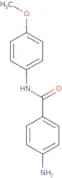
CAS:<p>4-Amino-N-(4-methoxyphenyl)benzamide is a catalytic sulfamate that has been optimized for use in the synthesis of benzimidazole derivatives. 4-Amino-N-(4-methoxyphenyl)benzamide is used as a reagent for the preparation of aldehydes from sulfamic acid and various types of carboxylic acids. The reaction mechanism involves nucleophilic attack by the hydroxyl group from the sulfamate on the carbonyl carbon atom to form an intermediate, which then reacts with water to release hydrogen sulfate and form a new double bond.</p>Formula:C14H14N2O2Purity:Min. 95%Molecular weight:242.27 g/mol5-Amino-2-chloro-N-[2-(diethylamino)ethyl]benzamide
CAS:<p>Versatile small molecule scaffold</p>Formula:C13H20ClN3OPurity:Min. 95%Molecular weight:269.77 g/mol4-(5-Chloro-2-methoxyphenyl)-1H-1,2,3-triazole
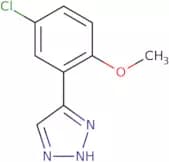
CAS:<p>Versatile small molecule scaffold</p>Formula:C9H8ClN3OPurity:Min. 95%Molecular weight:209.63 g/mol1-(4-Phenoxyphenyl)propan-1-one
CAS:<p>Versatile small molecule scaffold</p>Formula:C15H14O2Purity:Min. 95%Molecular weight:226.27 g/mol3,5-Diphenyl-1,2,4-oxadiazole
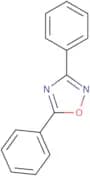
CAS:<p>3,5-Diphenyl-1,2,4-oxadiazole is a synthetic compound that has the chemical formula C12H10N2O. It is an optical material with orthorhombic symmetry and a melting point of 164 °C. It can be synthesized using the Grignard reaction. 3,5-Diphenyl-1,2,4-oxadiazole is used as a radiolabel for positron emission tomography (PET) imaging in studies of β-amyloid plaques in Alzheimer's disease patients and brain imaging to study the uptake of drugs in cancer cells. 3,5-Diphenyl-1,2,4-oxadiazole has been modified to increase its affinity for β amyloid plaques and increase its diffraction efficiency. The pharmacophore model for this drug is based on aromatic rings with modified electron density at 1' position.</p>Formula:C14H10N2OPurity:Min. 95%Molecular weight:222.24 g/mol1-Phenyl-3-(2-pyridyl)-2-thiourea
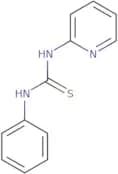
CAS:<p>1-Phenyl-3-(2-pyridyl)-2-thiourea (PTU) is a thiourea molecule that acts as an inhibitor of the production of polyhedra in bacteria. PTU binds to the ligand and inhibits the adsorption mechanism, preventing bacteria from attaching to surfaces. It has been shown that PTU can be used as a sensor for chlorine concentrations because it has a linear response. Additionally, it is used as an electrochemical impedance spectroscopy probe because of its potentiodynamic polarization and functional groups.</p>Formula:C12H11N3SPurity:Min. 95%Molecular weight:229.3 g/mol3-(6-Amino-9H-purin-9-yl)propan-1-ol
CAS:<p>Versatile small molecule scaffold</p>Formula:C8H11N5OPurity:Min. 95%Molecular weight:193.21 g/mol1-Phenyl-3-oxabicyclo[3.1.0]hexane-2,4-dione
CAS:<p>Versatile small molecule scaffold</p>Formula:C11H8O3Purity:Min. 95%Molecular weight:188.18 g/mol1,3-Diazaspiro[4.7]dodecane-2,4-dione
CAS:<p>Versatile small molecule scaffold</p>Formula:C10H16N2O2Purity:Min. 95%Molecular weight:196.25 g/mol(2Z)-3-[(4-Methylphenyl)sulfanyl]prop-2-enoic acid
CAS:<p>Versatile small molecule scaffold</p>Formula:C10H10O2SPurity:Min. 95%Molecular weight:194.25 g/mol1-(3-Nitrophenyl)-2-thiourea
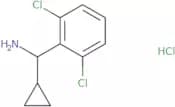
CAS:<p>1-(3-Nitrophenyl)-2-thiourea is a small molecule inhibitor of the transporter protein SLC5A8, which transports nitrates from the blood to the kidneys. 1-(3-Nitrophenyl)-2-thiourea inhibits this transporter in a systemically active fashion and selectively targets renal epithelial cells. This analog has been shown to be effective against some inherited disorders associated with mutations in SLC5A8. 1-(3-Nitrophenyl)-2-thiourea is believed to inhibit transport by binding to an allosteric site on SLC5A8, but its precise mechanism of action remains unclear.</p>Formula:C7H7N3O2SPurity:Min. 95%Molecular weight:197.22 g/molCyclopropyl(2,6-dichlorophenyl)methanamine hydrochloride
CAS:<p>Versatile small molecule scaffold</p>Formula:C10H12Cl3NPurity:Min. 95%Molecular weight:252.6 g/mol1-Nitro-3-(trichloromethyl)benzene
CAS:<p>Versatile small molecule scaffold</p>Formula:C7H4Cl3NO2Purity:Min. 95%Molecular weight:240.5 g/mol4-Cyano-1-phenylpyrazole
CAS:<p>4-Cyano-1-phenylpyrazole is a nitrile that can be chloromethylated to form 4-chloro-1-phenylpyrazole. It is a herbicide that inhibits plant growth by inhibiting photosynthesis. The type of reaction can be halogenation, alkoxycarbonylation, or chloromethylation. This compound hydrolyzes at a relatively fast rate in water and reacts with other compounds to form derivatives of the original molecule. 4-Cyano-1-phenylpyrazole binds to the c3 and c4 positions on the cycloalkane ring and also binds to alkenes with an oxygen atom at the end of the chain (such as allyl alcohol). The compound has been used in both pharmaceuticals and agricultural products. 4-Cyano-1-phenylpyrazole is toxic to plants and animals because it inhibits cell membrane function.</p>Formula:C10H7N3Purity:Min. 95%Molecular weight:169.18 g/mol


![N-[Carbamothioyl(phenyl)methyl]benzamide](/_next/image/?url=https%3A%2Fstatic.cymitquimica.com%2Fproducts%2F3D%2Fthumb-webp%2FAAA89278.webp&w=3840&q=75)
![5-Amino-2-chloro-N-[2-(diethylamino)ethyl]benzamide](/_next/image/?url=https%3A%2Fstatic.cymitquimica.com%2Fproducts%2F3D%2Fthumb-webp%2FAAA89058.webp&w=3840&q=75)


![1-Phenyl-3-oxabicyclo[3.1.0]hexane-2,4-dione](/_next/image/?url=https%3A%2Fstatic.cymitquimica.com%2Fproducts%2F3D%2Fthumb-webp%2FAAA71097.webp&w=3840&q=75)
![1,3-Diazaspiro[4.7]dodecane-2,4-dione](/_next/image/?url=https%3A%2Fstatic.cymitquimica.com%2Fproducts%2F3D%2Fthumb-webp%2FAAA71094.webp&w=3840&q=75)
![(2Z)-3-[(4-Methylphenyl)sulfanyl]prop-2-enoic acid](/_next/image/?url=https%3A%2Fstatic.cymitquimica.com%2Fproducts%2F3D%2Fthumb-webp%2FAAA71037.webp&w=3840&q=75)