Building Blocks
This section contains fundamental products for the synthesis of organic and biological compounds. Building blocks are the essential starting materials used to construct complex molecules through various chemical reactions. They play a critical role in drug discovery, material science, and chemical research. At CymitQuimica, we offer a diverse range of high-quality building blocks to support your innovative research and industrial projects, ensuring you have the essential components for successful synthesis.
Subcategories of "Building Blocks"
- Boronic Acids & Boronic Acid Derivatives(5,756 products)
- Chiral Building Blocks(1,242 products)
- Hydrocarbon Building Blocks(6,095 products)
- Organic Building Blocks(61,037 products)
Found 196200 products of "Building Blocks"
Sort by
Purity (%)
0
100
|
0
|
50
|
90
|
95
|
100
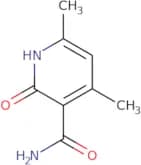
2-Hydroxy-4,6-dimethylnicotinamide
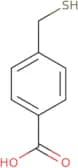
CAS:<p>Versatile small molecule scaffold</p>Formula:C8H10N2O2Purity:Min. 95%Molecular weight:166.18 g/mol4-(Mercaptomethyl)benzoic acid
CAS:<p>4-(Mercaptomethyl)benzoic acid is a thiosemicarbazide derivative that has been used as a photosensitizer in photodynamic therapy. This compound has the ability to bind to selenide ions, which are electron acceptors, and is converted to its reactive form by light. 4-(Mercaptomethyl)benzoic acid may be used for the treatment of cancers that have been resistant to other treatments. The compound also shows potential for use in diagnosing or treating other conditions such as carboxylate ligand transfer reactions and cadmium toxicity. The diameter of this drug is around 2 nm.</p>Formula:C8H8O2SPurity:Min. 95%Molecular weight:168.21 g/molThiomorpholine-4-carbonyl Chloride 1,1-Dioxide
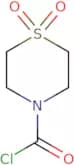
CAS:<p>Versatile small molecule scaffold</p>Formula:C5H8ClNO3SPurity:Min. 95%Molecular weight:197.64 g/mol5-Chloro-2-ethoxypyrimidine
CAS:<p>Versatile small molecule scaffold</p>Formula:C6H7ClN2OPurity:Min. 95%Molecular weight:158.58 g/mol2-(1-Chloroethyl)pyrazine
CAS:<p>Versatile small molecule scaffold</p>Formula:C6H7ClN2Purity:Min. 95%Molecular weight:142.59 g/mol1-(5-Fluoro-pyrimidin-2-yl)-azetidine-3-carboxylic acid
CAS:<p>Versatile small molecule scaffold</p>Formula:C8H8FN3O2Purity:Min. 95%Molecular weight:197.17 g/moltert-Butyl 2-[(cyclopropylamino)methyl]pyrrolidine-1-carboxylate
CAS:<p>Versatile small molecule scaffold</p>Formula:C13H24N2O2Purity:Min. 95%Molecular weight:240.34 g/mol2-Bromo-4-(methoxymethyl)pyridine
CAS:<p>Versatile small molecule scaffold</p>Formula:C7H8BrNOPurity:Min. 95%Molecular weight:202.05 g/mol4-[3-(Hydroxymethyl)piperidine-1-carbonyl]-1,2-dihydropyridin-2-one
CAS:<p>Versatile small molecule scaffold</p>Formula:C12H16N2O3Purity:Min. 95%Molecular weight:236.3 g/mol5-Cyclopropyl-1,3,4-oxadiazole-2-thiol
CAS:<p>Versatile small molecule scaffold</p>Formula:C5H6N2OSPurity:Min. 95%Molecular weight:142.18 g/mol3-Amino-5-bromo-1,2-dihydropyridine-2-thione
CAS:<p>Versatile small molecule scaffold</p>Formula:C5H5BrN2SPurity:Min. 95%Molecular weight:205.08 g/mol(2-Cyclohexylpropyl)(methyl)amine hydrochloride
CAS:Controlled Product<p>Versatile small molecule scaffold</p>Formula:C10H22ClNPurity:Min. 95%Molecular weight:191.74 g/mol5-(2,6-Dimethylphenoxymethyl)-4-phenyl-4H-1,2,4-triazole-3-thiol
CAS:<p>Versatile small molecule scaffold</p>Formula:C17H17N3OSPurity:Min. 95%Molecular weight:311.4 g/mol3-Amino-N-benzylpropanamide
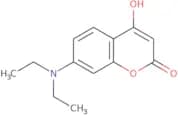
CAS:<p>Versatile small molecule scaffold</p>Formula:C10H14N2OPurity:Min. 95%Molecular weight:178.23 g/mol7-Diethylamino-4-hydroxy-chromen-2-one
CAS:<p>7-Diethylamino-4-hydroxy-chromen-2-one is a fluorescent chemical compound that belongs to the family of atypical fluorophores. It has a number of photophysical properties, including fluorescence and regression, which are characteristic of amines. 7-Diethylamino-4-hydroxy-chromen-2-one can be synthesized from diazonium salt and 4-hydroxycoumarin. This chemical compound has been used as a fluorescent probe for nucleophilic reactions in various types of organic molecules. The nature of this fluorophore is unknown, but it may be due to its ability to shift the wavelength of fluorescence by up to 400 nm.</p>Formula:C13H15NO3Purity:Min. 95%Molecular weight:233.26 g/mol5-Methyl-3-oxohexanenitrile
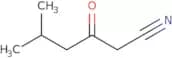
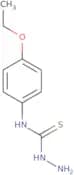
CAS:<p>5-Methyl-3-oxohexanenitrile is a dialkylamino compound that has been used as a reagent in organic chemistry. It is tautomeric and can exist as both an amide and an isoxazole. The pyridine ring of 5-methyl-3-oxohexanenitrile can be either substituted with a carbamate, nitro, or alkenyl group, depending on the substitution pattern. 5-Methyl-3-oxohexanenitrile reacts with dinitrophenyl to form an N–N bond, which is then cleaved by amines in order to generate the corresponding carbamate or amide. 5-Methyl-3-oxohexanenitrile also reacts with copper to form the corresponding nitro or alkenyl group.</p>Formula:C7H11NOPurity:Min. 95%Molecular weight:125.17 g/mol3-Amino-1-(4-ethoxyphenyl)thiourea
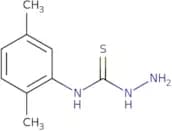
CAS:<p>Versatile small molecule scaffold</p>Formula:C9H13N3OSPurity:Min. 95%Molecular weight:211.29 g/mol3-Amino-1-(2,5-dimethylphenyl)thiourea
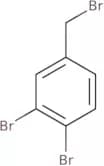
CAS:<p>Versatile small molecule scaffold</p>Formula:C9H13N3SPurity:Min. 95%Molecular weight:195.29 g/mol1,2-Dibromo-4-(bromomethyl)benzene
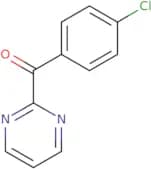
CAS:<p>1,2-Dibromo-4-(bromomethyl)benzene is a brominated organic compound that has been shown to act as a potent agonist for the peroxisome proliferator-activated receptor delta (PPARδ). It has been shown to have structural and biological effects on PPARδ. This compound has been used as a template in the synthesis of many other compounds. 1,2-Dibromo-4-(bromomethyl)benzene is non-selective and bioavailable, which means it can be taken orally or applied topically.</p>Formula:C7H5Br3Purity:Min. 95%Molecular weight:328.83 g/mol2-(4-Chlorobenzoyl)pyrimidine
CAS:<p>Versatile small molecule scaffold</p>Formula:C11H7ClN2OPurity:Min. 95%Molecular weight:218.64 g/mol



![tert-Butyl 2-[(cyclopropylamino)methyl]pyrrolidine-1-carboxylate](/_next/image/?url=https%3A%2Fstatic.cymitquimica.com%2Fproducts%2F3D%2Fthumb-webp%2FPBC38744.webp&w=3840&q=75)

![4-[3-(Hydroxymethyl)piperidine-1-carbonyl]-1,2-dihydropyridin-2-one](/_next/image/?url=https%3A%2Fstatic.cymitquimica.com%2Fproducts%2F3D%2Fthumb-webp%2FPBD97024.webp&w=3840&q=75)