Building Blocks
This section contains fundamental products for the synthesis of organic and biological compounds. Building blocks are the essential starting materials used to construct complex molecules through various chemical reactions. They play a critical role in drug discovery, material science, and chemical research. At CymitQuimica, we offer a diverse range of high-quality building blocks to support your innovative research and industrial projects, ensuring you have the essential components for successful synthesis.
Subcategories of "Building Blocks"
- Boronic Acids & Boronic Acid Derivatives(5,756 products)
- Chiral Building Blocks(1,242 products)
- Hydrocarbon Building Blocks(6,095 products)
- Organic Building Blocks(61,038 products)
Found 196817 products of "Building Blocks"
Sort by
Purity (%)
0
100
|
0
|
50
|
90
|
95
|
100
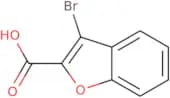
3-bromo-1-benzofuran-2-carboxylic acid
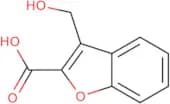
CAS:<p>Versatile small molecule scaffold</p>Formula:C9H5BrO3Purity:Min. 95%Molecular weight:241 g/mol3-(Hydroxymethyl)-1-benzofuran-2-carboxylic acid
CAS:<p>Versatile small molecule scaffold</p>Formula:C10H8O4Purity:Min. 95%Molecular weight:192.17 g/mol2-{[(tert-butoxy)carbonyl]amino}-4-hydroxybutanoic acid
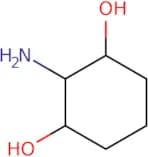
CAS:<p>Versatile small molecule scaffold</p>Formula:C9H17NO5Purity:Min. 95%Molecular weight:219.2 g/molrac-(1R,2R,3S)-2-Aminocyclohexane-1,3-diol
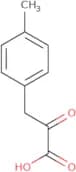
CAS:<p>Versatile small molecule scaffold</p>Formula:C6H13NO2Purity:Min. 95%Molecular weight:131.17 g/mol3-(4-Methylphenyl)-2-oxopropanoic acid
CAS:<p>3- (4-Methylphenyl)-2-oxopropanoic acid is an aromatic amino acid that is formed by the biotransformations of phenylpyruvic acid. The compound has been found to be a substrate for transaminases and can be converted to semicarbazone, an intermediate in the synthesis of many drugs. 3-(4-methylphenyl)-2-oxopropanoic acid has also been used as a catalyst for escherichia coli recombinant cells and e. coli recombinant cells.</p>Formula:C10H10O3Purity:Min. 95%Molecular weight:178.18 g/mol[(Oxolan-2-yl)methyl]urea
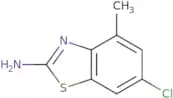
CAS:<p>Versatile small molecule scaffold</p>Formula:C6H12N2O2Purity:Min. 95%Molecular weight:144.17 g/mol6-Chloro-4-methyl-benzothiazol-2-ylamine
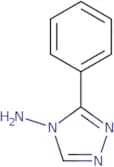
CAS:<p>Versatile small molecule scaffold</p>Formula:C8H7ClN2SPurity:Min. 95%Molecular weight:198.68 g/mol3-Phenyl-4H-1,2,4-triazol-4-amine
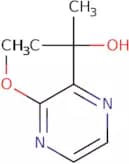
CAS:<p>Versatile small molecule scaffold</p>Formula:C8H8N4Purity:Min. 95%Molecular weight:160.18 g/mol2-(1-Hydroxy-1-methylethyl)-3-methoxypyrazine
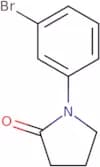
CAS:<p>2-(1-Hydroxy-1-methylethyl)-3-methoxypyrazine is a metabolite of the compound crocatus, which is found in the soil. Crocatus has been shown to inhibit the biosynthesis of geosmin, a volatile organic compound that can be responsible for the earthy or musty smells often associated with wet soils. 2-(1-Hydroxy-1-methylethyl)-3-methoxypyrazine is also produced by the myxobacterium species Chondromyces crocatus, and it has been shown that this metabolite inhibits bacterial growth by binding to RNA polymerase. This process prevents transcription, leading to cell death.</p>Formula:C8H12N2O2Purity:Min. 95%Molecular weight:168.19 g/mol1-(3-Bromophenyl)pyrrolidin-2-one
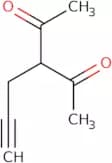
CAS:<p>Versatile small molecule scaffold</p>Formula:C10H10BrNOPurity:Min. 95%Molecular weight:240.1 g/mol3-(Prop-2-yn-1-yl)pentane-2,4-dione
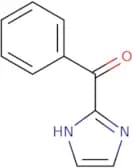
CAS:<p>Versatile small molecule scaffold</p>Formula:C8H10O2Purity:Min. 95%Molecular weight:138.16 g/mol2-Benzoyl-1H-imidazole
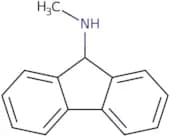
CAS:<p>2-Benzoyl-1H-imidazole is a cancer drug that has been shown to be effective against prostate cancer. 2-Benzoyl-1H-imidazole is a reaction product of 1,2,4-triazole and benzamide. It was synthesized by solid-phase synthesis on a resin containing the corresponding nitro groups. The nitrogen atoms are neutralized with sodium salts and the detergent compositions are reactive to form an antitumor agent. This agent is not active against other types of cancer cells and has been shown to be resistant in some cases. 2-Benzoyl-1H-imidazole has also been used in a medicinal preparation for the treatment of prostate cancer.</p>Formula:C10H8N2OPurity:Min. 95%Molecular weight:172.18 g/molN-Methyl-9H-fluoren-9-amine
CAS:<p>Versatile small molecule scaffold</p>Formula:C14H13NPurity:Min. 95%Molecular weight:195.26 g/mol6-Methyl-3H,4H-thieno[2,3-d][1,2,3]triazin-4-one
CAS:<p>Versatile small molecule scaffold</p>Formula:C6H5N3OSPurity:Min. 95%Molecular weight:167.19 g/mol5,6-Dimethyl-3H,4H-thieno[2,3-d][1,2,3]triazin-4-one
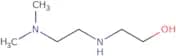
CAS:<p>Versatile small molecule scaffold</p>Formula:C7H7N3OSPurity:Min. 95%Molecular weight:181.22 g/mol2-(2-Dimethylamino-ethylamino)-ethanol
CAS:<p>2-(2-Dimethylamino-ethylamino)-ethanol is an organogold compound that has been synthesized by irradiating 2-(2-dimethylamino-ethyl)aminopyridine with gamma rays. This compound is a ligand for the phthalocyanine axial coordination complex and is cationic in nature. It reacts with sulfur to form a sulfide, which can be used as a reagent for the synthesis of other compounds. 2-(2-Dimethylamino-ethylamino)-ethanol has shown hydrophilicity and can be used as an additive in cosmetic products.<br>2-(2-Dimethylamino-ethylamino)-ethanol has been found to have high reactivity with ammonium ions and may be useful in the preparation of amides.</p>Formula:C6H16N2OPurity:Min. 95%Molecular weight:132.2 g/mol7-Nitro-2,3,4,5-tetrahydro-1,5-benzothiazepin-4-one
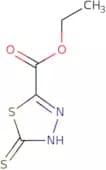
CAS:<p>Versatile small molecule scaffold</p>Formula:C9H8N2O3SPurity:Min. 95%Molecular weight:224.2 g/molEthyl 5-sulfanyl-1,3,4-thiadiazole-2-carboxylate
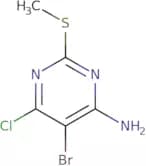
CAS:<p>Versatile small molecule scaffold</p>Formula:C5H6N2O2S2Purity:Min. 95%Molecular weight:190.2 g/mol5-bromo-6-chloro-2-(methylsulfanyl)pyrimidin-4-amine
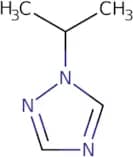
CAS:<p>Versatile small molecule scaffold</p>Formula:C5H5BrClN3SPurity:Min. 95%Molecular weight:254.5 g/mol1-Isopropyl-1H-1,2,4-triazole
CAS:<p>Versatile small molecule scaffold</p>Formula:C5H9N3Purity:Min. 95%Molecular weight:111.15 g/mol

![2-{[(tert-butoxy)carbonyl]amino}-4-hydroxybutanoic acid](/_next/image/?url=https%3A%2Fstatic.cymitquimica.com%2Fproducts%2F3D%2Fthumb-webp%2FNBA30892.webp&w=3840&q=75)
![[(Oxolan-2-yl)methyl]urea](/_next/image/?url=https%3A%2Fstatic.cymitquimica.com%2Fproducts%2F3D%2Fthumb-webp%2FNBA33610.webp&w=3840&q=75)
![6-Methyl-3H,4H-thieno[2,3-d][1,2,3]triazin-4-one](/_next/image/?url=https%3A%2Fstatic.cymitquimica.com%2Fproducts%2F3D%2Fthumb-webp%2FNBA35984.webp&w=3840&q=75)
![5,6-Dimethyl-3H,4H-thieno[2,3-d][1,2,3]triazin-4-one](/_next/image/?url=https%3A%2Fstatic.cymitquimica.com%2Fproducts%2F3D%2Fthumb-webp%2FNBA35985.webp&w=3840&q=75)