


Building Blocks
This section contains fundamental products for the synthesis of organic and biological compounds. Building blocks are the essential starting materials used to construct complex molecules through various chemical reactions. They play a critical role in drug discovery, material science, and chemical research. At CymitQuimica, we offer a diverse range of high-quality building blocks to support your innovative research and industrial projects, ensuring you have the essential components for successful synthesis.
Subcategories of "Building Blocks"
- Boronic Acids & Boronic Acid Derivatives(5,756 products)
- Chiral Building Blocks(1,242 products)
- Hydrocarbon Building Blocks(6,095 products)
- Organic Building Blocks(61,051 products)
Found 199813 products of "Building Blocks"
Sort by
Purity (%)
0
100
|
0
|
50
|
90
|
95
|
100
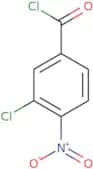
3-Chloro-4-nitrobenzoyl chloride
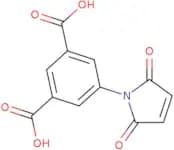
CAS:<p>Versatile small molecule scaffold</p>Formula:C7H3Cl2NO3Purity:Min. 95%Molecular weight:220.01 g/mol5-(2,5-Dioxo-2,5-dihydro-1H-pyrrol-1-yl)benzene-1,3-dicarboxylic acid
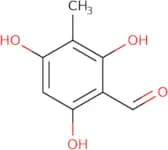
CAS:<p>Versatile small molecule scaffold</p>Formula:C12H7NO6Purity:Min. 95%Molecular weight:261.19 g/mol2,4,6-Trihydroxy-3-methylbenzaldehyde
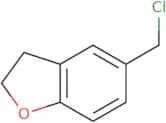
CAS:<p>Versatile small molecule scaffold</p>Formula:C8H8O4Purity:Min. 95%Molecular weight:168.15 g/mol5-(Chloromethyl)-2,3-dihydro-1-benzofuran
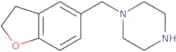
CAS:<p>Versatile small molecule scaffold</p>Formula:C9H9ClOPurity:Min. 95%Molecular weight:168.62 g/mol1-(2,3-Dihydro-1-benzofuran-5-ylmethyl)piperazine
CAS:Versatile small molecule scaffoldFormula:C13H18N2OPurity:Min. 95%Molecular weight:218.29 g/mol2,3-Dihydrobenzo[b]furan-5-ylmethylamine hydrochloride
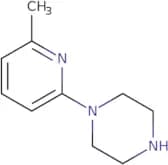
CAS:<p>Versatile small molecule scaffold</p>Formula:C9H11NO·ClHPurity:Min. 95%Molecular weight:185.65 g/mol1-(6-Methylpyridin-2-yl)piperazine
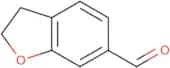
CAS:<p>Versatile small molecule scaffold</p>Formula:C10H15N3Purity:Min. 95%Molecular weight:177.25 g/mol2,3-dihydrobenzofuran-6-carbaldehyde
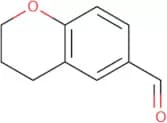
CAS:<p>Versatile small molecule scaffold</p>Formula:C9H8O2Purity:Min. 95%Molecular weight:148.16 g/molChroman-6-carbaldehyde
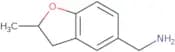
CAS:<p>Chroman-6-carbaldehyde is a chemical compound that has been shown to have antidiabetic and antifungal activity. It is synthesized by reductive amination of chroman-6-carboxylic acid with an amine (e.g., piperazine) in the presence of sodium cyanoborohydride. Chroman-6-carbaldehyde inhibits lipase activity, which can decrease the blood glucose level in diabetic patients, and also has antibacterial properties. This compound is one of the active compounds found in a strain of fungus Penicillium sp., which was isolated from soil samples collected in the city of Kolkata, India. Chroman-6-carbaldehyde is fluorescent and can be detected using fluorescence spectroscopy and high performance liquid chromatography (HPLC).</p>Formula:C10H10O2Purity:Min. 95%Molecular weight:162.19 g/molC-(2-Methyl-2,3-dihydro-benzofuran-5-yl)-methylamine
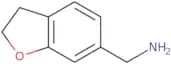
CAS:<p>Versatile small molecule scaffold</p>Formula:C10H13NOPurity:Min. 95%Molecular weight:163.22 g/mol(2,3-Dihydro-1-benzofuran-6-yl)methanamine
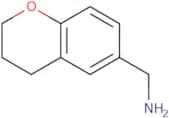
CAS:<p>Versatile small molecule scaffold</p>Formula:C9H11NOPurity:Min. 95%Molecular weight:149.19 g/molChroman-6-ylmethylamine
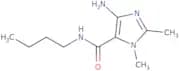
CAS:<p>Versatile small molecule scaffold</p>Formula:C10H13NOPurity:Min. 95%Molecular weight:163.22 g/mol4-Amino-N-butyl-1,2-dimethyl-1H-imidazole-5-carboxamide
CAS:<p>Versatile small molecule scaffold</p>Formula:C10H18N4OPurity:Min. 95%Molecular weight:210.28 g/mol3,6-Dichloropyridazine
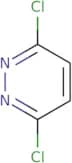
CAS:<p>3,6-Dichloropyridazine is a chemical compound that belongs to the group of heterocycles. It is used as an intermediate for the production of other chemicals such as pharmaceuticals and pesticides. 3,6-Dichloropyridazine can be used in the treatment of inflammatory diseases by inhibiting cyclic nucleotide phosphodiesterase and preventing the accumulation of cyclic nucleotides. 3,6-Dichloropyridazine has been shown to inhibit cancer cells by binding to α7 nicotinic acetylcholine receptors in the cell membrane. The chlorine atom at position 3 on the pyridine ring is responsible for this effect. In addition, 3,6-dichloropyridazine has been shown to react with both nucleophilic and electrophilic groups. This chemical also displays a wide range of chemical diversity due to its three chlorine atoms.</p>Formula:C4H2Cl2N2Purity:Min. 95%Color and Shape:Red PowderMolecular weight:148.98 g/mol2,6-Dimethoxyaniline
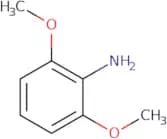
CAS:<p>2,6-Dimethoxyaniline is a synthetic compound that has been used in the past as an antibacterial agent. It has been shown to be effective against Staphylococcus aureus and Escherichia coli, but not against Pseudomonas aeruginosa. 2,6-Dimethoxyaniline forms nanowires with an average diameter of 100 nm and lengths up to 1 micron when exposed to radiation (e.g., gamma rays). The reaction rate is dependent on the architecture and morphology of the azobenzene moiety. The chloride anion coordinates with the nitrogen atom in the molecule, which leads to a phase transition temperature of about 230 K.</p>Formula:C8H11NO2Purity:Min. 95%Color and Shape:White PowderMolecular weight:153.18 g/mol2,4-Dichloro-3-nitroquinoline
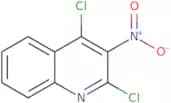
CAS:<p>2,4-Dichloro-3-nitroquinoline is a chemotherapeutic drug that belongs to the class of epidermal growth factor receptor (EGFR) inhibitors. This agent has anticancer activity against cells in the G1 phase of the cell cycle and may also have some antiproliferative effects on tumor cells. 2,4-Dichloro-3-nitroquinoline binds to EGFR and inhibits the binding of epidermal growth factor (EGF) to its receptor. This binding causes the activation of downstream signaling pathways that regulate cell proliferation. Computer modeling has been used to determine how this compound interacts with other molecules such as hydrogen bonds, nucleophilic substitution, and organic solvents.</p>Formula:C9H4Cl2N2O2Purity:Min. 95%Molecular weight:243.05 g/molDocosane
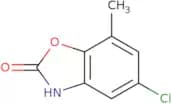
CAS:<p>Please enquire for more information about Docosane including the price, delivery time and more detailed product information at the technical inquiry form on this page</p>Formula:C22H46Purity:Min. 95%Molecular weight:310.6 g/mol5-Chloro-7-methyl-2,3-dihydro-1,3-benzoxazol-2-one
CAS:<p>Versatile small molecule scaffold</p>Formula:C8H6ClNO2Purity:Min. 95%Molecular weight:183.59 g/molBenzo[1,3]dioxole-5-carboxamidine hydrochloride
CAS:<p>Versatile small molecule scaffold</p>Formula:C8H9ClN2O2Purity:Min. 95%Color and Shape:PowderMolecular weight:200.62 g/mol2-Phenylpyrazolo[1,5-a]pyridine-3-carboxylic acid
CAS:<p>2-Phenylpyrazolo[1,5-a]pyridine-3-carboxylic acid is a reagent that is used to fluorinate methyl esters. It can be used to monitor the reaction by spectroscopy. 2-Phenylpyrazolo[1,5-a]pyridine-3-carboxylic acid reacts with acid methyl esters to form acid methyl esters in the presence of selectfluor. The product can be purified by extraction with ethanol and recrystallization or by column chromatography.</p>Formula:C14H10N2O2Purity:Min. 95%Molecular weight:238.24 g/mol

![2,3-Dihydrobenzo[b]furan-5-ylmethylamine hydrochloride](/_next/image/?url=https%3A%2Fstatic.cymitquimica.com%2Fproducts%2F3D%2Fthumb-webp%2FFCA74574.webp&w=3840&q=75)

![Benzo[1,3]dioxole-5-carboxamidine hydrochloride](/_next/image/?url=https%3A%2Fstatic.cymitquimica.com%2Fproducts%2F3D%2Fthumb-webp%2FFDA53115.webp&w=3840&q=75)
![2-Phenylpyrazolo[1,5-a]pyridine-3-carboxylic acid](/_next/image/?url=https%3A%2Fstatic.cymitquimica.com%2Fproducts%2F3D%2Fthumb-webp%2FFDA53707.webp&w=3840&q=75)