


Building Blocks
This section contains fundamental products for the synthesis of organic and biological compounds. Building blocks are the essential starting materials used to construct complex molecules through various chemical reactions. They play a critical role in drug discovery, material science, and chemical research. At CymitQuimica, we offer a diverse range of high-quality building blocks to support your innovative research and industrial projects, ensuring you have the essential components for successful synthesis.
Subcategories of "Building Blocks"
- Boronic Acids & Boronic Acid Derivatives(5,778 products)
- Chiral Building Blocks(1,242 products)
- Hydrocarbon Building Blocks(6,098 products)
- Organic Building Blocks(61,084 products)
Found 198714 products of "Building Blocks"
Sort by
Purity (%)
0
100
|
0
|
50
|
90
|
95
|
100
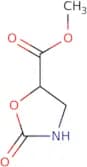
Methyl 2-oxo-1,3-oxazolidine-5-carboxylate
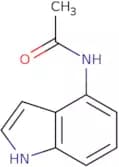
CAS:<p>Versatile small molecule scaffold</p>Formula:C5H7NO4Purity:Min. 95%Molecular weight:145.11 g/molN-(1H-Indol-4-yl)acetamide
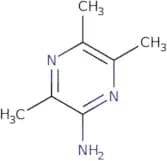
CAS:<p>Versatile small molecule scaffold</p>Formula:C10H10N2OPurity:Min. 95%Molecular weight:174.2 g/molTrimethylpyrazin-2-amine
CAS:<p>Versatile small molecule scaffold</p>Formula:C7H11N3Purity:Min. 95%Molecular weight:137.18 g/mol2-Methyl-4-phenylpyridine
CAS:2-Methyl-4-phenylpyridine is a cationic surfactant that has been shown to be effective in treating Parkinson's disease. 2-Methyl-4-phenylpyridine was found to have light emission properties, which may be related to the protein kinase C (PKC) signaling pathway. PKC phosphorylates a number of proteins, including dopamine D1 receptor and voltage gated potassium channels, leading to changes in cellular physiology. The uptake of 2-methyl-4-phenylpyridine into cells is mediated by the sodium/potassium ATPase pump. This drug has also been shown to inhibit active oxygen species production and decrease the levels of striatal dopamine in experimental models of Parkinson's disease. Clinical studies have shown that this drug can improve motor symptoms in patients with Parkinson's disease.Formula:C12H11NPurity:Min. 95%Molecular weight:169.22 g/mol2-Cyano-N-[2-(dimethylamino)ethyl]acetamide
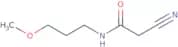
CAS:<p>Versatile small molecule scaffold</p>Formula:C7H13N3OPurity:Min. 95%Molecular weight:155.2 g/mol2-Cyano-N-(3-methoxypropyl)acetamide
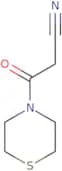
CAS:Versatile small molecule scaffoldFormula:C7H12N2O2Purity:Min. 95%Molecular weight:156.18 g/mol3-Oxo-3-(thiomorpholin-4-yl)propanenitrile
CAS:<p>Versatile small molecule scaffold</p>Formula:C7H10N2OSPurity:Min. 95%Molecular weight:170.23 g/molDL-phenylalanine methyl ester
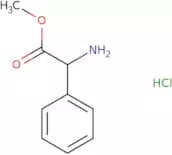
CAS:DL-Phenylalanine methyl ester is a pharmaceutical drug that is used in the treatment of bladder cancer. It is an ester of DL-phenylalanine, which is an amino acid. The drug binds to the active site of protease enzymes and inhibits their activity. This inhibition prevents the breakdown of proteins in cells, which may lead to cell death. DL-Phenylalanine methyl ester also has antihypertensive properties, which may be due to its ability to inhibit angiotensin II production or block sodium channels on vascular smooth muscle cells.Formula:C10H13NO2Purity:Min. 95%Molecular weight:179.22 g/molPhenylglycine Methyl Ester Hydrochloride
CAS:<p>Phenylglycine methyl ester hydrochloride is an amide that is synthesized by the reaction of an ester with an amino acid. It has been shown to inhibit the activity of copper enzymes in a chronic kidney disease model. This compound has been shown to bind to the active site of enzymes, such as aminopeptidase and dipeptidyl peptidase, which are involved in the metabolism of proteins. Phenylglycine methyl ester hydrochloride inhibits the activity of these enzymes, thereby affecting the production of inflammatory and autoimmune diseases. This product has also been shown to be effective against infectious diseases caused by bacteria, such as Mycobacterium tuberculosis and Pseudomonas aeruginosa. The structure of phenylglycine methyl ester hydrochloride consists of a heterocycle with two aromatic rings and one aliphatic ring.</p>Formula:C9H12ClNO2Purity:Min. 95%Molecular weight:201.65 g/mol1-Formamidocyclopentane-1-carboxylic acid
CAS:<p>Versatile small molecule scaffold</p>Formula:C7H11NO3Purity:Min. 95%Molecular weight:157.17 g/molBicyclo[2.2.1]hept-2-ene-1-carboxylic acid
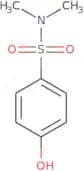
CAS:<p>Bicyclo[2.2.1]hept-2-ene-1-carboxylic acid is a cyclic dicarboxylic acid with a polarizing group, which is used as a polymerization initiator in the production of polymers. Bicyclo[2.2.1]hept-2-ene-1-carboxylic acid is an aliphatic hydrocarbon, which undergoes fluorination to form the trifluoromethyl ester and then undergoes polymerization to form poly(bicyclo[2.2.1]heptane). The hydroxyl group in bicyclo[2.2.1]heptane can be used as a reactive site for functional groups such as carbonyl groups or cationic polymerization.br><br>Bicyclo[2.2.1]hept-2-ene-1-carboxy</p>Formula:C8H10O2Purity:Min. 95%Molecular weight:138.16 g/mol4-Hydroxy-N,N-dimethylbenzene-1-sulfonamide
CAS:<p>4-Hydroxy-N,N-dimethylbenzene-1-sulfonamide is a compound with diverse applications in various industries. It is commonly used as a benzyl halide for brominating reactions and in the synthesis of pyrazoles. However, due to its low bioavailability, it is primarily used as a research chemical.</p>Formula:C8H11NO3SPurity:Min. 95%Molecular weight:201.25 g/mol2-{Bicyclo[2.2.1]heptan-1-yl}acetic acid
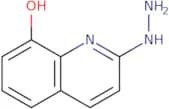
CAS:<p>Versatile small molecule scaffold</p>Formula:C9H14O2Purity:Min. 95%Molecular weight:154.21 g/mol2-Hydrazinylquinolin-8-ol
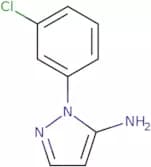
CAS:<p>Versatile small molecule scaffold</p>Formula:C9H9N3OPurity:Min. 95%Molecular weight:175.19 g/mol2-(3-Chlorophenyl)-2H-pyrazol-3-ylamine
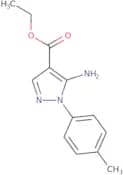
CAS:<p>Versatile small molecule scaffold</p>Formula:C9H8ClN3Purity:Min. 95%Molecular weight:193.63 g/molEthyl 5-amino-1-(p-tolyl)-1H-pyrazole-4-carboxylate
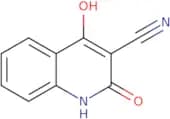
CAS:<p>Versatile small molecule scaffold</p>Formula:C13H15N3O2Purity:Min. 95%Molecular weight:245.28 g/mol4-Hydroxy-2-oxo-1,2-dihydroquinoline-3-carbonitrile
CAS:<p>Versatile small molecule scaffold</p>Formula:C10H6N2O2Purity:Min. 95%Molecular weight:186.17 g/molD-Valinol
CAS:<p>D-Valinol is a fine chemical that has been used as an intermediate in the synthesis of other chemicals. It is also a versatile building block for organic reactions, such as condensation reactions. D-Valinol is a white solid and has CAS No. 4276-09-9. It can be used as a reagent or catalyst in the synthesis of pharmaceuticals, agrochemicals, and other speciality chemicals. D-Valinol is also useful as an intermediate in the production of high quality research chemicals and speciality chemicals.</p>Formula:C5H13NOPurity:Min. 98.0 Area-%Molecular weight:103.1 g/mol1-[(tert-Butoxy)carbonyl]-3-phenoxyazetidine-3-carboxylic acid
CAS:<p>Versatile small molecule scaffold</p>Formula:C15H19NO5Purity:Min. 95%Molecular weight:293.3 g/mol3-Azabicyclo[4.2.1]nonane-3-carboxamide
CAS:<p>Versatile small molecule scaffold</p>Formula:C9H16N2OPurity:Min. 95%Molecular weight:168.2 g/mol


![2-Cyano-N-[2-(dimethylamino)ethyl]acetamide](/_next/image/?url=https%3A%2Fstatic.cymitquimica.com%2Fproducts%2F3D%2Fthumb-webp%2FQAA02955.webp&w=3840&q=75)


![Bicyclo[2.2.1]hept-2-ene-1-carboxylic acid](/_next/image/?url=https%3A%2Fstatic.cymitquimica.com%2Fproducts%2F3D%2Fthumb-webp%2FQAA02339.webp&w=3840&q=75)
![2-{Bicyclo[2.2.1]heptan-1-yl}acetic acid](/_next/image/?url=https%3A%2Fstatic.cymitquimica.com%2Fproducts%2F3D%2Fthumb-webp%2FQAA01983.webp&w=3840&q=75)

![1-[(tert-Butoxy)carbonyl]-3-phenoxyazetidine-3-carboxylic acid](/_next/image/?url=https%3A%2Fstatic.cymitquimica.com%2Fproducts%2F3D%2Fthumb-webp%2FPRD95586.webp&w=3840&q=75)
![3-Azabicyclo[4.2.1]nonane-3-carboxamide](/_next/image/?url=https%3A%2Fstatic.cymitquimica.com%2Fproducts%2F3D%2Fthumb-webp%2FPRD81804.webp&w=3840&q=75)