


Building Blocks
This section contains fundamental products for the synthesis of organic and biological compounds. Building blocks are the essential starting materials used to construct complex molecules through various chemical reactions. They play a critical role in drug discovery, material science, and chemical research. At CymitQuimica, we offer a diverse range of high-quality building blocks to support your innovative research and industrial projects, ensuring you have the essential components for successful synthesis.
Subcategories of "Building Blocks"
- Boronic Acids & Boronic Acid Derivatives(5,756 products)
- Chiral Building Blocks(1,242 products)
- Hydrocarbon Building Blocks(6,095 products)
- Organic Building Blocks(61,038 products)
Found 196817 products of "Building Blocks"
Sort by
Purity (%)
0
100
|
0
|
50
|
90
|
95
|
100
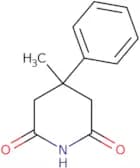
4-Methyl-4-phenylpiperidine-2,6-dione
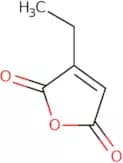
CAS:<p>Versatile small molecule scaffold</p>Formula:C12H13NO2Purity:Min. 95%Molecular weight:203.24 g/mol3-Ethyl-2,5-dihydrofuran-2,5-dione
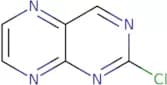
CAS:<p>3-Ethyl-2,5-dihydrofuran-2,5-dione is a phenylsiloxane that has been synthesized by the reaction of 2,5-diiodohexene with ethyl 2,3-epoxypropanoate. It is soluble in organic solvents and has been used as an antibacterial agent. 3-Ethyl-2,5-dihydrofuran-2,5-dione is also used as a coating material with excellent barrier properties and good resistance to water. This compound can be modified to produce reactive silanes or silicon polymers.</p>Formula:C6H6O3Purity:Min. 95%Molecular weight:126.11 g/mol2-Chloropteridine
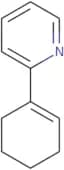
CAS:<p>2-Chloropteridine is a surfactant that has been shown to have antibacterial, antifungal, and antiviral activities. This compound is a triethyl orthoformate derivative of 2-chloro-1,3-dimethylhydrazine. It has been shown to have antimicrobial activity against gram positive bacteria such as methicillin resistant Staphylococcus aureus (MRSA) and Acinetobacter baumannii. 2-Chloropteridine also inhibits the production of TNF-α in macrophages by suppressing the transcription of NF-κB. This molecule can be used as a fluorescent probe for nucleic acid hybridization studies. It can also be used in an electroluminescent device or an ethyl orthoformate based light emitting diode (LED).</p>Formula:C6H3ClN4Purity:Min. 95%Molecular weight:166.57 g/mol2-(Cyclohex-1-en-1-yl)pyridine
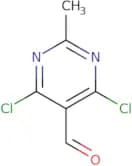
CAS:<p>2-(Cyclohex-1-en-1-yl)pyridine (CXEP) is a synthetic precursor in the synthesis of aminopyridines. CXEP has been used as a reagent for the synthesis of pyrimidine compounds, and it has been proposed as a possible antibacterial agent. This compound reacts with alcohols to form cyclohexene derivatives that have antibacterial properties. It can also be used as an acceptor in mechanistic studies or to connect two molecules together.</p>Formula:C11H13NPurity:Min. 95%Molecular weight:159.23 g/mol4,6-Dichloro-2-methylpyrimidine-5-carbaldehyde
CAS:<p>Versatile small molecule scaffold</p>Formula:C6H4Cl2N2OPurity:Min. 95%Molecular weight:191.01 g/mol4-Chloro-6-(dimethylamino)pyrimidine-5-carbaldehyde
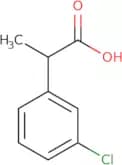
CAS:<p>Versatile small molecule scaffold</p>Formula:C7H8ClN3OPurity:Min. 95%Molecular weight:185.61 g/mol2-(3-Chlorophenyl)propanoic acid
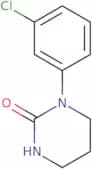
CAS:<p>2-(3-Chlorophenyl)propanoic acid is a surfactant that is soluble in water. It has been shown to be an effective reactant in the liquid phase of a reaction system. The molecular structure of 2-(3-Chlorophenyl)propanoic acid has been determined by optical and nuclear magnetic resonance spectroscopy. Its chemical formula is C8H10ClO2, with a molecular weight of 228.19 g/mol. It can be hydrolyzed by lipases, which are enzymes that catalyze the hydrolysis of ester bonds in lipids and other organic compounds. The reaction was monitored by high-performance liquid chromatography (HPLC). 2-(3-Chlorophenyl)propanoic acid is used as an intermediate in the production of polymers, plastics, and pharmaceuticals.</p>Formula:C9H9ClO2Purity:Min. 95%Molecular weight:184.62 g/mol1-(3-Chlorophenyl)tetrahydropyrimidin-2(1H)-one
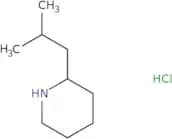
CAS:<p>Versatile small molecule scaffold</p>Formula:C10H11ClN2OPurity:Min. 95%Molecular weight:210.66 g/mol2-(2-Methylpropyl)piperidine hydrochloride
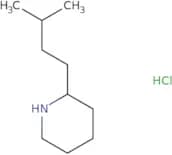
CAS:<p>Versatile small molecule scaffold</p>Formula:C9H20ClNPurity:Min. 95%Molecular weight:177.71 g/mol2-(3-Methylbutyl)piperidine hydrochloride
CAS:<p>Versatile small molecule scaffold</p>Formula:C10H22ClNPurity:Min. 95%Molecular weight:191.74 g/mol3-Hydroxy-6-methylpicolinic acid
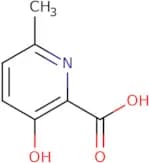
CAS:<p>3-Hydroxy-6-methylpicolinic acid is a pyridine derivative, a carboxylic acid and an isomer of picolinic acid. It was first synthesized in 1884 by the French chemist Pierre Paul Emile Leloir. 3-Hydroxy-6-methylpicolinic acid is produced by the ammonolysis of picoline with ammonia or ammonium salts at high pressure and temperature. The product is used as a precursor to other compounds, such as methylpyridines and ethylpyridines. It can also be used to make the cyanogen chloride gas, which has been used as a chemical weapon in World War II.</p>Formula:C7H7NO3Purity:Min. 95%Molecular weight:153.14 g/mol(2-Aminoethyl)(2-methoxyethyl)methylamine
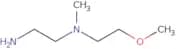
CAS:<p>Versatile small molecule scaffold</p>Formula:C6H16N2OPurity:Min. 95%Molecular weight:132.2 g/mol6-Phenylhexan-2-one
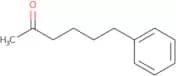
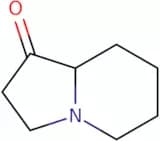
CAS:<p>6-Phenylhexan-2-one is a ketone that can be synthesized by the reaction of benzene with perborate. The compound is used as a starting material in organic synthesis, for example in the phenylation of an alcohol. 6-Phenylhexan-2-one has been shown to react with anhydrous hydrogen peroxide and form benzoyl peroxide.</p>Formula:C12H16OPurity:Min. 95%Molecular weight:176.25 g/molOctahydroindolizin-1-one
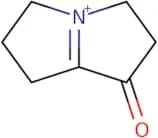
CAS:<p>Octahydroindolizin-1-one is a biologically active organic compound that has been shown to be effective against bowel disease and inflammatory bowel disease. The major pathway of metabolism for this drug is hydroxylation followed by conjugation with glucuronic acid. It also undergoes oxidative deamination, which produces the corresponding amide. Octahydroindolizin-1-one has been shown to have an effect on growth factor receptors, and can inhibit serine proteases in striatal dopamine. The drug has not been found to be enantioselective, with both the (S)- and (R)-isomers being synthesized during its synthesis.</p>Formula:C8H13NOPurity:Min. 95%Molecular weight:139.19 g/molHexahydropyrrolizin-1-one
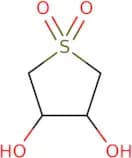
CAS:<p>Hexahydropyrrolizin-1-one is an aryl halide that has been shown to reduce the severity of colitis and other inflammatory bowel diseases. It has been proposed that this drug uses hydrogen bonding with dimethyl fumarate to form a stable, non-polar, hydrophobic complex. This complex is then taken up by intestinal cells and causes the release of inflammatory mediators. Hexahydropyrrolizin-1-one may also be useful in treating infectious diseases caused by gram-positive bacteria due to its ability to inhibit protein synthesis.</p>Formula:C7H11NOPurity:Min. 95%Molecular weight:125.17 g/mol(3R,4R)-rel-Tetrahydro-3,4-thiophenediol 1,1-dioxide
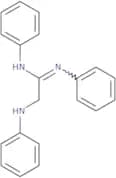
CAS:<p>Versatile small molecule scaffold</p>Formula:C4H8O4SPurity:Min. 95%Molecular weight:152.17 g/molN,N'-Diphenyl-2-(phenylamino)ethanimidamide
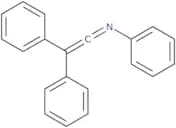
CAS:<p>Versatile small molecule scaffold</p>Formula:C20H19N3Purity:Min. 95%Molecular weight:301.4 g/molN-(Diphenylethenylidene)aniline
CAS:<p>Versatile small molecule scaffold</p>Formula:C20H15NPurity:Min. 95%Molecular weight:269.3 g/mol(R)-2-Phenylpropylamide
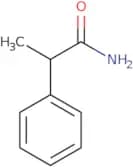
CAS:<p>(R)-2-Phenylpropylamide is an organic compound that has been synthesized to be a potential fungicide. It has been shown to inhibit the growth of Fusarium verticillioides, a fungus that causes wilt disease in plants. The compound is stereoselective and inhibits the growth of the fungus by inhibiting carbon metabolism at the level of pantolactone synthesis. The bacterial strain used in this study was Pantoea agglomerans, which was found on leaves and roots of six different plant species. (R)-2-Phenylpropylamide also showed antibacterial activity against Pantoea agglomerans and other bacteria. This compound had no significant effect on plant height, leaf area, or total root length. The metabolites were not detected in soil samples after two months, suggesting that (R)-2-phenylpropylamide may not have long-term effects on soil quality.</p>Formula:C9H11NOPurity:Min. 95%Molecular weight:149.19 g/mol1-(Morpholin-4-yl)-2-[4-(propan-2-yl)phenyl]ethane-1-thione
CAS:<p>Versatile small molecule scaffold</p>Formula:C15H21NOSPurity:Min. 95%Molecular weight:263.4 g/mol


![1-(Morpholin-4-yl)-2-[4-(propan-2-yl)phenyl]ethane-1-thione](/_next/image/?url=https%3A%2Fstatic.cymitquimica.com%2Fproducts%2F3D%2Fthumb-webp%2FPAA18265.webp&w=3840&q=75)