


Building Blocks
This section contains fundamental products for the synthesis of organic and biological compounds. Building blocks are the essential starting materials used to construct complex molecules through various chemical reactions. They play a critical role in drug discovery, material science, and chemical research. At CymitQuimica, we offer a diverse range of high-quality building blocks to support your innovative research and industrial projects, ensuring you have the essential components for successful synthesis.
Subcategories of "Building Blocks"
- Boronic Acids & Boronic Acid Derivatives(5,778 products)
- Chiral Building Blocks(1,242 products)
- Hydrocarbon Building Blocks(6,098 products)
- Organic Building Blocks(61,059 products)
Found 199580 products of "Building Blocks"
Sort by
Purity (%)
0
100
|
0
|
50
|
90
|
95
|
100
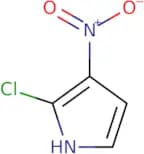
2-Chloro-3-nitro-1H-pyrrole
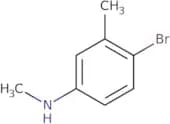
CAS:<p>Versatile small molecule scaffold</p>Formula:C4H3ClN2O2Purity:Min. 95%Molecular weight:146.53 g/mol4-Bromo-3,N-dimethylaniline
CAS:Versatile small molecule scaffoldFormula:C8H10BrNPurity:Min. 95%Molecular weight:200.08 g/mol1-[(Benzyloxy)carbonyl]-5-oxopyrrolidine-2-carboxylic acid
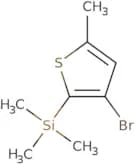
CAS:<p>Versatile small molecule scaffold</p>Formula:C13H13NO5Purity:Min. 95%Molecular weight:263.25 g/mol(3-Bromo-5-methylthiophen-2-yl)trimethylsilane
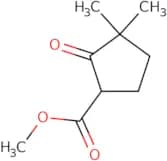
CAS:<p>(3-Bromo-5-methylthiophen-2-yl)trimethylsilane is a compound that can be used to synthesize triazole derivatives using copper. It is an alkyne and azide precursor. The photophysical properties of (3-bromo-5-methylthiophen-2-yl)trimethylsilane have been studied in detail and it has been shown to be a good choice for use in the preparation of triazole derivatives. Using this compound, researchers have been able to optimize their synthetic procedures.</p>Formula:C8H13BrSSiPurity:Min. 95%Molecular weight:249.24 g/molMethyl 3,3-dimethyl-2-oxocyclopentane-1-carboxylate
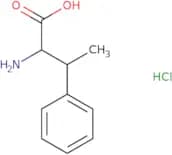
CAS:Versatile small molecule scaffoldFormula:C9H14O3Purity:Min. 95%Molecular weight:170.21 g/mol2-Amino-3-phenylbutanoic acid hydrochloride
CAS:<p>2-Amino-3-phenylbutanoic acid hydrochloride is a chelating agent that binds to metal ions and prevents their participation in reactions. This compound rearranges to form an enamine, which then reacts with the metal ion to form an intermediate. The intermediate can be stabilized by the formation of a metal-amino acid complex or through rearrangement. These reactions are stereospecific, diastereoselective, and diastereoisomeric. 2-Amino-3-phenylbutanoic acid hydrochloride is typically used as a catalyst for organic reactions.</p>Formula:C10H14ClNO2Purity:Min. 95%Molecular weight:215.68 g/mol1,4-Dimethyl 2-sulfamoylbenzene-1,4-dicarboxylate
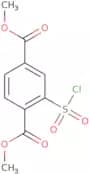
CAS:Versatile small molecule scaffoldFormula:C10H11NO6SPurity:Min. 95%Molecular weight:273.3 g/mol1,4-Dimethyl 2-(chlorosulfonyl)benzene-1,4-dicarboxylate
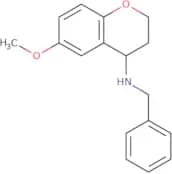
CAS:1,4-Dimethyl 2-(chlorosulfonyl)benzene-1,4-dicarboxylate is a potential herbicide. It is a chlorinated hydrocarbon that has been shown to inhibit plant growth by interfering with the production of ethylene. The mechanism of action for 1,4-dimethyl 2-(chlorosulfonyl)benzene-1,4-dicarboxylate is as an inhibitor of the enzyme acetolactate synthase (ALS). ALS catalyzes the first step in the biosynthesis of both branched and linear chains of amino acids. This inhibition leads to reduced levels of the amino acids proline and glutamic acid in plants. These amino acids are important regulators of plant growth and development.Formula:C10H9ClO6SPurity:Min. 95%Molecular weight:292.69 g/molN-Benzyl-6-methoxy-3,4-dihydro-2H-1-benzopyran-4-amine
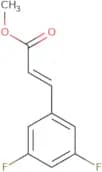
CAS:<p>Versatile small molecule scaffold</p>Formula:C17H19NO2Purity:Min. 95%Molecular weight:269.34 g/molMethyl (E)-3-(3,5-difluorophenyl)prop-2-enoate
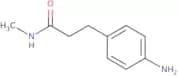
CAS:Versatile small molecule scaffoldFormula:C10H8F2O2Purity:Min. 95%Molecular weight:198.17 g/mol3-(4-Aminophenyl)-N-methylpropanamide
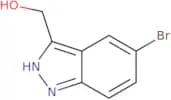
CAS:Versatile small molecule scaffoldFormula:C10H14N2OPurity:Min. 95%Molecular weight:178.24 g/mol(5-Bromo-1H-indazol-3-yl)-methanol
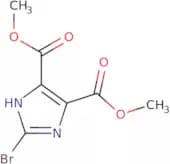
CAS:<p>Versatile small molecule scaffold</p>Formula:C8H7BrN2OPurity:Min. 95%Molecular weight:227.06 g/molDimethyl 2-bromo-1H-imidazole-4,5-dicarboxylate
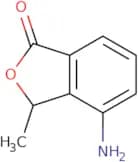
CAS:<p>Dimethyl 2-bromo-1H-imidazole-4,5-dicarboxylate is an alkylating agent that reacts with DNA by the alkylation of guanine. This causes a break in the DNA strands, which leads to cell death. Dimethyl 2-bromo-1H-imidazole-4,5-dicarboxylate is used as a hydrazine precursor in the synthesis of hydrazine and hydrogen peroxide. The oxidized form of this compound is also used as a stabilizer for polyurethane coatings.</p>Formula:C7H7BrN2O4Purity:Min. 95%Molecular weight:263.05 g/mol4-Amino-3-methyl-1,3-dihydro-2-benzofuran-1-one
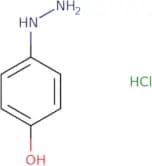
CAS:<p>Versatile small molecule scaffold</p>Formula:C9H9NO2Purity:Min. 95%Molecular weight:163.17 g/mol4-Hydrazinylphenol hydrochloride
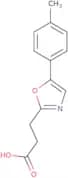
CAS:<p>Versatile small molecule scaffold</p>Formula:C6H9ClN2OPurity:Min. 95%Color and Shape:PowderMolecular weight:160.6 g/mol3-(5-p-Tolyl-oxazol-2-yl)-propionic acid
CAS:Versatile small molecule scaffoldFormula:C13H13NO3Purity:Min. 95%Molecular weight:231.25 g/mol(1S,2R)-cis-N-Boc-2-aminocyclopentanol
CAS:<p>Versatile small molecule scaffold</p>Formula:C10H19NO3Purity:Min. 95%Molecular weight:201.26 g/mol5-Silaspiro[4.5]decan-8-one
CAS:Versatile small molecule scaffoldFormula:C9H16OSiPurity:Min. 95%Molecular weight:168.3 g/mol6-Silaspiro[5.5]undecan-3-amine hydrochloride
CAS:Versatile small molecule scaffoldFormula:C10H22ClNSiPurity:Min. 95%Molecular weight:219.8 g/molN-[1-(4,4-Difluorocyclohexyl)ethylidene]hydroxylamine
CAS:<p>Versatile small molecule scaffold</p>Formula:C8H13F2NOPurity:Min. 95%Molecular weight:177.19 g/mol

![1-[(Benzyloxy)carbonyl]-5-oxopyrrolidine-2-carboxylic acid](/_next/image/?url=https%3A%2Fstatic.cymitquimica.com%2Fproducts%2F3D%2Fthumb-webp%2FFDA95362.webp&w=3840&q=75)

![5-Silaspiro[4.5]decan-8-one](/_next/image/?url=https%3A%2Fstatic.cymitquimica.com%2Fproducts%2F3D%2Fthumb-webp%2FFDC16663.webp&w=3840&q=75)
![6-Silaspiro[5.5]undecan-3-amine hydrochloride](/_next/image/?url=https%3A%2Fstatic.cymitquimica.com%2Fproducts%2F3D%2Fthumb-webp%2FFDC16670.webp&w=3840&q=75)
![N-[1-(4,4-Difluorocyclohexyl)ethylidene]hydroxylamine](/_next/image/?url=https%3A%2Fstatic.cymitquimica.com%2Fproducts%2F3D%2Fthumb-webp%2FFDD56424.webp&w=3840&q=75)