Building Blocks
This section contains fundamental products for the synthesis of organic and biological compounds. Building blocks are the essential starting materials used to construct complex molecules through various chemical reactions. They play a critical role in drug discovery, material science, and chemical research. At CymitQuimica, we offer a diverse range of high-quality building blocks to support your innovative research and industrial projects, ensuring you have the essential components for successful synthesis.
Subcategories of "Building Blocks"
- Boronic Acids & Boronic Acid Derivatives(5,778 products)
- Chiral Building Blocks(1,242 products)
- Hydrocarbon Building Blocks(6,098 products)
- Organic Building Blocks(61,059 products)
Found 199580 products of "Building Blocks"
Sort by
Purity (%)
0
100
|
0
|
50
|
90
|
95
|
100
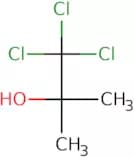
Chlorobutanol
CAS:Chlorobutanol is an antimicrobial agent that is used in the preservation of pharmaceuticals, cosmetics, and other products. It has been shown to be effective against a variety of bacterial and fungal organisms. Chlorobutanol is also used as a preservative in topical ophthalmic preparations. In addition, chlorobutanol has been found to be a potent inhibitor of histone deacetylase (HDAC) activity, which may be due to its ability to bind to the active site of HDACs. This binding prevents acetylation of lysine residues on histones, thereby preventing transcriptional activation.Formula:C4H7OCl3Purity:Min. 95%Color and Shape:White To Off-White SolidMolecular weight:177.46 g/mol4-Chloro-2,3-dimethylpyridine N-oxide
CAS:<p>4-Chloro-2,3-dimethylpyridine N-oxide is a chemical compound that belongs to the class of medicines. It is used in the manufacture of hydrogen peroxide, which is an oxidizing agent and a bleaching agent. 4-Chloro-2,3-dimethylpyridine N-oxide has been used as a reagent for organic synthesis and as a catalyst in organic reactions. This compound also has the ability to inhibit proton pumps, which are membrane proteins that pump protons across biological membranes. The presence of sodium impurities can lead to scaling problems because it affects the solubility of 4-chloro-2,3-dimethylpyridine N-oxide. The exothermic reaction with chlorine leads to the formation of chloride, sulfoxide, and chloride ions. These products are more soluble than 4-chloro-2,3-dimethylpyridine N-oxide itself.</p>Formula:C7H8ClNOPurity:Min. 95%Color and Shape:Off-White PowderMolecular weight:157.6 g/molClonidine hydrochloride
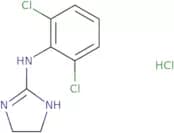
CAS:<p>Clonidine hydrochloride is a drug used in the treatment of hypertension and other cardiac diseases. It belongs to the class of drugs called centrally acting alpha-2 adrenergic agonists. Clonidine hydrochloride is also used for its antihypertensive effects in patients with neurogenic orthostatic hypotension, diabetic neuropathy, and glomerular filtration rate. The long-term efficacy and safety profile of clonidine hydrochloride has been established in clinical trials that have shown it to be effective in reducing symptoms of chronic pain and opioid withdrawal, as well as improving quality of life. Clonidine hydrochloride may be administered orally or transdermally. Clonidine binds to both alpha-1 and alpha-2 adrenergic receptors, which are responsible for vasoconstriction, inhibition of renin secretion from the kidneys, decreased sympathetic nerve activity, and increased parasympathetic nerve activity. This drug also has a protective effect on bone cancer cells</p>Formula:C9H9Cl2N3•HClPurity:Min. 95%Color and Shape:PowderMolecular weight:266.55 g/molCyclopropanecarboxylic acid chloride
CAS:<p>Cyclopropanecarboxylic acid chloride is an organic compound with a molecular formula of C3H6Cl2O. It belongs to the group of carboxylic acids and has a pyrazole ring, which is a potential drug target. Cyclopropanecarboxylic acid chloride has been found to be active against infectious diseases such as herpes, influenza, and Ebola. The mechanism of action for this compound is not yet fully understood but it has been shown to have an effect on growth factors and kinetic data.</p>Formula:C4H5ClOPurity:Min. 95%Molecular weight:104.53 g/molalpha-Cyano-3-hydroxycinnamic acid
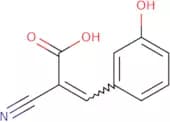
CAS:<p>alpha-Cyano-3-hydroxycinnamic acid is a mitochondrial matrix analog that has been shown to inhibit the uptake of carnitine, glutamate, and branched-chain amino acids. This compound also inhibits the activity of glyceraldehyde-3-phosphate dehydrogenase and dodecyl CoA dehydrogenase, which are enzymes involved in the production of cellular energy. alpha-Cyano-3-hydroxycinnamic acid also inhibits the synthesis of mitochondrial DNA and RNA. The compound binds to the enzyme succinate dehydrogenase, inhibiting its function. This inhibition leads to a decrease in cellular energy production and an increase in oxidative stress.</p>Formula:C10H7NO3Purity:Min. 95%Color and Shape:PowderMolecular weight:189.17 g/mol1-(2,4,5-Trifluorophenyl)propan-2-one
CAS:Versatile small molecule scaffoldFormula:C9H7F3OPurity:Min. 95%Molecular weight:188.15 g/mol1-(4-Chloro-2-fluorophenyl)propan-2-one
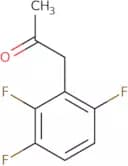
CAS:Versatile small molecule scaffoldFormula:C9H8ClFOPurity:Min. 95%Molecular weight:186.61 g/mol1-(2,3,6-Trifluorophenyl)propan-2-one
CAS:Versatile small molecule scaffoldFormula:C9H7F3OPurity:Min. 95%Molecular weight:188.15 g/mol1-(3-Chloro-2,6-difluorophenyl)propan-2-one
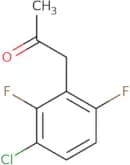
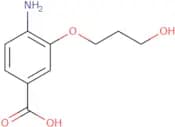
CAS:<p>Versatile small molecule scaffold</p>Formula:C9H7ClF2OPurity:Min. 95%Molecular weight:204.6 g/mol4-Amino-3-(3-hydroxypropoxy)benzoic acid
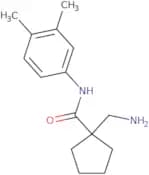
CAS:<p>Versatile small molecule scaffold</p>Formula:C10H13NO4Purity:Min. 95%Molecular weight:211.21 g/mol1-(Aminomethyl)-N-(3,4-dimethylphenyl)cyclopentane-1-carboxamide
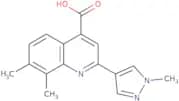
CAS:Versatile small molecule scaffoldFormula:C15H22N2OPurity:Min. 95%Molecular weight:246.35 g/mol7,8-Dimethyl-2-(1-methyl-1H-pyrazol-4-yl)quinoline-4-carboxylic acid
CAS:Versatile small molecule scaffoldFormula:C16H15N3O2Purity:Min. 95%Molecular weight:281.31 g/mol4-{[(3-Methylphenyl)methyl]carbamoyl}benzoic acid
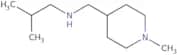
CAS:Versatile small molecule scaffoldFormula:C16H15NO3Purity:Min. 95%Molecular weight:269.29 g/mol2-Methyl-N-((1-methylpiperidin-4-yl)methyl)propan-1-amine
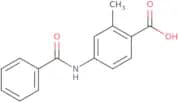
CAS:Versatile small molecule scaffoldFormula:C11H24N2Purity:Min. 95%Molecular weight:184.32 g/mol4-Benzamido-2-methylbenzoic acid
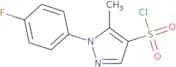
CAS:Versatile small molecule scaffoldFormula:C15H13NO3Purity:Min. 95%Molecular weight:255.27 g/mol1-(4-Fluorophenyl)-5-methyl-1H-pyrazole-4-sulfonyl chloride
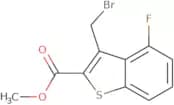
CAS:Versatile small molecule scaffoldFormula:C10H8ClFN2O2SPurity:Min. 95%Molecular weight:274.7 g/molMethyl 3-(bromomethyl)-4-fluoro-1-benzothiophene-2-carboxylate
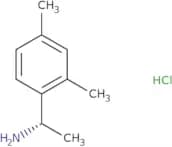
CAS:Versatile small molecule scaffoldFormula:C11H8BrFO2SPurity:Min. 95%Molecular weight:303.15 g/mol(S)-1-(2,4-dimethylphenyl)ethanamine hydrochloride
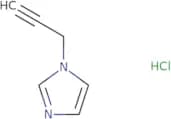
CAS:<p>Versatile small molecule scaffold</p>Formula:C10H16ClNPurity:Min. 95%Molecular weight:185.69 g/mol1-(Prop-2-yn-1-yl)-1H-imidazole hydrochloride
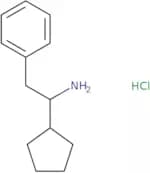
CAS:Versatile small molecule scaffoldFormula:C6H7ClN2Purity:Min. 95%Molecular weight:142.58 g/mol1-Cyclopentyl-2-phenylethan-1-amine hydrochloride
CAS:Controlled ProductVersatile small molecule scaffoldFormula:C13H20ClNPurity:Min. 95%Molecular weight:225.76 g/mol





![4-{[(3-Methylphenyl)methyl]carbamoyl}benzoic acid](/_next/image/?url=https%3A%2Fstatic.cymitquimica.com%2Fproducts%2F3D%2Fthumb-webp%2FFCC56743.webp&w=3840&q=75)