Building Blocks
This section contains fundamental products for the synthesis of organic and biological compounds. Building blocks are the essential starting materials used to construct complex molecules through various chemical reactions. They play a critical role in drug discovery, material science, and chemical research. At CymitQuimica, we offer a diverse range of high-quality building blocks to support your innovative research and industrial projects, ensuring you have the essential components for successful synthesis.
Subcategories of "Building Blocks"
- Boronic Acids & Boronic Acid Derivatives(5,778 products)
- Chiral Building Blocks(1,243 products)
- Hydrocarbon Building Blocks(6,098 products)
- Organic Building Blocks(61,057 products)
Found 200710 products of "Building Blocks"
Sort by
Purity (%)
0
100
|
0
|
50
|
90
|
95
|
100
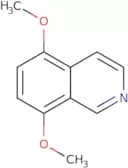
5,8-Dimethoxyisoquinoline
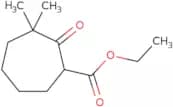
CAS:Versatile small molecule scaffoldFormula:C11H11NO2Purity:Min. 95%Molecular weight:189.21 g/molEthyl 3,3-dimethyl-2-oxocycloheptane-1-carboxylate
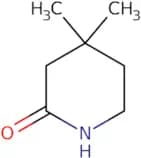
CAS:Versatile small molecule scaffoldFormula:C12H20O3Purity:Min. 95%Molecular weight:212.28 g/mol4,4-Dimethylpiperidin-2-one
CAS:<p>Versatile small molecule scaffold</p>Formula:C7H13NOPurity:Min. 95%Molecular weight:127.18 g/mol4-Chloro-thieno[3,2-c]pyridine-7-carboxamide
CAS:<p>Versatile small molecule scaffold</p>Formula:C8H5ClN2OSPurity:Min. 95%Molecular weight:212.66 g/mol4-Chlorothieno[3,2-c]pyridine-7-carboxylic acid
CAS:<p>Versatile small molecule scaffold</p>Formula:C8H4ClNO2SPurity:Min. 95%Molecular weight:213.64 g/mol2-[(Quinazolin-4-yl)amino]acetamide
CAS:<p>Versatile small molecule scaffold</p>Formula:C10H10N4OPurity:Min. 95%Molecular weight:202.21 g/mol2-[(Quinazolin-4-yl)amino]acetic acid
CAS:<p>Versatile small molecule scaffold</p>Formula:C10H9N3O2Purity:Min. 95%Molecular weight:203.2 g/mol3-(Diethylphosphoryl)aniline
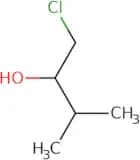
CAS:<p>Versatile small molecule scaffold</p>Formula:C10H16NOPPurity:Min. 95%Molecular weight:197.2 g/mol1-Chloro-3-methylbutan-2-ol
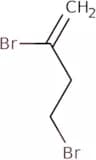
CAS:<p>Versatile small molecule scaffold</p>Formula:C5H11ClOPurity:Min. 95%Molecular weight:122.59 g/mol2,4-Dibromobut-1-ene
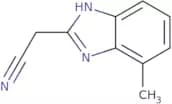
CAS:<p>2,4-Dibromobut-1-ene is a dihedral molecule that is used as an intermediate in the synthesis of other compounds. The highest serum levels are seen in infants and rationalized to protonation of the tertiary butyl group. Dehydration leads to formation of a high yield via alkylation with long-term exposure. 2,4-Dibromobut-1-ene has been shown to be an antineoplastic drug that inhibits cell growth by binding to electron deficient positions on DNA molecules. This causes nucleic acid strand breakage and inhibition of DNA synthesis, leading to cell death.</p>Formula:C4H6Br2Purity:Min. 95%Molecular weight:213.9 g/mol2-(4-methyl-1H-1,3-benzodiazol-2-yl)acetonitrile
CAS:Versatile small molecule scaffoldFormula:C10H9N3Purity:Min. 95%Molecular weight:171.19 g/mol11,13-Dimethyl-8-thia-3,5,10-triazatricyclo[7.4.0.0,2,7]trideca-1(13),2(7),3,9,11-pentaen-6-one
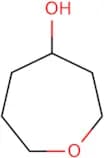
CAS:Versatile small molecule scaffoldFormula:C11H9N3OSPurity:Min. 95%Molecular weight:231.28 g/molOxepan-4-ol
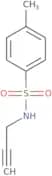
CAS:<p>Versatile small molecule scaffold</p>Formula:C6H12O2Purity:Min. 95%Molecular weight:116.16 g/mol4-Methyl-N-(prop-2-yn-1-yl)benzenesulfonamide
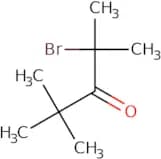
CAS:4-Methyl-N-(prop-2-yn-1-yl)benzenesulfonamide is a chiral, isopropyl substituted sulfonamide that has been synthesized by a palladium-catalyzed coupling reaction. It is an example of a biomolecular catalyst that has been shown to have the ability to catalyze the formation of chlorides, terminal alkynes and formyl groups. The crystal structure of this compound has been determined by X-ray diffraction and it was found to be composed of two molecules in the asymmetric unit with one molecule being disordered. 4-Methylbenzenesulfonamide is also an alkylating agent and can react with amines and amides to form cinchona alkaloid derivatives.Formula:C10H11NO2SPurity:Min. 95%Molecular weight:209.27 g/mol2-Bromo-2,4,4-trimethylpentan-3-one
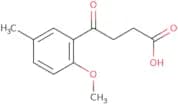
CAS:<p>Versatile small molecule scaffold</p>Formula:C8H15BrOPurity:Min. 95%Molecular weight:207.11 g/mol4-(2-Methoxy-5-methyl-phenyl)-4-oxo-butyric acid
CAS:Versatile small molecule scaffoldFormula:C12H14O4Purity:Min. 95%Molecular weight:222.24 g/mol[1-(4-Biphenylyl)ethyl]amine hydrochloride
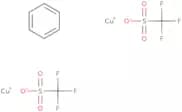
CAS:<p>Versatile small molecule scaffold</p>Formula:C14H16ClNPurity:Min. 95%Molecular weight:233.73 g/molCopper(I) trifluoromethanesulfonate benzene complex
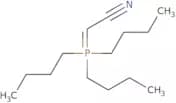
CAS:Copper trifluoromethanesulfonate is a copper complex that inhibits the activity of thrombin receptor and other diazo compounds. It has been shown to inhibit the activity of the cannabinoid receptors, sodium channels, and voltage-gated potassium channels. Copper trifluoromethanesulfonate can be used in organic chemistry as an alkylating agent or to form thioacetals. The activity of this compound is chiral, meaning that it can exist as two different enantiomers: (1) (S)-(+)-Copper(I) trifluoromethanesulfonate benzene complex and (2) (R)-(-)-Copper(I) trifluoromethanesulfonate benzene complex. These two enantiomers have different chemical properties, including their ability to bind to protein receptors.Formula:(CF3SO3Cu)2•C6H6Purity:Min. 95%Color and Shape:PowderMolecular weight:503.34 g/molCyanomethylenetributylphosphorane
CAS:<p>Cyanomethylenetributylphosphorane (CMTP) is an agent used for the diagnosis of body formation. It is a chemical compound that can be used to produce images of tissue and organs by detecting apoptosis, or programmed cell death. CMTP binds to the glucose-dependent insulinotropic polypeptide receptor (GIPR), stimulating the release of insulin in the pancreas. CMTP also has therapeutic potential for metabolic disorders, as it has been shown to reduce triglycerides and increase HDL cholesterol levels in human serum. CMTP is synthesized from trifluoroacetic acid, which is then reacted with a cyclic peptide containing an amino acid derivative and 1-methyl-2-pyrrolidinone. This reaction produces a molecule with one free amino group at one end and two free carboxylic acid groups at the other end. The molecule can be reacted with epidermal growth factor (EGF) or insulin to</p>Formula:C14H28NPPurity:Min. 95%Color and Shape:Yellow To Dark Brown Clear LiquidMolecular weight:241.35 g/mol4-Chloro-2,3-dimethylpyridine N-oxide
CAS:<p>4-Chloro-2,3-dimethylpyridine N-oxide is a chemical compound that belongs to the class of medicines. It is used in the manufacture of hydrogen peroxide, which is an oxidizing agent and a bleaching agent. 4-Chloro-2,3-dimethylpyridine N-oxide has been used as a reagent for organic synthesis and as a catalyst in organic reactions. This compound also has the ability to inhibit proton pumps, which are membrane proteins that pump protons across biological membranes. The presence of sodium impurities can lead to scaling problems because it affects the solubility of 4-chloro-2,3-dimethylpyridine N-oxide. The exothermic reaction with chlorine leads to the formation of chloride, sulfoxide, and chloride ions. These products are more soluble than 4-chloro-2,3-dimethylpyridine N-oxide itself.</p>Formula:C7H8ClNOPurity:Min. 95%Color and Shape:Off-White PowderMolecular weight:157.6 g/mol

![4-Chloro-thieno[3,2-c]pyridine-7-carboxamide](/_next/image/?url=https%3A%2Fstatic.cymitquimica.com%2Fproducts%2F3D%2Fthumb-webp%2FFCA04049.webp&w=3840&q=75)
![4-Chlorothieno[3,2-c]pyridine-7-carboxylic acid](/_next/image/?url=https%3A%2Fstatic.cymitquimica.com%2Fproducts%2F3D%2Fthumb-webp%2FFCA04048.webp&w=3840&q=75)
![2-[(Quinazolin-4-yl)amino]acetamide](/_next/image/?url=https%3A%2Fstatic.cymitquimica.com%2Fproducts%2F3D%2Fthumb-webp%2FFCA04021.webp&w=3840&q=75)
![2-[(Quinazolin-4-yl)amino]acetic acid](/_next/image/?url=https%3A%2Fstatic.cymitquimica.com%2Fproducts%2F3D%2Fthumb-webp%2FFCA04011.webp&w=3840&q=75)
![11,13-Dimethyl-8-thia-3,5,10-triazatricyclo[7.4.0.0,2,7]trideca-1(13),2(7),3,9,11-pentaen-6-one](/_next/image/?url=https%3A%2Fstatic.cymitquimica.com%2Fproducts%2F3D%2Fthumb-webp%2FFCA02335.webp&w=3840&q=75)
![[1-(4-Biphenylyl)ethyl]amine hydrochloride](/_next/image/?url=https%3A%2Fstatic.cymitquimica.com%2Fproducts%2F3D%2Fthumb-webp%2FFCA00532.webp&w=3840&q=75)