Building Blocks
Subcategories of "Building Blocks"
- Boronic Acids & Boronic Acid Derivatives(5,786 products)
- Chiral Building Blocks(1,246 products)
- Hydrocarbon Building Blocks(6,107 products)
- Organic Building Blocks(61,079 products)
Found 205461 products of "Building Blocks"
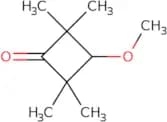
3-Methoxy-2,2,4,4-tetramethylcyclobutan-1-one
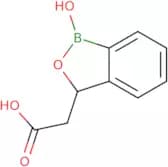
CAS:Versatile small molecule scaffoldFormula:C9H16O2Purity:Min. 95%Molecular weight:156.2 g/mol2-(1-Hydroxy-1,3-dihydro-2,1-benzoxaborol-3-yl)acetic acid
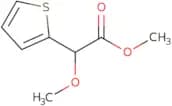
CAS:Versatile small molecule scaffoldFormula:C9H9BO4Purity:Min. 95%Molecular weight:191.98 g/molMethyl 2-methoxy-2-(thiophen-2-yl)acetate
CAS:Versatile small molecule scaffoldFormula:C8H10O3SPurity:Min. 95%Molecular weight:186.23 g/mol2-(2-Hydroxyethyl)phenylboronic acid dehydrated
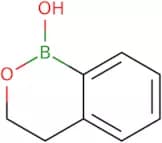
CAS:2-(2-Hydroxyethyl)phenylboronic acid dehydrated is a molecule with a hydroxyl group, a neutral ph, and a hydroxyl group. It is used in the synthesis of nitro compounds and has shown to have an inhibitory effect on protein synthesis. The compound also binds to hyaluronic acid, which may be due to its structural similarity to the sugar glucose.
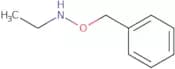
Formula:C8H9BO2Purity:Min. 95%Molecular weight:147.97 g/mol(Benzyloxy)(ethyl)amine
CAS:Versatile small molecule scaffold
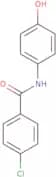
Formula:C9H13NOPurity:Min. 95%Molecular weight:151.21 g/mol4-Chloro-N-(4-hydroxyphenyl)benzamide
CAS:Versatile small molecule scaffold
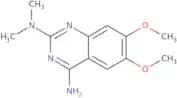
Formula:C13H10ClNO2Purity:Min. 95%Molecular weight:247.67 g/mol6,7-Dimethoxy-N2,N2-dimethylquinazoline-2,4-diamine
CAS:Versatile small molecule scaffold
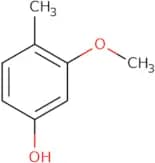
Formula:C12H16N4O2Purity:Min. 95%Molecular weight:248.28 g/mol3-Methoxy-4-methylphenol
CAS:3-Methoxy-4-methylphenol is a fatty acid that has been found to be an effective feedstock for the production of octane and other alkanes. It is produced by treatment of hexane with mandelonitrile followed by acetylation and alkylation. This chemical can also be used in the production of polyaromatic compounds, such as naphthalene, anthracene, phenanthrene, and pyrene. 3-Methoxy-4-methylphenol can be modified by peroxide treatment to produce a variety of products including methyl methacrylate.
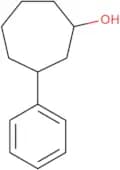
Formula:C8H10O2Purity:Min. 95%Molecular weight:138.16 g/mol3-Phenylcycloheptan-1-ol
CAS:Versatile small molecule scaffold
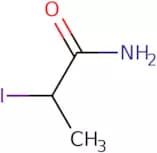
Formula:C13H18OPurity:Min. 95%Molecular weight:190.28 g/mol2-Iodopropanamide
CAS:2-Iodopropanamide is a polymeric compound that is obtained from the reaction of 2-iodobenzene with triethylborane in the presence of polystyrene. The product has a high yield and can be used to make laminates that are semipermeable, osmotic, and environmentally friendly. The polymeric composition is also cyclisable.
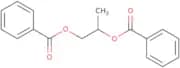
Formula:C3H6INOPurity:Min. 95%Molecular weight:198.99 g/mol2-(Benzoyloxy)propyl benzoate
CAS:2-(Benzoyloxy)propyl benzoate is a dibenzoate ester with a hydroxy group. It is an organic solvent that is minimizes the spreading of coatings and has optical properties. This compound reduces the viscosity of various polymers, such as polystyrene and polyvinyl chloride, when mixed in water. 2-(Benzoyloxy)propyl benzoate can be used to make coatings for plastics and paper products, including those that are biodegradable. This compound has been shown to have health effects like irritation on skin and mucous membranes, but it is not toxic to aquatic organisms.
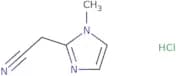
Formula:C17H16O4Purity:Min. 95%Molecular weight:284.31 g/mol2-(1-Methyl-1H-imidazol-2-yl)acetonitrile hydrochloride
CAS:Versatile small molecule scaffoldFormula:C6H8ClN3Purity:Min. 95%Molecular weight:157.6 g/molN-(3-Iodophenyl)acetamide
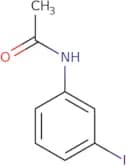
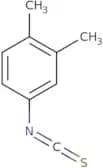
CAS:N-(3-Iodophenyl)acetamide is a chemical compound that is used in organic synthesis. It is soluble in water and has a melting point of 154°C. N-(3-Iodophenyl)acetamide can be synthesized by reacting 3-iodoaniline with acetic anhydride. The yield of this reaction is typically high, with a product purity of over 99%. This compound is used as an energy source when it undergoes photolysis, which results in the formation of CO2 and I2. N-(3-Iodophenyl)acetamide can also be synthesized through the aliphatic amine synthesis process by reacting ethylamine with acetaldehyde. This reaction produces a yellow liquid that can be purified by adding water to it and then boiling off the excess water. The resulting liquid should be cooled before use and stored under nitrogen gas for long periods of time.Formula:C8H8INOPurity:Min. 95%Molecular weight:261.06 g/mol3,4-Dimethylphenyl isothiocyanate
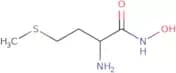
CAS:Versatile small molecule scaffoldFormula:C9H9NSPurity:Min. 95%Molecular weight:163.24 g/mol(2S)-2-Amino-N-hydroxy-4-(methylsulfanyl)butanamide
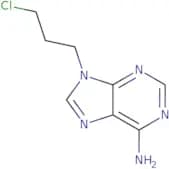
CAS:(2S)-2-Amino-N-hydroxy-4-(methylsulfanyl)butanamide is a ligand that binds to metal ions. It has been shown to bind to the axial coordination site of some transition metals, such as nickel, copper, and zinc. It is classified as a hydroxamic acid and can be used in coordination chemistry. The affinity of (2S)-2-amino-N-hydroxy-4-(methylsulfanyl)butanamide for copper is approximately 100 times stronger than its affinity for nickel. In addition, the red shift of (2S)-2-amino-N-hydroxy-4-(methylsulfanyl)butanamide is a sensitive indicator of the orientation of the ligand in coordination compounds with metal ions.Formula:C5H12N2O2SPurity:Min. 95%Molecular weight:164.23 g/mol9-(3-Chloropropyl)-9H-purin-6-amine
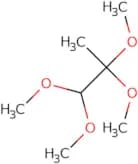
CAS:Versatile small molecule scaffoldFormula:C8H10ClN5Purity:Min. 95%Molecular weight:211.65 g/mol1,1,2,2-Tetramethoxypropane
CAS:Versatile small molecule scaffoldFormula:C7H16O4Purity:Min. 95%Molecular weight:164.2 g/mol2-[(2-Methylphenyl)methyl]butanedioic acid
CAS:2-[(2-Methylphenyl)methyl]butanedioic acid is a nitrate that is produced by the conversion of 2-methylbenzylsuccinic acid. It can be used as an electron acceptor in microbial assays and has been shown to have the ability to mineralize carbon sources such as xylene. It has also been shown to be capable of transforming benzoate, benzylsuccinic acid, and other substrates, but it does not form benzaldehyde or other metabolic products. The enzyme responsible for its conversion is a dehydrogenase.Formula:C12H14O4Purity:Min. 95%Molecular weight:222.24 g/mol2-Bromoethyl 4-methylbenzenesulfonate
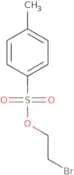
CAS:2-Bromoethyl 4-methylbenzenesulfonate is a molecule that binds to the benzodiazepine receptor and is used in clinical studies. It has been shown to have an uptake of 0.16% per hour, which is much slower than other benzodiazepines such as diazepam. 2-Bromoethyl 4-methylbenzenesulfonate has also been shown to be effective in treating anxiety and depression. The effective dose for this drug is 50 mg/kg, which is much higher than the 10 mg/kg dose of diazepam. This drug has been found to be safe in animals and humans at high doses, but its efficacy against pancreatic cancer remains unknown.Formula:C9H11BrO3SPurity:Min. 95%Molecular weight:279.15 g/mol(2-tert-Butyl-phenoxy)-acetic acid
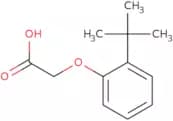
CAS:2-tert-Butyl-phenoxyacetic acid is a chain compound that has a crystal structure with hydrogen bonds. This compound has a disordered conformation and is composed of two dimers connected by hydrogen bonds. The dimers are linked by a benzene ring and form hydrogen-bonded chains. The molecule also has an asymmetric dihedral conformation. 2-tert-Butylphenoxyacetic acid can exist as either of the two conformations, depending on the environment it is in.
2-tert-Butylphenoxyacetic acid is soluble in alcohols, ethers, acetone, and chloroform. It has been shown to inhibit the growth of bacteria when used as a preservative agent in food products.Formula:C12H16O3Purity:Min. 95%Molecular weight:208.25 g/mol

![2-[(2-Methylphenyl)methyl]butanedioic acid](/_next/image/?url=https%3A%2Fstatic.cymitquimica.com%2Fproducts%2F3D%2Fthumb-webp%2FUAA26311.webp&w=3840&q=75)