Building Blocks
This section contains fundamental products for the synthesis of organic and biological compounds. Building blocks are the essential starting materials used to construct complex molecules through various chemical reactions. They play a critical role in drug discovery, material science, and chemical research. At CymitQuimica, we offer a diverse range of high-quality building blocks to support your innovative research and industrial projects, ensuring you have the essential components for successful synthesis.
Subcategories of "Building Blocks"
- Boronic Acids & Boronic Acid Derivatives(5,756 products)
- Chiral Building Blocks(1,242 products)
- Hydrocarbon Building Blocks(6,095 products)
- Organic Building Blocks(61,051 products)
Found 199813 products of "Building Blocks"
Sort by
Purity (%)
0
100
|
0
|
50
|
90
|
95
|
100
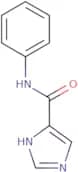
N-Phenyl-1H-imidazole-5-carboxamide
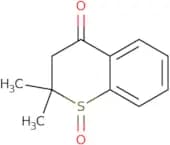
CAS:<p>Versatile small molecule scaffold</p>Formula:C10H9N3OPurity:Min. 95%Molecular weight:187.2 g/mol2,3-Ddihydro-2,2-dimethyl-4H-1-benzothiopyran-4-one 1-oxide
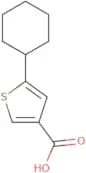
CAS:<p>Versatile small molecule scaffold</p>Formula:C11H12O2SPurity:Min. 95%Molecular weight:208.28 g/mol5-Cyclohexylthiophene-3-carboxylic acid
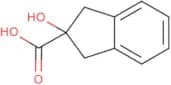
CAS:<p>Versatile small molecule scaffold</p>Formula:C11H14O2SPurity:Min. 95%Molecular weight:210.29 g/mol2-Hydroxy-2,3-dihydro-1H-indene-2-carboxylic acid
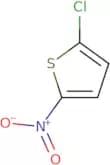
CAS:<p>Versatile small molecule scaffold</p>Formula:C10H10O3Purity:Min. 95%Molecular weight:178.18 g/mol2-chloro-5-nitrothiophene
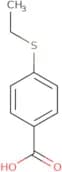
CAS:<p>2-Chloro-5-nitrothiophene is a nucleophilic compound that reacts with acetonitrile, which is a nucleophile. The inhibitory concentration of 2-chloro-5-nitrothiophene has been shown to be lower than that of thiophenes in general, and the compound can be used as a tool for evaluating the biological activity of thiophenes. 2-Chloro-5-nitrothiophene has been shown to have good inhibitory effects on Escherichia coli and other organisms. This compound also induces a number of different reactions: heterocyclic ring formation, synthesis of acetonitrile, and biomolecule evaluation.</p>Formula:C4H2ClNO2SPurity:Min. 95%Molecular weight:163.58 g/mol4-(Ethylthio)benzoic acid
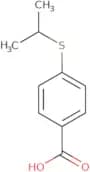
CAS:<p>4-(Ethylthio)benzoic acid is a stabilizer and biotransformation product of salicylic acid. It is synthesized by the demethylation of 4-hydroxybenzoic acid, which is an intermediate in the synthesis of salicylic acid. 4-(Ethylthio)benzoic acid has been shown to be a potent inhibitor of bacterial cytochrome P450 enzymes and may be useful as an antibacterial agent against bacteria that are resistant to other antibiotics. The nature and mechanism of its action on bacterial cytochrome P450 enzymes is not well understood at this time.</p>Formula:C9H10O2SPurity:Min. 95%Molecular weight:182.24 g/mol4-(Isopropylsulfanyl)benzoic acid
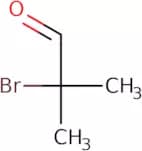
CAS:<p>4-(Isopropylsulfanyl)benzoic acid is a disubstituted benzoic acid with a 4-isopropylsulfanyl substituent. The compound is an analog of 4-methoxybenzoic acid and has been shown to be complementary to the same target site. Analogously, it also has been shown to have similar regiochemistry and ortho substitution as 4-methoxybenzoic acid.</p>Formula:C10H12O2SPurity:Min. 95%Molecular weight:196.27 g/mol2-Bromo-2-methylpropanal
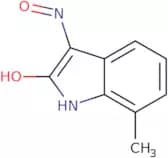
CAS:<p>2-Bromo-2-methylpropionaldehyde is an organic compound that belongs to the class of propionates. It is a primary amine that can be synthesized from acetone and chloroform. 2-Bromo-2-methylpropionaldehyde has been used as a disinfectant for skin and mucous membranes. It also lowers blood pressure by dilating the veins, which can help to prevent strokes and heart attacks. 2-Bromo-2-methylpropionaldehyde is more labile than its parent compound, propionic acid, because it lacks the hydrogens on the methyl group. It is susceptible to oxidation by hypobromous acid or chloride ions, which can lead to the formation of phenacyl bromide. Phenacyl bromide has been shown to have antiseptic properties and can be used as an intermediate in organic synthesis. END>></p>Formula:C4H7OBrPurity:Min. 95%Molecular weight:151 g/mol3-(Hydroxyimino)-7-methyl-2,3-dihydro-1H-indol-2-one
CAS:<p>Versatile small molecule scaffold</p>Formula:C9H8N2O2Purity:Min. 95%Molecular weight:176.17 g/mol3,3-Dimethylbicyclo[2.2.1]heptan-2-one
CAS:<p>3,3-Dimethylbicyclo[2.2.1]heptan-2-one is a reactive compound that belongs to the group of psychostimulants. It has been shown to be effective against cancer cells and is used in the treatment of cancer patients. There are two possible reaction mechanisms: 1) the formation of an intermediate (a cation), which then reacts with water vapor, and 2) a direct reaction between 3,3-dimethylbicyclo[2.2.1]heptan-2-one and water vapor. The former mechanism is more probable because it requires less energy input than the latter one. The quantum theory states that 3,3-dimethylbicyclo[2.2.1]heptan-2-one has an activation energy of ˜120 kJ/mol (or ˜135 kJ/mol).</p>Formula:C9H14OPurity:Min. 95%Molecular weight:138.21 g/mol1,4-Dihydrobenzo[d][1,3]oxazin-2-one
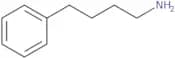
CAS:<p>1,4-Dihydrobenzo[d][1,3]oxazin-2-one is an organic solvent that can be used in the synthesis of quinoline derivatives. It is a carbamate that has been used as an efficient method for preparing chloroformates. In addition, 1,4-Dihydrobenzo[d][1,3]oxazin-2-one has been shown to be a potent progesterone receptor modulator.</p>Formula:C8H7NO2Purity:Min. 95%Molecular weight:149.15 g/mol4-Phenylbutylamine
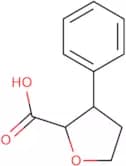
CAS:<p>4-Phenylbutylamine is a chemical that is found in natural compounds. It is a monoclonal antibody that binds to insulin-stimulated glucose, which is a type of protein. This binding inhibits the activity of 4-hydroxycinnamic acid and other enzymes, thereby reducing the amount of kinetic energy generated by these reactions. The binding also reduces the number of amines present in the sample. 4-Phenylbutylamine can be used for kinetic studies because it has low molecular weight and high stability.</p>Formula:C10H15NPurity:Min. 95%Molecular weight:149.24 g/molrac-(2R,3R)-3-Phenyloxolane-2-carboxylic acid
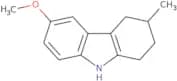
CAS:<p>Versatile small molecule scaffold</p>Formula:C11H12O3Purity:Min. 95%Molecular weight:192.21 g/mol6-Methoxy-3-methyl-2,3,4,9-tetrahydro-1H-carbazole
CAS:<p>Versatile small molecule scaffold</p>Formula:C14H17NOPurity:Min. 95%Molecular weight:215.29 g/mol2-Bromo-5,7-dimethyl[1,2,4]triazolo[1,5-a]pyrimidine
CAS:<p>Please enquire for more information about 2-Bromo-5,7-dimethyl[1,2,4]triazolo[1,5-a]pyrimidine including the price, delivery time and more detailed product information at the technical inquiry form on this page</p>Formula:C7H7BrN4Purity:Min. 95%Molecular weight:227.06 g/mol[1,2,4]Triazolo[1,5-a]pyrimidin-2-ylamine
CAS:<p>[1,2,4]Triazolo[1,5-a]pyrimidin-2-ylamine is a heterocyclic compound that is used to treat hematological and inflammatory diseases. It has been shown to have a long-term effect in treating autoimmune diseases and neurodegenerative diseases. It is also an aromatic hydrocarbon that can be used as a drug for the treatment of gastroenterological conditions such as ulcers or Crohn's disease.</p>Formula:C5H5N5Purity:Min. 95%Molecular weight:135.13 g/mol2-(Prop-2-yn-1-yl)oxane
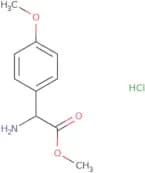
CAS:<p>Versatile small molecule scaffold</p>Formula:C8H12OPurity:Min. 95%Molecular weight:124.2 g/molmethyl 2-amino-2-(4-methoxyphenyl)acetate hydrochloride
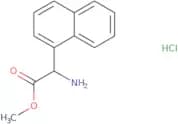
CAS:<p>Versatile small molecule scaffold</p>Formula:C10H14ClNO3Purity:Min. 95%Molecular weight:231.7 g/molMethyl 2-amino-2-(naphthalen-1-yl)acetate hydrochloride
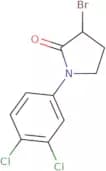
CAS:<p>Versatile small molecule scaffold</p>Formula:C13H14ClNO2Purity:Min. 95%Molecular weight:251.71 g/mol3-Bromo-1-(3,4-dichlorophenyl)pyrrolidin-2-one
CAS:<p>Versatile small molecule scaffold</p>Formula:C10H8BrCl2NOPurity:Min. 95%Molecular weight:308.98 g/mol

![3,3-Dimethylbicyclo[2.2.1]heptan-2-one](/_next/image/?url=https%3A%2Fstatic.cymitquimica.com%2Fproducts%2F3D%2Fthumb-webp%2FNAA21115.webp&w=3840&q=75)
![1,4-Dihydrobenzo[d][1,3]oxazin-2-one](/_next/image/?url=https%3A%2Fstatic.cymitquimica.com%2Fproducts%2F3D%2Fthumb-webp%2FNAA21388.webp&w=3840&q=75)
![2-Bromo-5,7-dimethyl[1,2,4]triazolo[1,5-a]pyrimidine](/_next/image/?url=https%3A%2Fstatic.cymitquimica.com%2Fproducts%2F3D%2Fthumb-webp%2FNAA22338.webp&w=3840&q=75)
![[1,2,4]Triazolo[1,5-a]pyrimidin-2-ylamine](/_next/image/?url=https%3A%2Fstatic.cymitquimica.com%2Fproducts%2F3D%2Fthumb-webp%2FNAA22353.webp&w=3840&q=75)