


Building Blocks
This section contains fundamental products for the synthesis of organic and biological compounds. Building blocks are the essential starting materials used to construct complex molecules through various chemical reactions. They play a critical role in drug discovery, material science, and chemical research. At CymitQuimica, we offer a diverse range of high-quality building blocks to support your innovative research and industrial projects, ensuring you have the essential components for successful synthesis.
Subcategories of "Building Blocks"
- Boronic Acids & Boronic Acid Derivatives(5,756 products)
- Chiral Building Blocks(1,242 products)
- Hydrocarbon Building Blocks(6,095 products)
- Organic Building Blocks(61,055 products)
Found 199650 products of "Building Blocks"
Sort by
Purity (%)
0
100
|
0
|
50
|
90
|
95
|
100
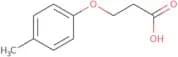
3-(4-Methylphenoxy)propionic acid
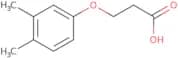
CAS:<p>Versatile small molecule scaffold</p>Formula:C10H12O3Purity:Min. 95%Molecular weight:180.2 g/mol3-(3,4-Dimethylphenoxy)propanoic acid
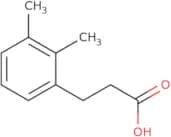
CAS:<p>Versatile small molecule scaffold</p>Formula:C11H14O3Purity:Min. 95%Molecular weight:194.23 g/mol3-(2',3'-Dimethylphenyl)propionic acid
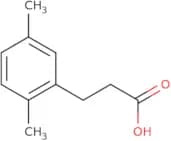
CAS:<p>3-(2',3'-Dimethylphenyl)propionic acid is a prostaglandin compound that inhibits the production of vasoconstricting and vasodilating substances. It belongs to the class of amide, benzoic acid, and azacyclic compounds. The structural formula is CHCOOH. 3-(2',3'-Dimethylphenyl)propionic acid inhibits the response of cells to agonists such as histamine, serotonin, and bradykinin by binding to specific receptors on cell surfaces called integrins. This compound has been shown to have vasospastic effects in patients with Raynaud's phenomenon or other diseases involving vasospasm. 3-(2',3'-Dimethylphenyl)propionic acid also has thrombotic effects due to its inhibition of blood coagulation factors IIa and Xa.</p>Formula:C11H14O2Purity:Min. 95%Molecular weight:178.23 g/mol3-(2,5-Dimethylphenyl)propionic acid
CAS:<p>3-(2,5-Dimethylphenyl)propionic acid is a cytotoxic agent that belongs to the group of carboxamides. It is lipophilic and has been shown to be effective against colon tumor cells in vivo. 3-(2,5-Dimethylphenyl)propionic acid binds to DNA chains and inhibits cellular proliferation by inhibiting the synthesis of nucleic acids. This agent also inhibits the activity of topoisomerases I and II, which are enzymes that are necessary for DNA replication and transcription. 3-(2,5-Dimethylphenyl)propionic acid has been shown to have a high cytotoxic potency in vitro but low potency against cultured human cells.</p>Formula:C11H14O2Purity:Min. 95%Molecular weight:178.23 g/mol6-(1H-Indol-3-yl)hexanoic acid
CAS:<p>Versatile small molecule scaffold</p>Formula:C14H17NO2Purity:Min. 95%Molecular weight:231.29 g/mol2-[4-(3-Chlorophenyl)piperazin-1-yl]acetonitrile
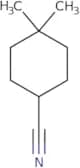
CAS:<p>Versatile small molecule scaffold</p>Formula:C12H14ClN3Purity:Min. 95%Molecular weight:235.71 g/mol4,4-Dimethylcyclohexane-1-carbonitrile
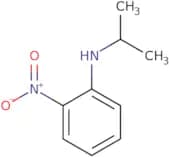
CAS:<p>Versatile small molecule scaffold</p>Formula:C9H15NPurity:Min. 95%Molecular weight:137.22 g/molIsopropyl-(2-nitro-phenyl)-amine
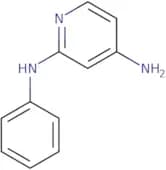
CAS:<p>Versatile small molecule scaffold</p>Formula:C9H12N2O2Purity:Min. 95%Molecular weight:180.21 g/molN-2-Phenylpyridine-2,4-diamine
CAS:<p>Versatile small molecule scaffold</p>Formula:C11H11N3Purity:Min. 95%Molecular weight:185.22 g/mol6-Bromopyridine-2-carboxamide
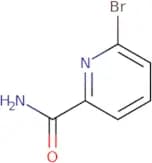
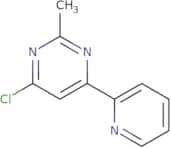
CAS:<p>6-Bromopyridine-2-carboxamide is a dibenzazepine and an azacycle. It is used to study its affinity for the dopamine receptors, sodium channels, and histamine receptors. 6-Bromopyridine-2-carboxamide has been shown to block histamine receptors in the rat brain. This drug also has affinity for sodium channels and blocks them at lower concentrations than other drugs. Functional assays have demonstrated that 6-bromopyridine-2-carboxamide is a functional blocker of the ion channel receptor in human erythrocytes.</p>Formula:C6H5BrN2OPurity:Min. 95%Molecular weight:201.02 g/mol4-Chloro-2-methyl-6-(pyridin-2-yl)pyrimidine
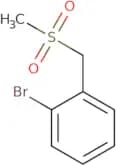
CAS:<p>Versatile small molecule scaffold</p>Formula:C10H8ClN3Purity:Min. 95%Molecular weight:205.64 g/mol1-Bromo-2-((methylsulfonyl)methyl)benzene
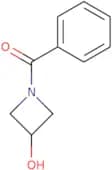
CAS:<p>Versatile small molecule scaffold</p>Formula:C8H9BrO2SPurity:Min. 95%Molecular weight:249.12 g/mol1-Benzoylazetidin-3-ol
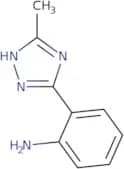
CAS:<p>Versatile small molecule scaffold</p>Formula:C10H11NO2Purity:Min. 95%Molecular weight:177.2 g/mol2-(3-Methyl-1H-1,2,4-triazol-5-yl)aniline
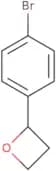
CAS:<p>Versatile small molecule scaffold</p>Formula:C9H10N4Purity:Min. 95%Molecular weight:174.2 g/mol2-(4-Bromophenyl)oxetane
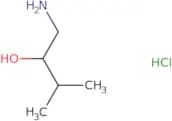
CAS:<p>Versatile small molecule scaffold</p>Formula:C9H9BrOPurity:Min. 95%Molecular weight:213.07 g/mol1-Amino-3-methylbutan-2-ol hydrochloride
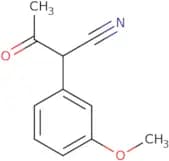
CAS:<p>Versatile small molecule scaffold</p>Formula:C5H14ClNOPurity:Min. 95%Molecular weight:139.62 g/mol2-(3-Methoxyphenyl)-3-oxobutanenitrile
CAS:<p>Versatile small molecule scaffold</p>Formula:C11H11NO2Purity:Min. 95%Molecular weight:189.21 g/molBis[(6-methylpyridin-2-yl)methyl]amine
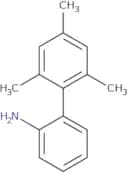
CAS:<p>Bis[(6-methylpyridin-2-yl)methyl]amine is a monoxide that is used as an electrocatalyst for the reduction of nitrite to nitric oxide. Bis[(6-methylpyridin-2-yl)methyl]amine is able to catalyze the conversion of an electron from a proton donor to a sulfide substrate, which generates a geometrical change in the molecule. The bis[(6-methylpyridin-2-yl)methyl]amine molecule has acidic properties and can be used in coordination chemistry as it can coordinate with gold electrodes. This compound also has been shown to have nitrite reductase activity, which may be due to its ability to reduce molecular oxygen.</p>Formula:C14H17N3Purity:Min. 95%Molecular weight:227.3 g/mol2-(2,4,6-Trimethylphenyl)aniline
CAS:<p>Versatile small molecule scaffold</p>Formula:C15H17NPurity:Min. 95%Molecular weight:211.3 g/molPyrazolo[1,5-a]pyridine-3-carbonitrile
CAS:<p>Pyrazolo[1,5-a]pyridine-3-carbonitrile is a crystalline solid in the form of an amorphous or polymorph. It has been shown to inhibit the kinase activity of protein tyrosine phosphatases and may be useful for the treatment of gastrointestinal disorders. The compound has also been shown to have antioxidant properties, which may be related to its ability to inhibit oxidative phosphorylation by inhibiting the mitochondrial membrane potential. Pyrazolo[1,5-a]pyridine-3-carbonitrile has also been shown to suppress proliferation and induce apoptosis in some types of cancer cells. This compound can serve as a nitrogen source for microbial growth and can inhibit bacterial growth by acting as an inhibitor of indolizine synthesis or nitrogen fixation.</p>Formula:C8H5N3Purity:Min. 95%Molecular weight:143.15 g/mol


![2-[4-(3-Chlorophenyl)piperazin-1-yl]acetonitrile](/_next/image/?url=https%3A%2Fstatic.cymitquimica.com%2Fproducts%2F3D%2Fthumb-webp%2FABA17891.webp&w=3840&q=75)
![Bis[(6-methylpyridin-2-yl)methyl]amine](/_next/image/?url=https%3A%2Fstatic.cymitquimica.com%2Fproducts%2F3D%2Fthumb-webp%2FABA59907.webp&w=3840&q=75)
![Pyrazolo[1,5-a]pyridine-3-carbonitrile](/_next/image/?url=https%3A%2Fstatic.cymitquimica.com%2Fproducts%2F3D%2Fthumb-webp%2FABA62789.webp&w=3840&q=75)