Building Blocks
This section contains fundamental products for the synthesis of organic and biological compounds. Building blocks are the essential starting materials used to construct complex molecules through various chemical reactions. They play a critical role in drug discovery, material science, and chemical research. At CymitQuimica, we offer a diverse range of high-quality building blocks to support your innovative research and industrial projects, ensuring you have the essential components for successful synthesis.
Subcategories of "Building Blocks"
- Boronic Acids & Boronic Acid Derivatives(5,756 products)
- Chiral Building Blocks(1,242 products)
- Hydrocarbon Building Blocks(6,095 products)
- Organic Building Blocks(61,037 products)
Found 196200 products of "Building Blocks"
Sort by
Purity (%)
0
100
|
0
|
50
|
90
|
95
|
100
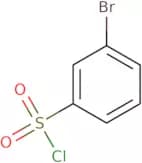
3-Bromobenzenesulfonyl chloride
CAS:<p>3-Bromobenzenesulfonyl chloride is a molecule that can be used to inhibit the uptake of 3-bromobenzoate. The inhibition of uptake is due to the desymmetrization of the unsymmetrical, 3-bromobenzoate. This reaction leads to an increase in the concentration of 3-bromobenzoate. Inhibition studies have shown that 3-bromobenzenesulfonyl chloride has an inhibitory effect on cancer cells and apoptosis pathway. The structural studies have shown that this drug is synthetic and biphenyl can be synthesized from it. T-cell lymphomas have been shown to be inhibited by this drug and heart disease has also been inhibited.</p>Formula:C6H4BrClO2SPurity:Min. 95%Molecular weight:255.52 g/moltert-Butyl 3-bromopropionate
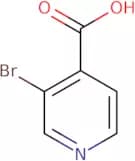
CAS:<p>Tert-butyl 3-bromopropionate is a linker for the synthesis of pleuromutilin derivatives. It has been used as a model substrate for studying the effects of hypertrophy on cardiac muscle. Tert-butyl 3-bromopropionate has also been shown to inhibit the production of proinflammatory cytokines in response to bacterial infection, and can be used as an antibacterial agent. Tert-butyl 3-bromopropionate binds to RNA and inhibits protein synthesis, which leads to cell death by preventing the production of proteins vital for cell division. Tert-butyl 3-bromopropionate is also a potent inhibitor of chloride channels that are found in nerve cells and prevents the flow of chloride ions through these channels, leading to paralysis. This drug also inhibits hydrogen fluoride excretion in rats, which may be due to its ability to bind with chloride ions in the kidney tubules, preventing their</p>Formula:C7H13BrO2Purity:Min. 95%Color and Shape:Colorless Clear LiquidMolecular weight:209.08 g/mol3-Bromo-4-pyridinecarboxylic acid
CAS:<p>3-Bromo-4-pyridinecarboxylic acid is a naphthyridine derivative that is used in drug development. It is a crystalline solid that can be dissolved in organic solvents. 3-Bromo-4-pyridinecarboxylic acid has been shown to have antiinflammatory properties and can be used as an oxidant. 3-Bromo-4-pyridinecarboxylic acid is being investigated as a receptor subtype for inflammatory diseases, and it has also been used to study the mechanism of chronic inflammatory diseases.</p>Formula:C6H4BrNO2Purity:Min. 95%Molecular weight:202.01 g/mol(2-Bromoethoxy)-tert-butyldimethylsilane
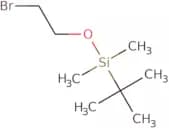
CAS:<p>2-Bromoethoxy-tert-butyldimethylsilane is a conjugate that has been shown to have anticancer efficacy in vivo. It is a pyrimidine derivative and inhibits the viral enzyme RNA polymerase, thereby inhibiting viral replication. 2-Bromoethoxy-tert-butyldimethylsilane also inhibits glyceraldehyde 3-phosphate dehydrogenase, which is an enzyme that catalyzes the conversion of glucose into glyceraldehyde 3-phosphate and plays an important role in glycolysis. The compound has been shown to be active against mouse tumors, which are associated with endogenous retroviruses. The compound has also been shown to inhibit gapdh, an enzyme involved in energy metabolism and cancer therapy.</p>Formula:C8H19BrOSiPurity:Min. 95%Color and Shape:Colorless Clear LiquidMolecular weight:239.23 g/mol1,1-Bis(hydroxymethyl)cyclopropane
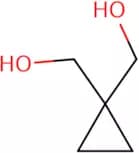
CAS:<p>Disulfonates are a class of compounds that have a sulfonyl group bound to two adjacent carbon atoms. They are typically synthetic and rarely occur in nature. Disulfonates are used as industrial solvents, such as for the manufacture of polyurethane foams and plastics. The most common disulfonate is 1,1-Bis(hydroxymethyl)cyclopropane (HMC). HMC is synthesized from 2-hydroxypropene by the addition of hydrogen chloride, followed by conversion to the imine and then hydrolysis to the final product. In addition to being an industrial solvent, HMC has been shown to be an effective inhibitor of HIV replication. It binds to chemokine receptors on cells, preventing HIV entry into the cell. HMC also inhibits the growth of cancer cells in vitro and exhibits anti-inflammatory properties that may be due to its ability to inhibit prostaglandin synthesis. END></p>Formula:C5H10O2Purity:Min. 95%Molecular weight:102.13 g/mol1-Phenyl-1H-pyrrole-2-carbaldehyde
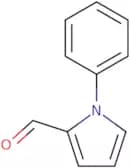
CAS:<p>Versatile small molecule scaffold</p>Formula:C11H9NOPurity:Min. 95%Molecular weight:171.2 g/mol1-tert-Butyl-1H-pyrrole-3-carbaldehyde
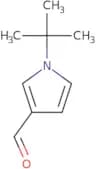
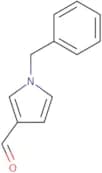
CAS:<p>Versatile small molecule scaffold</p>Formula:C9H13NOPurity:Min. 95%Molecular weight:151.21 g/mol1-Benzyl-1H-pyrrole-3-carbaldehyde
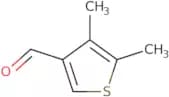
CAS:<p>1-Benzyl-1H-pyrrole-3-carbaldehyde is an acylpyrrole that can be synthesized from the reaction of sodium borohydride with acetaldehyde or benzaldehyde. It is used in heteroarylation reactions, which are efficient methods for the synthesis of a variety of indoles. 1-Benzyl-1H-pyrrole-3-carbaldehyde has also been shown to be effective in reductive amination reactions, which are used to generate pyrroles from indole and aldehyde precursors.</p>Formula:C12H11NOPurity:Min. 95%Molecular weight:185.22 g/mol4,5-Dimethylthiophene-3-carbaldehyde
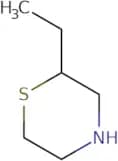
CAS:<p>Versatile small molecule scaffold</p>Formula:C7H8OSPurity:Min. 95%Molecular weight:140.2 g/mol2-Ethylthiomorpholine
CAS:<p>Versatile small molecule scaffold</p>Formula:C6H13NSPurity:Min. 95%Molecular weight:131.24 g/mol2-Methylthiomorpholine hydrochloride
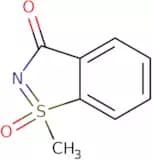
CAS:<p>Versatile small molecule scaffold</p>Formula:C5H12ClNSPurity:Min. 95%Molecular weight:153.7 g/mol1-Methyl-3H-1λ⁶,2-benzothiazole-1,3-dione
CAS:<p>Versatile small molecule scaffold</p>Formula:C8H7NO2SPurity:Min. 95%Molecular weight:181.21 g/molOctahydrocyclopenta[b]thiomorpholine
CAS:<p>Versatile small molecule scaffold</p>Formula:C7H13NSPurity:Min. 95%Molecular weight:143.25 g/molrac-(3aR,6aR)-Hexahydrofuro[3,4-d][1,3]oxazol-2-one
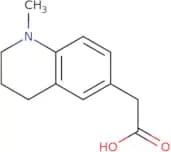
CAS:<p>Versatile small molecule scaffold</p>Formula:C5H7NO3Purity:Min. 95%Molecular weight:129.1 g/mol2-(1-Methyl-1,2,3,4-tetrahydroquinolin-6-yl)acetic acid
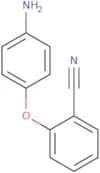
CAS:<p>Versatile small molecule scaffold</p>Formula:C12H15NO2Purity:Min. 95%Molecular weight:205.25 g/mol2-(4-Aminophenoxy)benzonitrile
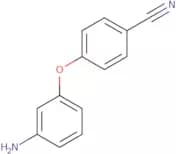
CAS:<p>Versatile small molecule scaffold</p>Formula:C13H10N2OPurity:Min. 95%Molecular weight:210.23 g/mol4-(3-Aminophenoxy)benzonitrile
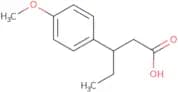
CAS:<p>Versatile small molecule scaffold</p>Formula:C13H10N2OPurity:Min. 95%Molecular weight:210.23 g/mol3-(4-Methoxyphenyl)pentanoic acid
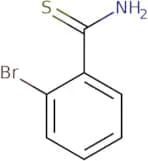
CAS:<p>Versatile small molecule scaffold</p>Formula:C12H16O3Purity:Min. 95%Molecular weight:208.25 g/mol2-Bromothiobenzamide
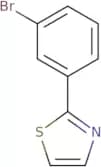
CAS:<p>2-Bromothiobenzamide is an organic solvent that is used as a reactant in the production of 2-bromothiolane. It is synthesized from the reaction of bromine with thiourea, which is then hydrolyzed to form the desired product. The reaction system is acidic, which leads to high yields and can be carried out on a large scale. It has a ligand that reacts with copper metal to form a reagent that can be used for the synthesis of various organic compounds. This product has a high yield (90%), and can be easily purified by filtration. Its efficiency makes it an ideal choice for industrial use.</p>Formula:C7H6BrNSPurity:Min. 95%Molecular weight:216.1 g/mol2-(3-Bromophenyl)-1,3-thiazole
CAS:<p>Versatile small molecule scaffold</p>Formula:C9H6BrNSPurity:Min. 95%Molecular weight:240.12 g/mol


![Octahydrocyclopenta[b]thiomorpholine](/_next/image/?url=https%3A%2Fstatic.cymitquimica.com%2Fproducts%2F3D%2Fthumb-webp%2FFBA19620.webp&w=3840&q=75)
![rac-(3aR,6aR)-Hexahydrofuro[3,4-d][1,3]oxazol-2-one](/_next/image/?url=https%3A%2Fstatic.cymitquimica.com%2Fproducts%2F3D%2Fthumb-webp%2FFBA19756.webp&w=3840&q=75)