


Building Blocks
This section contains fundamental products for the synthesis of organic and biological compounds. Building blocks are the essential starting materials used to construct complex molecules through various chemical reactions. They play a critical role in drug discovery, material science, and chemical research. At CymitQuimica, we offer a diverse range of high-quality building blocks to support your innovative research and industrial projects, ensuring you have the essential components for successful synthesis.
Subcategories of "Building Blocks"
- Boronic Acids & Boronic Acid Derivatives(5,756 products)
- Chiral Building Blocks(1,242 products)
- Hydrocarbon Building Blocks(6,095 products)
- Organic Building Blocks(61,038 products)
Found 196817 products of "Building Blocks"
Sort by
Purity (%)
0
100
|
0
|
50
|
90
|
95
|
100
3-(4-Methylphenyl)-1-[(4-methylphenyl)methyl]-1H-pyrazole-4-carboxylic acid
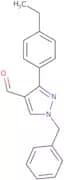
CAS:<p>Versatile small molecule scaffold</p>Formula:C19H18N2O2Purity:Min. 95%Molecular weight:306.4 g/mol1-Benzyl-3-(4-ethylphenyl)-1H-pyrazole-4-carbaldehyde
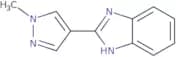
CAS:<p>Versatile small molecule scaffold</p>Formula:C19H18N2OPurity:Min. 95%Molecular weight:290.4 g/mol2-(1-Methyl-1H-pyrazol-4-yl)-1H-1,3-benzodiazole
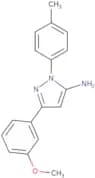
CAS:<p>2-(1-Methyl-1H-pyrazol-4-yl)-1H-1,3-benzodiazole is a molecule that is found in both solid and liquid states. It has a tautomeric structure that is determined by the temperature and pressure of the environment. The crystal x-ray diffraction (CXRD) technique and nmr analysis were used to study its crystal x-ray diffraction and physicochemical properties, respectively. 2-(1-Methyl-1H-pyrazol-4-yl)-1H-1,3 -benzodiazole has been shown to exist in two tautomers: the keto form and enol form. Tautomerization can be induced by light or acid.</p>Formula:C11H10N4Purity:Min. 95%Molecular weight:198.22 g/mol3-(3-Methoxyphenyl)-1-(4-methylphenyl)-1H-pyrazol-5-amine
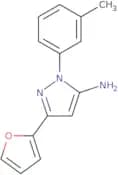
CAS:<p>Versatile small molecule scaffold</p>Formula:C17H17N3OPurity:Min. 95%Molecular weight:279.34 g/mol3-(Furan-2-yl)-1-(3-methylphenyl)-1H-pyrazol-5-amine
CAS:<p>Versatile small molecule scaffold</p>Formula:C14H13N3OPurity:Min. 95%Molecular weight:239.27 g/mol[1-(Methoxymethyl)cyclohexyl]methanol
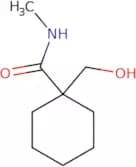
CAS:<p>Versatile small molecule scaffold</p>Formula:C9H18O2Purity:Min. 95%Molecular weight:158.24 g/mol1-(Hydroxymethyl)-N-methylcyclohexane-1-carboxamide
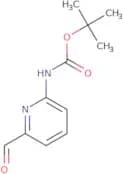
CAS:<p>Versatile small molecule scaffold</p>Formula:C9H17NO2Purity:Min. 95%Molecular weight:171.24 g/moltert-butyl N-(6-formylpyridin-2-yl)carbamate
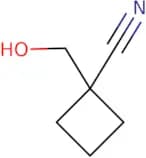
CAS:<p>Versatile small molecule scaffold</p>Formula:C11H14N2O3Purity:Min. 95%Molecular weight:222.2 g/mol1-(Hydroxymethyl)cyclobutane-1-carbonitrile
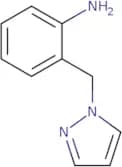
CAS:<p>Versatile small molecule scaffold</p>Formula:C6H9NOPurity:Min. 95%Molecular weight:111.14 g/mol2-((1H-Pyrazol-1-yl)methyl)aniline
CAS:<p>Versatile small molecule scaffold</p>Formula:C10H11N3Purity:Min. 95%Molecular weight:173.21 g/mol2-({4-Formyl-3-methyl-1-[(4-methylphenyl)methyl]-1H-pyrazol-5-yl}sulfanyl)acetic acid
CAS:<p>Versatile small molecule scaffold</p>Formula:C15H16N2O3SPurity:Min. 95%Molecular weight:304.4 g/mol2-[5-Amino-3-(4-propylphenyl)-1H-pyrazol-1-yl]ethan-1-ol
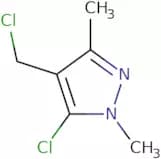
CAS:<p>Versatile small molecule scaffold</p>Formula:C14H19N3OPurity:Min. 95%Molecular weight:245.32 g/mol5-Chloro-4-(chloromethyl)-1,3-dimethyl-1H-pyrazole
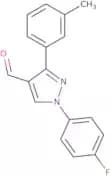
CAS:<p>Versatile small molecule scaffold</p>Formula:C6H8Cl2N2Purity:Min. 95%Molecular weight:179.04 g/mol1-(4-Fluorophenyl)-3-(3-methylphenyl)-1H-pyrazole-4-carbaldehyde
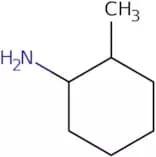
CAS:<p>Versatile small molecule scaffold</p>Formula:C17H13FN2OPurity:Min. 95%Molecular weight:280.3 g/mol2-Methylcyclohexylamine
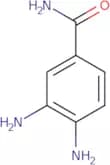
CAS:<p>2-Methylcyclohexylamine is a potential drug for the treatment of cancer. It has been shown to have an anti-proliferative effect on cells in culture. 2-Methylcyclohexylamine reacts with nucleophilic sites on DNA, leading to cell death. 2-Methylcyclohexylamine also inhibits cell growth through inhibition of RNA synthesis and protein synthesis. It can be used as an acid catalyst or as a surface coating agent in coatings, such as cellulose acetate, amines, and nitrocellulose.</p>Formula:C7H15Purity:Min. 95%Molecular weight:113.2 g/mol3,4-Diaminobenzamide
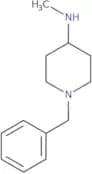
CAS:<p>Versatile small molecule scaffold</p>Formula:C7H9N3OPurity:Min. 95%Molecular weight:151.17 g/mol(1-Benzyl-piperidin-4-yl)-methyl-amine
CAS:Controlled Product<p>Versatile small molecule scaffold</p>Formula:C13H20N2Purity:Min. 95%Molecular weight:204.31 g/mol6-Phenylimidazo[2,1-b][1,3]thiazole
CAS:<p>6-Phenylimidazo[2,1-b][1,3]thiazole is a chemical compound that has been shown to have antimycobacterial activity. It also has been shown to inhibit the growth of cancer cells in vitro and in vivo. 6-Phenylimidazo[2,1-b][1,3]thiazole is used as a fluorescence probe for the detection of DNA in living cells. The fluorescence of this molecule can be excited by light at a wavelength of 365 nm and emission can be observed at 460 nm. This compound has also been shown to bind with high affinity to microsporum and trichophyton mentagrophytes.</p>Formula:C11H8N2SPurity:Min. 95%Molecular weight:200.26 g/molSodium 2-[1-(hydroxymethyl)cyclohexyl]acetate
CAS:<p>Sodium 2-[1-(hydroxymethyl)cyclohexyl]acetate (SCH-48461) is an anti-inflammatory drug that belongs to the class of cholesteryl ester transferase inhibitors. It is used in the treatment of patients with inflammatory diseases such as arthritis and psoriasis. SCH-48461 inhibits the production of fatty acids from cholesterol by inhibiting lipoprotein lipase, thereby reducing the production of triglycerides. The drug also has been shown to decrease levels of low density lipoproteins (LDL). SCH-48461 has a high therapeutic index and does not affect platelet aggregation or coagulation factors, making it useful for treating patients with heart disease.</p>Formula:C9H15NaO3Purity:Min. 95%Molecular weight:194.2 g/molDodecyl(2-hydroxyethyl)dimethylammonium bromide
CAS:<p>Versatile small molecule scaffold</p>Formula:C16H36BrNOPurity:Min. 95%Molecular weight:338.37 g/mol
![3-(4-Methylphenyl)-1-[(4-methylphenyl)methyl]-1H-pyrazole-4-carboxylic acid](/_next/image/?url=https%3A%2Fstatic.cymitquimica.com%2Fproducts%2F3D%2Fthumb-webp%2FGNB50854.webp&w=3840&q=75)

![[1-(Methoxymethyl)cyclohexyl]methanol](/_next/image/?url=https%3A%2Fstatic.cymitquimica.com%2Fproducts%2F3D%2Fthumb-webp%2FGNB51876.webp&w=3840&q=75)
![2-({4-Formyl-3-methyl-1-[(4-methylphenyl)methyl]-1H-pyrazol-5-yl}sulfanyl)acetic acid](/_next/image/?url=https%3A%2Fstatic.cymitquimica.com%2Fproducts%2F3D%2Fthumb-webp%2FGNB56849.webp&w=3840&q=75)
![2-[5-Amino-3-(4-propylphenyl)-1H-pyrazol-1-yl]ethan-1-ol](/_next/image/?url=https%3A%2Fstatic.cymitquimica.com%2Fproducts%2F3D%2Fthumb-webp%2FGNB56866.webp&w=3840&q=75)
![6-Phenylimidazo[2,1-b][1,3]thiazole](/_next/image/?url=https%3A%2Fstatic.cymitquimica.com%2Fproducts%2F3D%2Fthumb-webp%2FHAA00863.webp&w=3840&q=75)
![Sodium 2-[1-(hydroxymethyl)cyclohexyl]acetate](/_next/image/?url=https%3A%2Fstatic.cymitquimica.com%2Fproducts%2F3D%2Fthumb-webp%2FHAA00949.webp&w=3840&q=75)
