Building Blocks
This section contains fundamental products for the synthesis of organic and biological compounds. Building blocks are the essential starting materials used to construct complex molecules through various chemical reactions. They play a critical role in drug discovery, material science, and chemical research. At CymitQuimica, we offer a diverse range of high-quality building blocks to support your innovative research and industrial projects, ensuring you have the essential components for successful synthesis.
Subcategories of "Building Blocks"
- Boronic Acids & Boronic Acid Derivatives(5,756 products)
- Chiral Building Blocks(1,242 products)
- Hydrocarbon Building Blocks(6,095 products)
- Organic Building Blocks(61,038 products)
Found 196817 products of "Building Blocks"
Sort by
Purity (%)
0
100
|
0
|
50
|
90
|
95
|
100
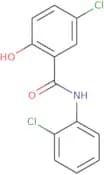
5-Chloro-N-(2-Chlorophenyl)-2-Hydroxybenzamide
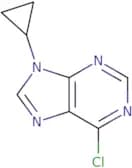
CAS:<p>5-Chloro-N-(2-chlorophenyl)-2-hydroxybenzamide is a promyelocytic leukemia (PML) inhibitor that has been shown to have significant cytotoxicity against leukemia cells. 5-Chloro-N-(2-chlorophenyl)-2-hydroxybenzamide also inhibits the growth of prostate cancer cells and cervical cancer cells. It has been shown to inhibit the expression of oncogenes, such as sarcoma viral oncogene (SV40), and induce apoptosis in human cancer cells. This drug also shows significant cytotoxicity against human leukemia HL60 cells and erythroleukemia U937 cells.</p>Formula:C13H9NO2Cl2Purity:Min. 95%Molecular weight:282.12 g/mol6-Chloro-9-cyclopropyl-9H-purine
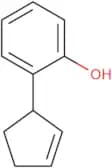
CAS:<p>Versatile small molecule scaffold</p>Formula:C8H7ClN4Purity:Min. 95%Molecular weight:194.62 g/mol2-(2-Cyclopenten-1-yl)-phenol
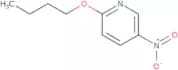
CAS:<p>Versatile small molecule scaffold</p>Formula:C11H12OPurity:Min. 95%Molecular weight:160.21 g/mol2-Butoxy-5-nitropyridine
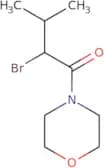
CAS:<p>Versatile small molecule scaffold</p>Formula:C9H12N2O3Purity:Min. 95%Molecular weight:196.2 g/mol2-Bromo-3-methyl-1-(morpholin-4-yl)butan-1-one
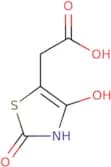
CAS:<p>Versatile small molecule scaffold</p>Formula:C9H16BrNO2Purity:Min. 95%Molecular weight:250.13 g/mol2-(Dihydroxy-1,3-thiazol-5-yl)acetic acid
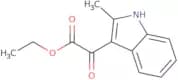
CAS:<p>Versatile small molecule scaffold</p>Formula:C5H5NO4SPurity:Min. 95%Molecular weight:175.16 g/molEthyl 2-(2-methyl-1H-indol-3-yl)-2-oxoacetate
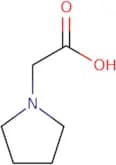
CAS:<p>Versatile small molecule scaffold</p>Formula:C13H13NO3Purity:Min. 95%Molecular weight:231.25 g/molPyrrolidin-1-yl-acetic acid hydrochloride
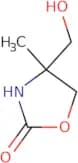
CAS:<p>Pyrrolidin-1-yl-acetic acid hydrochloride is a drug that inhibits the enzyme protease, which is involved in the replication of HIV. It also inhibits the enzyme piperazine, an essential cofactor for retroviral replication. Pyrrolidin-1-yl-acetic acid hydrochloride has been shown to inhibit insulin resistance and increase glucose uptake in animal models. This drug may be a potential treatment for diabetes mellitus type 2. The structural formula of this drug is shown below:</p>Formula:C6H12ClNO2Purity:Min. 95%Molecular weight:165.62 g/mol4-(Hydroxymethyl)-4-methyl-1,3-oxazolidin-2-one
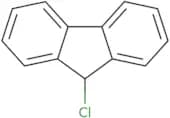
CAS:<p>Versatile small molecule scaffold</p>Formula:C5H9NO3Purity:Min. 95%Molecular weight:131.13 g/mol9-Chlorofluorene
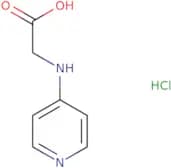
CAS:<p>9-Chlorofluorene is a synthetic chemical that has been used as an intermediate for the production of polymers and dyes. It is a colorless liquid with a chloroform-like odor. 9-Chlorofluorene reacts with hydrogen chloride to form the chlorinated derivative, fluorene dichloride. This chemical is also known to react with other compounds such as alcohols, amines, and phenols in the presence of moisture or heat to produce unwanted byproducts including aldehydes, chlorides, and hydrocarbons. 9-Chlorofluorene may be contaminated with impurities such as carbon tetrachloride, which can lead to toxic effects on humans and animals. There are bioassays that measure the toxicity of this substance in mice. The toxicity of 9-chlorofluorene has been shown to depend on the electron transfer reactions it undergoes during metabolism.</p>Formula:C13H9ClPurity:Min. 95%Molecular weight:200.66 g/mol(Pyridin-4-ylamino)acetic acid hydrochloride
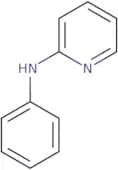
CAS:<p>Versatile small molecule scaffold</p>Formula:C7H9ClN2O2Purity:Min. 95%Molecular weight:188.61 g/mol2-Anilinopyridine
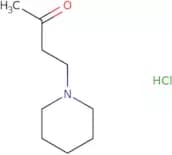
CAS:<p>2-Anilinopyridine is a reactive compound that binds to the mitochondrial membrane potential and inhibits the electron transport chain. It has been shown to be cytotoxic against colorectal adenocarcinoma cells in vitro. 2-Anilinopyridine binds to the carbonyl group of proteins, disrupting the function of proteins and leading to cell death by apoptosis. The compound was tested in vivo in a mouse model for cancer and showed promising results. 2-Anilinopyridine has also been shown to induce DNA strand breaks, which are used as biomarkers for carcinogenicity.</p>Formula:C11H10N2Purity:Min. 95%Molecular weight:170.21 g/mol4-(Piperidin-1-yl)butan-2-one hydrochloride
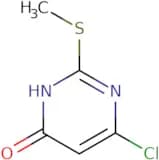
CAS:<p>Versatile small molecule scaffold</p>Formula:C9H18ClNOPurity:Min. 95%Molecular weight:191.7 g/mol6-Chloro-4-hydroxy-2-(methylthio)pyrimidine
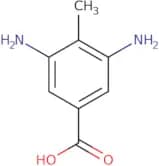
CAS:<p>Versatile small molecule scaffold</p>Formula:C5H5ClN2OSPurity:Min. 95%Molecular weight:176.62 g/mol3,5-Diamino-4-methylbenzoic acid
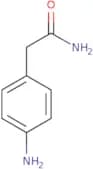
CAS:<p>3,5-Diamino-4-methylbenzoic acid is a chemical compound with the formula C6H3N3O2. It is an organic nitrite that reacts readily with nucleophiles such as alcohols, phenols, and amines to form the corresponding N-substituted benzoic acid. The reaction proceeds via a two step process in which 3,5-diamino-4-methylbenzoic acid first reacts with sodium nitrite to produce 3,5-diamino-4-nitrobenzoic acid followed by hydrolysis of this intermediate to form the desired product. Nitrite salts are used in the food industry as preservatives and antimicrobials. They can be applied as a gas or dissolved in water. Nitrite salts are also used for wastewater treatment and for environmental remediation.</p>Formula:C8H10N2O2Purity:Min. 95%Molecular weight:166.18 g/mol2-(4-Aminophenyl)acetamide
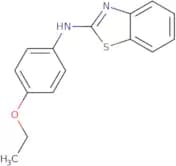
CAS:<p>2-(4-Aminophenyl)acetamide is a white crystalline solid with a melting point of 146°C. It has the optical rotation of +232° and 13c-nmr spectroscopy in DMSO-d6, with chemical shifts at δ = 9.3 (1H), 8.8 (1H), 7.5 (2H), 5.9 (1H), 5.8 (1H). 2-(4-Aminophenyl)acetamide has been synthesized from 4-aminobenzenesulfonyl chloride and 2-methylacetic acid in the presence of triethylamine and potassium carbonate as catalysts. This compound has two conformations, one being lamellar and the other being switchable between lamellar and non-lamellar structures due to its amide linkage. In addition, this compound can be used to study bacterial cell wall biosynthesis by using microscopy</p>Formula:C8H10N2OPurity:Min. 95%Molecular weight:150.18 g/molBenzothiazol-2-yl-(4-ethoxy-phenyl)-amine
CAS:<p>Benzothiazol-2-yl-(4-ethoxy-phenyl)-amine is a compound that has been shown to be active against solid tumours and metastases. It has been shown to inhibit phosphatase activity in the presence of monoclonal antibodies, which is an indicator for cancerous cells. Benzothiazol-2-yl-(4-ethoxy-phenyl)-amine may be used as a diagnostic marker for determining the presence of cancer cells in patients with infectious diseases, such as HIV/AIDS. This compound has also been shown to inhibit phosphatase activity in the presence of monoclonal antibodies, which is an indicator for cancerous cells. Benzothiazol-2-yl-(4-ethoxy-phenyl)-amine may be used as a diagnostic marker for determining the presence of cancer cells in patients with infectious diseases, such as HIV/AIDS.</p>Formula:C15H14N2OSPurity:Min. 95%Molecular weight:270.4 g/mol2-(Dimethylamino)-6-hydroxypyrimidine-4-carboxylic Acid
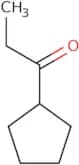
CAS:<p>Versatile small molecule scaffold</p>Formula:C7H9N3O3Purity:Min. 95%Molecular weight:183.16 g/mol1-Cyclopentylpropan-1-one
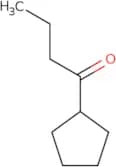
CAS:<p>Cyclopentylpropan-1-one is an organic compound with the chemical formula CH3C(O)CH2CH2CH2. It is a cyclic ketone that can be synthesized by reacting boron trifluoride etherate with aldehydes. Cyclopentylpropan-1-one has stereochemical and diastereomeric properties, which can be determined by looking at the spectral data. The molecular geometry of cyclopentylpropan-1-one is also chiral and there are two possible configurations of this molecule.</p>Formula:C8H14OPurity:Min. 95%Molecular weight:126.2 g/mol1-Cyclopentylbutan-1-one
CAS:<p>Versatile small molecule scaffold</p>Formula:C9H16OPurity:Min. 95%Molecular weight:140.22 g/mol