Building Blocks
This section contains fundamental products for the synthesis of organic and biological compounds. Building blocks are the essential starting materials used to construct complex molecules through various chemical reactions. They play a critical role in drug discovery, material science, and chemical research. At CymitQuimica, we offer a diverse range of high-quality building blocks to support your innovative research and industrial projects, ensuring you have the essential components for successful synthesis.
Subcategories of "Building Blocks"
- Boronic Acids & Boronic Acid Derivatives(5,756 products)
- Chiral Building Blocks(1,242 products)
- Hydrocarbon Building Blocks(6,095 products)
- Organic Building Blocks(61,037 products)
Found 196139 products of "Building Blocks"
Sort by
Purity (%)
0
100
|
0
|
50
|
90
|
95
|
100
7H-[1,2,4]Triazolo[4,3-b][1,2,4]triazol-3-amine
CAS:<p>Versatile small molecule scaffold</p>Formula:C3H4N6Purity:Min. 95%Molecular weight:124.1 g/mol7H-[1,2,4]Triazolo[4,3-b][1,2,4]triazole-3-thiol
CAS:<p>Versatile small molecule scaffold</p>Formula:C3H3N5SPurity:Min. 95%Molecular weight:141.2 g/molTricyclo[6.2.1.0,2,7]undeca-2,4,6-triene-1-carboxylic acid
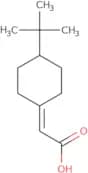
CAS:<p>Versatile small molecule scaffold</p>Formula:C12H12O2Purity:Min. 95%Molecular weight:188.22 g/mol2-(4-tert-Butylcyclohexylidene)acetic acid
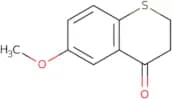
CAS:<p>Versatile small molecule scaffold</p>Formula:C12H20O2Purity:Min. 95%Molecular weight:196.29 g/mol6-Methoxy-3,4-dihydro-2H-1-benzothiopyran-4-one
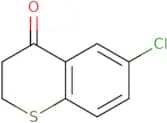
CAS:<p>Versatile small molecule scaffold</p>Formula:C10H10O2SPurity:Min. 95%Molecular weight:194.25 g/mol6-Chlorothiochroman-4-one
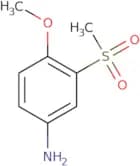
CAS:<p>6-Chlorothiochroman-4-one is a heterocycle that has been synthesized and purified. It has shown to inhibit the growth of botrytis cinerea, a fungus that causes black rot on various plants. 6-Chlorothiochroman-4-one can be used as a starting material for the synthesis of other compounds with medicinal properties. The compound is also an excellent biomolecular probe for studying detoxification enzymes in natural products. The best yields were obtained by using acidic conditions, which led to the hydrolysis of the sulfide group to form the corresponding thiol. The optimal parameters for dehydrogenation are pH 2 and 40 ˚C. In vitro studies have shown that 6-chlorothiochroman-4-one inhibits angiogenesis in endothelial cells and is carcinogenic at high concentrations (>5 mM).</p>Formula:C9H7ClOSPurity:Min. 95%Molecular weight:198.67 g/mol3-Methanesulfonyl-4-methoxyaniline
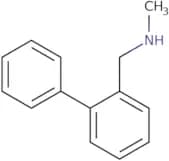
CAS:<p>Versatile small molecule scaffold</p>Formula:C8H11NO3SPurity:Min. 95%Molecular weight:201.25 g/mol1-(2-Biphenylyl)-N-methylmethanamine
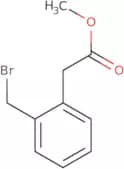
CAS:<p>1-(2-Biphenylyl)-N-methylmethanamine is a monosaccharide that belongs to the group of neochamaejasmine. It has been shown to have insecticidal properties and can be used as a pesticide. 1-(2-Biphenylyl)-N-methylmethanamine has been shown to contain diterpenoids, which are found in plants and insects. This compound also contains diterpenes, which are derived from terpene alcohols and are found in plants such as neochamaejasmin. The ethanol extract of 1-(2-biphenyl) N-methylmethanamine was found to have antimicrobial activity against bacteria such as Pseudomonas aeruginosa, Staphylococcus aureus, and Escherichia coli.</p>Formula:C14H15NPurity:Min. 95%Molecular weight:197.28 g/molBenzeneacetic acid, 2-(bromomethyl)-, methyl ester
CAS:<p>Benzeneacetic acid, 2-(bromomethyl)-, methyl ester is an intermediate in the synthesis of trifloxystrobin.</p>Formula:C10H11BrO2Purity:Min. 95%Molecular weight:243.1 g/mol3-[(4-Methoxyphenyl)sulfanyl]propanoic acid
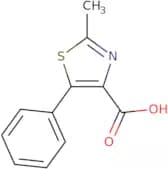
CAS:<p>Versatile small molecule scaffold</p>Formula:C10H12O3SPurity:Min. 95%Molecular weight:212.27 g/mol2-Methyl-5-phenyl-1,3-thiazole-4-carboxylic acid
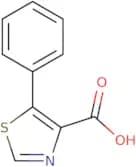
CAS:<p>Versatile small molecule scaffold</p>Formula:C11H9NO2SPurity:Min. 95%Molecular weight:219.26 g/mol5-Phenylthiazole-4-carboxylic acid
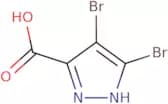
CAS:<p>5-Phenylthiazole-4-carboxylic acid is a heterocycle that is a muscarinic receptor antagonist. It blocks the action of acetylcholine on the muscarinic receptors, which are found in smooth muscles and glands. Muscarinic receptor antagonists are used to reduce salivation, treat peptic ulcers, and relieve bladder spasms. The onset of this drug is long-acting and it has a duration of up to 24 hours in humans. 5-Phenylthiazole-4-carboxylic acid has been shown to block the binding of acetylcholine at the muscarinic receptor with an IC50 value of 11 nM. This agent also has polycyclic properties and can form hydrogen bonds with acidic functional groups such as phosphoric acid. 5-Phenylthiazole-4-carboxylic acid may have pharmacological profiles similar to chlorpheniramine because they both bind to</p>Formula:C10H7NO2SPurity:Min. 95%Molecular weight:205.23 g/mol3,4-Dibromo-1H-pyrazole-5-carboxylic acid
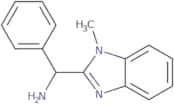
CAS:<p>Versatile small molecule scaffold</p>Formula:C4H2Br2N2O2Purity:Min. 95%Molecular weight:269.88 g/mol(1-Methyl-1H-1,3-benzodiazol-2-yl)(phenyl)methanamine
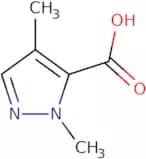
CAS:<p>Versatile small molecule scaffold</p>Formula:C15H15N3Purity:Min. 95%Molecular weight:237.31 g/mol1,4-dimethyl-1H-pyrazole-5-carboxylic acid
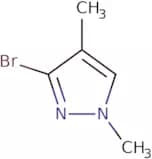
CAS:<p>Versatile small molecule scaffold</p>Formula:C6H8N2O2Purity:Min. 95%Molecular weight:140.13 g/mol3-Bromo-1,4-dimethyl-pyrazole
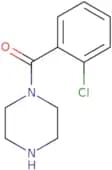
CAS:<p>Versatile small molecule scaffold</p>Formula:C5H7BrN2Purity:Min. 95%Molecular weight:175.03 g/mol(2-Chlorophenyl)(piperazin-1-yl)methanone
CAS:<p>Versatile small molecule scaffold</p>Formula:C11H13ClN2OPurity:Min. 95%Molecular weight:224.69 g/mol(5-Bromo-benzo[b]thiophen-2-yl)-methanol
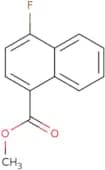
CAS:<p>Versatile small molecule scaffold</p>Formula:C9H7BrOSPurity:Min. 95%Molecular weight:243.12 g/molMethyl 4-fluoronaphthalene-1-carboxylate
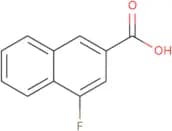
CAS:<p>Versatile small molecule scaffold</p>Formula:C12H9FO2Purity:Min. 95%Molecular weight:204.2 g/mol4-Fluoronaphthalene-2-carboxylic acid
CAS:<p>4-Fluoronaphthalene-2-carboxylic acid is a synthetic compound that belongs to the class of nitro compounds. This compound has been shown to have constant connectivity with quinoline and naphthoic acid. 4-Fluoronaphthalene-2-carboxylic acid has also been found to be ionizable and ionic, showing correlations with water solubility. It is an organic carboxylic acid that can be used in the synthesis of other chemicals, such as quinoline derivatives or naphthoic acids.</p>Formula:C11H7FO2Purity:Min. 95%Molecular weight:190.17 g/mol
![7H-[1,2,4]Triazolo[4,3-b][1,2,4]triazol-3-amine](/_next/image/?url=https%3A%2Fstatic.cymitquimica.com%2Fproducts%2F3D%2Fthumb-webp%2FNAA72821.webp&w=3840&q=75)

![7H-[1,2,4]Triazolo[4,3-b][1,2,4]triazole-3-thiol](/_next/image/?url=https%3A%2Fstatic.cymitquimica.com%2Fproducts%2F3D%2Fthumb-webp%2FNAA72826.webp&w=3840&q=75)
![Tricyclo[6.2.1.0,2,7]undeca-2,4,6-triene-1-carboxylic acid](/_next/image/?url=https%3A%2Fstatic.cymitquimica.com%2Fproducts%2F3D%2Fthumb-webp%2FNAA73346.webp&w=3840&q=75)
![3-[(4-Methoxyphenyl)sulfanyl]propanoic acid](/_next/image/?url=https%3A%2Fstatic.cymitquimica.com%2Fproducts%2F3D%2Fthumb-webp%2FNAA73936.webp&w=3840&q=75)
![(5-Bromo-benzo[b]thiophen-2-yl)-methanol](/_next/image/?url=https%3A%2Fstatic.cymitquimica.com%2Fproducts%2F3D%2Fthumb-webp%2FNAA77172.webp&w=3840&q=75)