Building Blocks
This section contains fundamental products for the synthesis of organic and biological compounds. Building blocks are the essential starting materials used to construct complex molecules through various chemical reactions. They play a critical role in drug discovery, material science, and chemical research. At CymitQuimica, we offer a diverse range of high-quality building blocks to support your innovative research and industrial projects, ensuring you have the essential components for successful synthesis.
Subcategories of "Building Blocks"
- Boronic Acids & Boronic Acid Derivatives(5,756 products)
- Chiral Building Blocks(1,242 products)
- Hydrocarbon Building Blocks(6,093 products)
- Organic Building Blocks(60,522 products)
Found 195533 products of "Building Blocks"
Sort by
Purity (%)
0
100
|
0
|
50
|
90
|
95
|
100
N-Methyl-1-azabicyclo[2.2.2]octan-3-amine
CAS:<p>Versatile small molecule scaffold</p>Formula:C8H16N2Purity:Min. 95%Molecular weight:140.23 g/mol2-(Chloromethyl)-5-(4-nitrophenyl)-1,3,4-oxadiazole
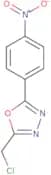
CAS:<p>Versatile small molecule scaffold</p>Formula:C9H6ClN3O3Purity:Min. 95%Molecular weight:239.62 g/molN'-(2-Chloroacetyl)-4-methoxybenzohydrazide
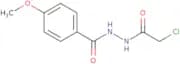
CAS:<p>Versatile small molecule scaffold</p>Formula:C10H11ClN2O3Purity:Min. 95%Molecular weight:242.66 g/molN'-(2-Chloroacetyl)benzohydrazide
CAS:<p>Versatile small molecule scaffold</p>Formula:C9H9ClN2O2Purity:Min. 95%Molecular weight:212.63 g/mol2,2-Dimethylcyclopropane-1-carbonyl chloride
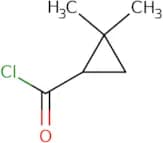
CAS:<p>2,2-Dimethylcyclopropane-1-carbonyl chloride is a diastereomeric mixture of two diastereoisomers. It is soluble in chloroform and diethyl ether and crystallizes from acetone. 2,2-Dimethylcyclopropane-1-carbonyl chloride is used as a feedstock to produce cyhalothrin, an insecticide that acts by contact. The insecticide is made by esterification of the 2,2-dimethylcyclopropane-1-carbonyl chloride with 3-phenoxybenzaldehyde and then chlorination of the ester.<br>A mixture of two diastereoisomers can be separated using chromatography techniques such as gas chromatography or high performance liquid chromatography (HPLC). In this case it would be possible to use HPLC to separate the two diastereoisomers.</p>Formula:C6H9ClOPurity:Min. 95%Molecular weight:132.59 g/mol(2,2-Dimethyltetrahydro-2H-pyran-4-yl)methanol
CAS:<p>Versatile small molecule scaffold</p>Formula:C8H16O2Purity:Min. 95%Molecular weight:144.21 g/mol4-Bromo-1-napthaldehyde
CAS:<p>4-Bromo-1-napthaldehyde is a chemical compound that belongs to the group of formyl compounds. It has a formyl group, which can be easily alkylated. 4-Bromo-1-napthaldehyde has been used in the industrial preparation of pharmaceuticals and agrochemicals as well as in the synthesis of other compounds. This molecule can be synthesized by reacting formic acid with bromine and sodium hydroxide. In some cases, this reaction may require heating at higher temperatures or using more than one equivalent of sodium hydroxide. The efficiency and reaction time depend on the technique used to perform the synthesis, such as Grignard reagent or hybridization.</p>Formula:C11H7BrOPurity:Min. 95%Molecular weight:235.08 g/molethyl 3-(2-bromophenyl)-3-oxopropanoate
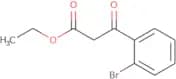
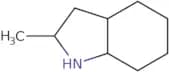
CAS:<p>Ethyl 3-(2-bromophenyl)-3-oxopropanoate is an ester that has been synthesized by condensation and transesterification of ethyl diazoacetate with benzylic alcohols. Zeolites have been used as catalysts in the synthesis of this compound. The yields obtained were 74%.</p>Formula:C11H11BrO3Purity:Min. 95%Molecular weight:271.11 g/mol2-Methyl-octahydro-1H-indole
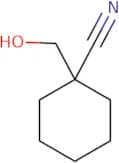
CAS:<p>Versatile small molecule scaffold</p>Formula:C9H17NPurity:Min. 95%Molecular weight:139.24 g/mol1-(Hydroxymethyl)cyclohexane-1-carbonitrile
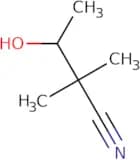
CAS:<p>Versatile small molecule scaffold</p>Formula:C8H13NOPurity:Min. 95%Molecular weight:139.19 g/mol3-Hydroxy-2,2-dimethylbutanenitrile
CAS:<p>Versatile small molecule scaffold</p>Formula:C6H11NOPurity:Min. 95%Molecular weight:113.16 g/molMethyl 3-methylpent-2-enoate
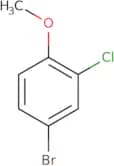
CAS:<p>Methyl 3-methylpent-2-enoate is an organic compound. It is used in the preparation of flavorings, fragrances, and pharmaceuticals. It also has a number of practical applications in the food industry, such as as a flavoring agent for salad dressings, mayonnaise, and soups. Methyl 3-methylpent-2-enoate can be prepared by the reaction of isoeugenol with methanol and sodium methoxide in an aqueous solution at room temperature. The methyl ester is then hydrolyzed with hydrochloric acid to produce methyl 3-methylpentanoate which can be purified by distillation and recrystallized from ethanol.</p>Formula:C7H12O2Purity:Min. 95%Molecular weight:128.17 g/mol4-Bromo-2-chloro-1-methoxybenzene
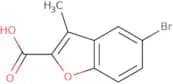
CAS:<p>4-Bromo-2-chloro-1-methoxybenzene is a chemical that has been shown to inhibit the growth of fungi through several different pathways. It inhibits the production of the polychlorinated phenols, chlorpyrifos, and paraoxon in humans. In addition, 4-bromo-2-chloro-1-methoxybenzene can potentially be used as an anti-fungal agent against Aspergillus and other fungus.</p>Formula:C7H6BrClOPurity:Min. 95%Molecular weight:221.48 g/mol5-bromo-3-methyl-1-benzofuran-2-carboxylic acid
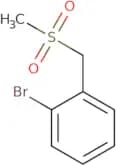
CAS:<p>Versatile small molecule scaffold</p>Formula:C10H7BrO3Purity:Min. 95%Molecular weight:255.1 g/mol1-Bromo-2-((methylsulfonyl)methyl)benzene
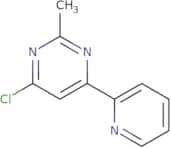
CAS:<p>Versatile small molecule scaffold</p>Formula:C8H9BrO2SPurity:Min. 95%Molecular weight:249.12 g/mol4-Chloro-2-methyl-6-(pyridin-2-yl)pyrimidine
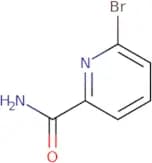
CAS:<p>Versatile small molecule scaffold</p>Formula:C10H8ClN3Purity:Min. 95%Molecular weight:205.64 g/mol6-Bromopyridine-2-carboxamide
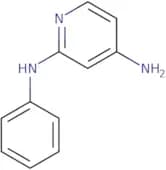
CAS:<p>6-Bromopyridine-2-carboxamide is a dibenzazepine and an azacycle. It is used to study its affinity for the dopamine receptors, sodium channels, and histamine receptors. 6-Bromopyridine-2-carboxamide has been shown to block histamine receptors in the rat brain. This drug also has affinity for sodium channels and blocks them at lower concentrations than other drugs. Functional assays have demonstrated that 6-bromopyridine-2-carboxamide is a functional blocker of the ion channel receptor in human erythrocytes.</p>Formula:C6H5BrN2OPurity:Min. 95%Molecular weight:201.02 g/molN-2-Phenylpyridine-2,4-diamine
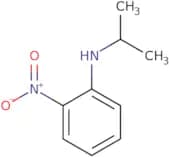
CAS:<p>Versatile small molecule scaffold</p>Formula:C11H11N3Purity:Min. 95%Molecular weight:185.22 g/molIsopropyl-(2-nitro-phenyl)-amine
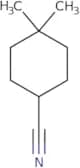
CAS:<p>Versatile small molecule scaffold</p>Formula:C9H12N2O2Purity:Min. 95%Molecular weight:180.21 g/mol4,4-Dimethylcyclohexane-1-carbonitrile
CAS:<p>Versatile small molecule scaffold</p>Formula:C9H15NPurity:Min. 95%Molecular weight:137.22 g/mol
![N-Methyl-1-azabicyclo[2.2.2]octan-3-amine](/_next/image/?url=https%3A%2Fstatic.cymitquimica.com%2Fproducts%2F3D%2Fthumb-webp%2FACA68424.webp&w=3840&q=75)