Building Blocks
This section contains fundamental products for the synthesis of organic and biological compounds. Building blocks are the essential starting materials used to construct complex molecules through various chemical reactions. They play a critical role in drug discovery, material science, and chemical research. At CymitQuimica, we offer a diverse range of high-quality building blocks to support your innovative research and industrial projects, ensuring you have the essential components for successful synthesis.
Subcategories of "Building Blocks"
- Boronic Acids & Boronic Acid Derivatives(5,756 products)
- Chiral Building Blocks(1,242 products)
- Hydrocarbon Building Blocks(6,095 products)
- Organic Building Blocks(61,037 products)
Found 196200 products of "Building Blocks"
Sort by
Purity (%)
0
100
|
0
|
50
|
90
|
95
|
100
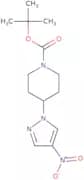
tert-Butyl 4-(4-nitro-1H-pyrazol-1-yl)piperidine-1-carboxylate
CAS:<p>Versatile small molecule scaffold</p>Formula:C13H20N4O4Purity:Min. 95%Molecular weight:296.32 g/mol3-Methoxy-1-methyl-1H-pyrazol-5-amine
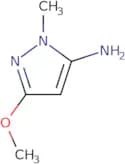
CAS:<p>3-Methoxy-1-methyl-1H-pyrazol-5-amine is a compound that belongs to the group of aminopyrazoles. It has been synthesized from an alkali metal, and reacts with benzylhydrazine to form a dithioacetal. This chemical can be used as a medicine.</p>Formula:C5H9N3OPurity:Min. 95%Molecular weight:127.14 g/moltert-Butyl 4-(3-nitro-1H-pyrazol-1-yl)piperidine-1-carboxylate
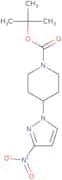
CAS:<p>Versatile small molecule scaffold</p>Formula:C13H20N4O4Purity:Min. 95%Molecular weight:296.32 g/mol3-(Methoxymethyl)-1-methyl-1H-pyrazol-4-amine
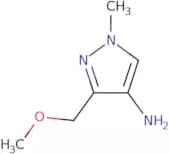
CAS:<p>Versatile small molecule scaffold</p>Formula:C6H11N3OPurity:Min. 95%Molecular weight:141.17 g/mol(1-Methyl-4-nitro-1H-pyrazol-3-yl)methanol
CAS:<p>Versatile small molecule scaffold</p>Formula:C5H7N3O3Purity:Min. 95%Molecular weight:157.13 g/mol4-Amino-1-methyl-1H-pyrazole-3-carbonitrile
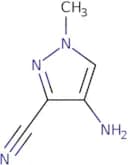
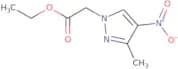
CAS:<p>Versatile small molecule scaffold</p>Formula:C5H6N4Purity:Min. 95%Molecular weight:122.13 g/molEthyl 2-(3-methyl-4-nitro-1H-pyrazol-1-yl)acetate
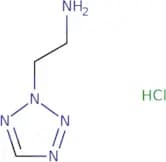
CAS:<p>Versatile small molecule scaffold</p>Formula:C8H11N3O4Purity:Min. 95%Molecular weight:213.19 g/mol2-(2H-1,2,3,4-Tetrazol-2-yl)ethan-1-amine hydrochloride
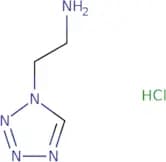
CAS:<p>Versatile small molecule scaffold</p>Formula:C3H8ClN5Purity:Min. 95%Molecular weight:149.58 g/mol2-(1H-1,2,3,4-Tetrazol-1-yl)ethan-1-amine hydrochloride
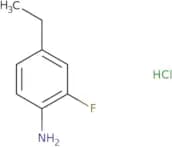
CAS:<p>Versatile small molecule scaffold</p>Formula:C3H8ClN5Purity:Min. 95%Molecular weight:149.58 g/mol4-Ethyl-2-fluoroaniline hydrochloride
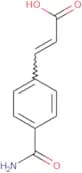
CAS:<p>Versatile small molecule scaffold</p>Formula:C8H11ClFNPurity:Min. 95%Molecular weight:175.63 g/mol(2E)-3-(4-Carbamoylphenyl)prop-2-enoic acid
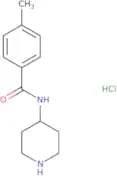
CAS:<p>Versatile small molecule scaffold</p>Formula:C10H9NO3Purity:Min. 95%Molecular weight:191.18 g/mol4-Methyl-N-(piperidin-4-yl)benzamide hydrochloride
CAS:<p>Versatile small molecule scaffold</p>Formula:C13H19ClN2OPurity:Min. 95%Molecular weight:254.75 g/mol3-fluorobicyclo[1.1.1]pentan-1-amine hydrochloride
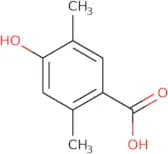
CAS:<p>Versatile small molecule scaffold</p>Formula:C5H9ClFNPurity:Min. 95%Molecular weight:137.6 g/mol4-Hydroxy-2,5-dimethylbenzoic acid
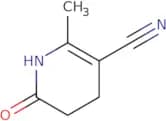
CAS:<p>Versatile small molecule scaffold</p>Formula:C9H10O3Purity:Min. 95%Molecular weight:166.17 g/mol2-Methyl-6-oxo-1,4,5,6-tetrahydropyridine-3-carbonitrile
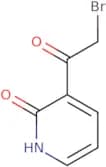
CAS:<p>Versatile small molecule scaffold</p>Formula:C7H8N2OPurity:Min. 95%Molecular weight:136.15 g/mol3-(2-Bromoacetyl)pyridin-2(1H)-one
CAS:<p>Versatile small molecule scaffold</p>Formula:C7H6BrNO2Purity:Min. 95%Molecular weight:216.03 g/molFuro[2,3-b]pyridin-3(2H)-one
CAS:<p>Versatile small molecule scaffold</p>Formula:C7H5NO2Purity:Min. 95%Molecular weight:135.12 g/molN-(4-Chlorophenyl)pyridine-2-methylamine
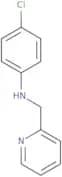
CAS:<p>N-(4-Chlorophenyl)pyridine-2-methylamine is a research tool that can be used for the study of ion channels, ligand-receptor interactions and protein interactions. It inhibits ligand binding to receptors and ion channels, preventing activation of the receptor or opening of the ion channel. N-(4-Chlorophenyl)pyridine-2-methylamine has a high purity and is suitable for use in pharmacology, cell biology, and other research fields.</p>Formula:C12H11ClN2Purity:Min. 95%Molecular weight:218.68 g/mol2-Phenyl-1-(pyridin-2-yl)ethanone
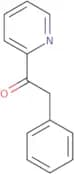
CAS:<p>2-Phenyl-1-(pyridin-2-yl)ethanone (2PPE) is a reactive methylene compound that can be used as a calibration standard for the determination of enolate equivalents in organomercurials. 2PPE reacts with azides to form a fluorescent product and undergoes boron trifluoride etherate mediated cleavage of its C(sp3)-H bond, yielding an alkyl azide intermediate. The reaction rate of 2PPE has been shown to be dependent on the carbonyl group and to be faster in the presence of fluorine. The kinetic data obtained from this experiment are used to calculate the β-unsaturated ketones concentration in mineralization reactions.</p>Formula:C13H11NOPurity:Min. 95%Molecular weight:197.24 g/mol(5-Methylthiophen-2-yl)(phenyl)methanone
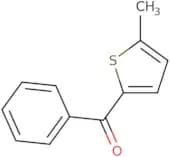
CAS:<p>5-Methylthiophen-2-yl)(phenyl)methanone is a triplet with a wavelength of 349 nm. It has an ultraviolet absorption spectrum with maxima at 285, 295, and 350 nm. The carbonyl group in 5-Methylthiophen-2-yl)(phenyl)methanone has been shown to be the chromophore that absorbs at 310 nm. The carbonyl group is also responsible for the emission of light at 361 nm when irradiated with a deuterium lamp. The methyl group in 5-Methylthiophen-2-yl)(phenyl)methanone can undergo photocycloaddition reactions with isobutylene and 2-, 3-, or 4-benzoylthiophene to produce cyclopropanes, cyclobutanes, or tetrahydrofurans, respectively. Thermally, 5-Methylthiophen-</p>Formula:C12H10OSPurity:Min. 95%Molecular weight:202.27 g/mol


![3-fluorobicyclo[1.1.1]pentan-1-amine hydrochloride](/_next/image/?url=https%3A%2Fstatic.cymitquimica.com%2Fproducts%2F3D%2Fthumb-webp%2FBYC90079.webp&w=3840&q=75)
![Furo[2,3-b]pyridin-3(2H)-one](/_next/image/?url=https%3A%2Fstatic.cymitquimica.com%2Fproducts%2F3D%2Fthumb-webp%2FCBA03848.webp&w=3840&q=75)