Building Blocks
This section contains fundamental products for the synthesis of organic and biological compounds. Building blocks are the essential starting materials used to construct complex molecules through various chemical reactions. They play a critical role in drug discovery, material science, and chemical research. At CymitQuimica, we offer a diverse range of high-quality building blocks to support your innovative research and industrial projects, ensuring you have the essential components for successful synthesis.
Subcategories of "Building Blocks"
- Boronic Acids & Boronic Acid Derivatives(5,756 products)
- Chiral Building Blocks(1,242 products)
- Hydrocarbon Building Blocks(6,095 products)
- Organic Building Blocks(61,037 products)
Found 196200 products of "Building Blocks"
Sort by
Purity (%)
0
100
|
0
|
50
|
90
|
95
|
100
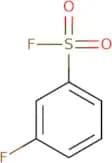
3-Fluorobenzene-1-sulfonyl fluoride
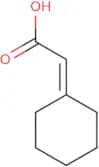
CAS:<p>3-Fluorobenzene-1-sulfonyl fluoride is a chemical compound that can be used as a catalyst to synthesize organic compounds. It is a colorless liquid, which is soluble in water and organic solvents. This catalyst has been shown to be more efficient than the traditional catalysts, such as tetraphenylphosphonium chloride, potassium fluoride or sodium borohydride. 3-Fluorobenzene-1-sulfonyl fluoride also reacts with nitro groups to produce dinitro compounds, which are valuable synthetic intermediates for the production of dyes and pharmaceuticals. The synthesis of this compound can be carried out in high yields with stoichiometric amounts of reactants.</p>Formula:C6H4F2O2SPurity:Min. 95%Molecular weight:178.16 g/mol2-Cyclohexylideneacetic acid
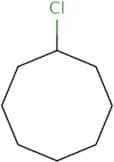
CAS:<p>2-Cyclohexylideneacetic acid is a pseudomonic acid that is synthesized by an asymmetric synthesis. The compound has been shown to be active against cerebral tumors in mice and can inhibit the growth of cells in culture. 2-Cyclohexylideneacetic acid is also the precursor for gabapentin, which is used as a treatment for seizures, mood disorders and pain. Gabapentin inhibits the activity of voltage-gated sodium channels, which are required for the propagation of action potentials in neurons. This drug can also be used as a solvent in pharmaceutical formulations. 2-Cyclohexylideneacetic acid binds to cell membranes and may inhibit bacterial growth through its effects on cell membrane permeability and integrity. It has been shown to have chiral properties, with one enantiomer being more active than the other. 2-Cyclohexylideneacetic acid has been shown to inhibit the growth</p>Formula:C8H12O2Purity:Min. 95%Molecular weight:140.18 g/molChlorocyclooctane
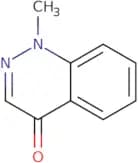
CAS:<p>Chlorocyclooctane is an organic solvent used in the production of polyurethanes and other polymers. It is a colorless liquid that has a pleasant odor. Chlorocyclooctane can also be used as a reactive diluent, a conditioning agent, or a polymerization initiator. This chemical is an isomeric mixture of two compounds: chloromethylcyclohexane and cyclohexanone. Chlorocyclooctane reacts with proton to form the amide which is then reacted with inorganic acid to yield uv absorption. The reaction intermediates are hydrogen chloride and nucleophilic, which react with inorganic reagents to form synthetic products such as polymers</p>Formula:C8H15ClPurity:Min. 95%Molecular weight:146.66 g/mol1-Methyl-1,4-dihydrocinnolin-4-one
CAS:<p>Versatile small molecule scaffold</p>Formula:C9H8N2OPurity:Min. 95%Molecular weight:160.17 g/molAllyltriphenylphosphonium Bromide
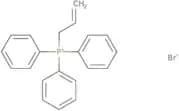
CAS:<p>Allyltriphenylphosphonium Bromide is a white crystalline salt that is soluble in water and alcohol. It has antimicrobial properties that are related to its asymmetric synthesis, which can be achieved by mixing mixtures of hydrogen fluoride, hydrochloric acid, and cyclosporine. Allyltriphenylphosphonium Bromide has been used as a model system to study the interactions between biological molecules with organometallic compounds. This salt has been shown to inhibit the production of fatty acids and hydrogen bonds in biological systems. Allyltriphenylphosphonium Bromide can also be used as an analytical reagent for structural analysis by gas-liquid chromatography.</p>Formula:C21H20BrPPurity:Min. 95%Molecular weight:383.27 g/mol3,3-Dichloroprop-2-enoic acid
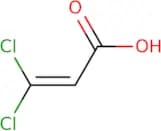
CAS:<p>Versatile small molecule scaffold</p>Formula:C3H2Cl2O2Purity:Min. 95%Molecular weight:140.95 g/molSodium 2-hydroxypropane-1-sulfonate
CAS:<p>Sodium 2-hydroxypropane-1-sulfonate is a surfactant that is used in the production of polymers. It can be used as a hydroxyethyl monomer and an oxidant, or as an initiator for polymerization reactions. This compound can also be used as an abrasive and to produce yields of propanesulfonic acid. Sodium 2-hydroxypropane-1-sulfonate has shown to yield piperazine from 2-amino-2-methyl-1-propanol and zwitterion from ethanesulfonic acid.</p>Formula:C3H8O4SPurity:Min. 95%Molecular weight:140.16 g/molPhenyl vinylsulfonate
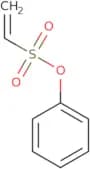
CAS:<p>Phenyl vinylsulfonate is a redox-active molecule that binds to the phosphate group of glutamate and cross-links amide groups. The stability of this film-forming polymer can be increased by adding an asymmetric synthesis and quinoline derivatives. Phenyl vinylsulfonate has been used as a cross-linking agent for the production of amide hydrogels, which are film forming polymers. This polymer is also used in the manufacture of antimicrobial agents.</p>Formula:CH2CHSO3C6H5Purity:Min. 95%Molecular weight:184.21 g/mol3-(2-Chloroethanesulfonyl)propanamide
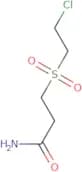
CAS:<p>3-(2-Chloroethanesulfonyl)propanamide is a molecule that has been shown to activate cells in the muscle. Activated cells are able to divide and grow. The mechanism of activation is not known, but it may be due to the functional groups on the molecule or its benzoic acid moiety. 3-(2-Chloroethanesulfonyl)propanamide is more active in muscle than in other tissues, and it stimulates muscle growth by increasing protein synthesis. This drug is also found to have anti-inflammatory properties, which may be due to its ability to inhibit prostaglandin synthesis.END></p>Formula:C5H10ClNO3SPurity:Min. 95%Molecular weight:199.66 g/mol2-(2-Bromoethyl)piperidine hydrobromide
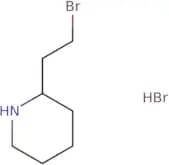
CAS:<p>2-(2-Bromoethyl)piperidine hydrobromide (HPBA) is a hydride reagent that is used in organic synthesis. It can be prepared by the reaction of lithium aluminium hydride and diethyl ether, allowing for high yield and purity. HPBA reacts with acrylates to form acrylate, which can then be used for polymerization reactions. The use of HPBA is an efficient way to synthesize acrylates and other polymers.</p>Formula:C7H15Br2NPurity:Min. 95%Molecular weight:273.01 g/mol3-Amino-4-(butylamino)benzene-1-sulfonamide
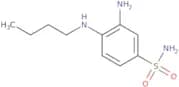
CAS:<p>Versatile small molecule scaffold</p>Formula:C10H17N3O2SPurity:Min. 95%Molecular weight:243.33 g/mol4-Methoxy-2-nitrophenol
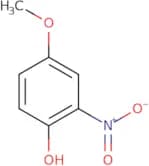
CAS:<p>4-Methoxy-2-nitrophenol is a chemical compound that has been shown to have a potential use in the functional theory of organic compounds. It can be prepared by hydrolysis of nitrobenzene with sodium hydroxide, which leads to the formation of 3-methoxy-4-nitrobenzoic acid. 4-Methoxy-2-nitrophenol can also be synthesized from an intramolecular hydrogen transfer reaction using sodium nitrite and potassium cyanide as reagents. 4MMP has been shown to bind to monoclonal antibodies, and it has been used for the detection of epitopes on proteins or peptides. The crystal structure of 4MPN was determined using X-ray diffraction analysis and was found to show three isomers. Heterostructures are also known for this compound.</p>Formula:C7H7NO4Purity:Min. 95%Molecular weight:169.13 g/molPropyl 2-chloropropanoate
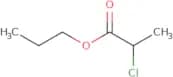
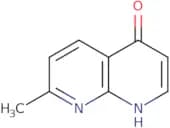
CAS:<p>Propyl 2-chloropropanoate is an eluted and monochlorinated short-chain alcohol. It is homologous to propanol, which has the same number of carbon atoms. The compound has been analysed using gas-liquid chromatography and found to be a mixture of several different n-alkyl chains. Propyl 2-chloropropanoate was analysed using gas chromatography and found to contain two propanoate chain lengths. This compound was also observed to elute from the column at the same time as a gas chromatographic peak with a retention time of 5 minutes and another peak with a retention time of 6 minutes.</p>Formula:C6H11ClO2Purity:Min. 95%Molecular weight:150.6 g/mol7-Methyl-1,8-naphthyridin-4-ol
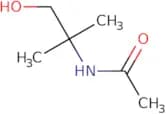
CAS:<p>Versatile small molecule scaffold</p>Formula:C9H8N2OPurity:Min. 95%Molecular weight:160.17 g/molN-(1-Hydroxy-2-methylpropan-2-yl)acetamide
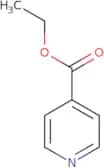
CAS:<p>Versatile small molecule scaffold</p>Formula:C6H13NO2Purity:Min. 95%Molecular weight:131.17 g/mol4-Pyridinecarboxylic Acid Ethyl Ester
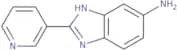
CAS:<p>4-Pyridinecarboxylic Acid Ethyl Ester is a compound that belongs to the group of pyridinecarboxylic acids. It is a metabolite of nicotinamide, which is converted to 4-pyridinecarboxylic acid ethyl ester by esterases in the intestine. Nicotinamide is an important component of the vitamin B3 and has been shown to be effective for treating autoimmune diseases such as rheumatoid arthritis. 4-Pyridinecarboxylic Acid Ethyl Ester may have similar effects on inflammatory bowel disease and alopecia areata. The reaction mechanism of this compound has not been elucidated, but it has been shown to inhibit amyloid protein production in rat intestines. Hydroxyl groups on the side chain likely play a role in hydrogen bonding interactions with receptors in inflammatory bowel disease and alopecia areata.</p>Formula:C8H9NO2Purity:Min. 95%Molecular weight:151.16 g/mol2-Pyridin-3-yl-1H-benzoimidazol-5-ylamine
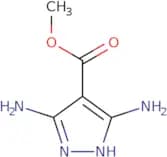
CAS:<p>Versatile small molecule scaffold</p>Formula:C12H10N4Purity:Min. 95%Molecular weight:210.2 g/molMethyl 3,5-diamino-1H-pyrazole-4-carboxylate
CAS:<p>Methyl 3,5-diamino-1H-pyrazole-4-carboxylate is a chemical compound with the molecular formula CH3N2C(NH2)C(=O)OCH3. It is a condensation product of acetoacetic ester and x-ray structural analysis. The structural analysis of methyl 3,5-diamino-1H-pyrazole-4-carboxylate has shown that it is a 1:1 mixture of the two stereoisomers at the central carbon atom. The acetoacetic ester moiety of methyl 3,5-diamino-1H-pyrazole-4-carboxylate has been shown to have protective effects against acetaminophen (paracetamol)-induced hepatotoxicity in mice. Methyl 3,5 -diamino -1H -pyrazole -4 carboxylate is an intermediate in the</p>Formula:C5H8N4O2Purity:Min. 95%Molecular weight:156.14 g/mol(S)-1-(4-Methoxyphenyl)ethanol
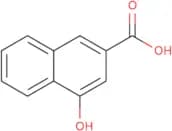
CAS:<p>(S)-1-(4-Methoxyphenyl)ethanol is an enantiopure chemical compound that is a reaction intermediate in the synthesis of various pharmaceuticals. The reaction system is immobilized, and the biological function of this molecule is activation energy. The surface methodology used for this compound is surface methodology, and the substrate concentration required for the reaction to occur is high. This compound also reacts with water, which may be due to its hydrophilic nature. The strain used in this experiment was Staphylococcus aureus, and the extents of the reaction were determined by measuring the rate at which the substrate concentration decreased over time. (S)-1-(4-Methoxyphenyl)ethanol has an asymmetric synthesis that can be caused by a surfactant or by adding a chiral catalyst to a racemic mixture.</p>Formula:C9H12O2Purity:Min. 95%Molecular weight:152.19 g/mol4-Hydroxy-2-naphthoic acid
CAS:<p>4-Hydroxy-2-naphthoic acid is a hydrocarbon with a carboxylic acid group. It can act as an antagonist to the hydrocarbon receptor (HCR). 4-Hydroxy-2-naphthoic acid has been shown to be effective in treating colon cancer cells in vitro, and has been shown to inhibit the growth of cancer cells in vivo. This compound is also effective at inhibiting the proliferation of human colon cancer cells (Caco2) that have been exposed to benzo(a)pyrene, an aromatic hydrocarbon found in cigarette smoke. The mechanism by which this drug inhibits cell proliferation is not fully understood but may involve inhibition of cytochrome P450 1A1 (CYP1A1), which metabolizes benzo(a)pyrene into carcinogenic intermediates. 4-Hydroxy-2-naphthoic acid has also been shown to be anisotropic and microreactor, meaning</p>Formula:C11H8O3Purity:Min. 95%Molecular weight:188.17 g/mol