


Building Blocks
This section contains fundamental products for the synthesis of organic and biological compounds. Building blocks are the essential starting materials used to construct complex molecules through various chemical reactions. They play a critical role in drug discovery, material science, and chemical research. At CymitQuimica, we offer a diverse range of high-quality building blocks to support your innovative research and industrial projects, ensuring you have the essential components for successful synthesis.
Subcategories of "Building Blocks"
- Boronic Acids & Boronic Acid Derivatives(5,756 products)
- Chiral Building Blocks(1,242 products)
- Hydrocarbon Building Blocks(6,095 products)
- Organic Building Blocks(61,051 products)
Found 199813 products of "Building Blocks"
Sort by
Purity (%)
0
100
|
0
|
50
|
90
|
95
|
100
(6-Bromobenzo[d][1,3]dioxol-5-yl)methanol
CAS:<p>Versatile small molecule scaffold</p>Formula:C8H7BrO3Purity:Min. 95%Molecular weight:231.04 g/mol2-(4-Iodo-5-methyl-1H-pyrazol-1-yl)acetic acid
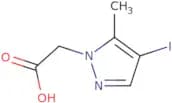
CAS:<p>Versatile small molecule scaffold</p>Formula:C6H7IN2O2Purity:Min. 95%Molecular weight:266.04 g/mol2-(4-Iodo-3-methyl-1H-pyrazol-1-yl)acetic acid
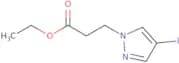
CAS:<p>Versatile small molecule scaffold</p>Formula:C6H7IN2O2Purity:Min. 95%Molecular weight:266.04 g/molEthyl 3-(4-iodopyrazol-1-yl)propanoate
CAS:<p>Versatile small molecule scaffold</p>Formula:C8H11IN2O2Purity:Min. 95%Molecular weight:294.09 g/mol6-(4-Bromophenyl)-2H,3H,5H,6H-imidazo[2,1-b][1,3]thiazole
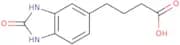
CAS:<p>6-(4-Bromophenyl)-2H,3H,5H,6H-imidazo[2,1-b][1,3]thiazole is a phosphatase inhibitor. It is used to treat hyperphosphatemia in patients with end-stage renal disease who are on dialysis. 6-(4-Bromophenyl)-2H,3H,5H,6H-imidazo[2,1-b][1,3]thiazole inhibits the activity of tyrosine phosphatases and prevents the uptake of calcium and phosphate from the gastrointestinal tract. This drug has been shown to improve bone mineralization in postmenopausal women with osteoporosis.</p>Formula:C11H11BrN2SPurity:Min. 95%Molecular weight:283.19 g/mol4-(2-Oxo-2,3-dihydro-1H-1,3-benzodiazol-5-yl)butanoic acid
CAS:<p>Versatile small molecule scaffold</p>Formula:C11H12N2O3Purity:Min. 95%Molecular weight:220.22 g/molmethyl 2-(4-amino-1H-pyrazol-1-yl)acetate hydrochloride
CAS:<p>Versatile small molecule scaffold</p>Formula:C6H10ClN3O2Purity:Min. 95%Molecular weight:191.6 g/mol4-Iodo-1,5-dimethyl-1H-pyrazole-3-carboxylic acid
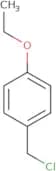
CAS:<p>Versatile small molecule scaffold</p>Formula:C6H7IN2O2Purity:Min. 95%Molecular weight:266.04 g/mol1-(Chloromethyl)-4-ethoxybenzene
CAS:<p>1-(Chloromethyl)-4-ethoxybenzene is an alkylation agent that is used as a phase transfer catalyst in the conversion of toluene to ethylbenzene. The reaction can be catalyzed by sodium hydroxide, which causes the chloride ion from 1-(chloromethyl)-4-ethoxybenzene to react with sodium hydroxide and form sodium chloride (table salt). This reaction produces an ether group (-O-CH2-) on the benzene ring of 1-(chloromethyl)-4-ethoxybenzene. Elemental analysis has shown that 1-(chloromethyl)-4-ethoxybenzene has a 98% yield for the product, ethylbenzene. Spectrometry has confirmed that 1-(chloromethyl)-4-ethoxybenzene contains three carbon atoms, nine hydrogen atoms, two chlorine atoms, and one oxygen atom.</p>Formula:C9H11ClOPurity:Min. 95%Molecular weight:170.64 g/mol2-Nitrobenzene-1-sulfonyl azide
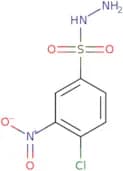
CAS:<p>Versatile small molecule scaffold</p>Formula:C6H4N4O4SPurity:Min. 95%Molecular weight:228.19 g/mol4-Chloro-3-nitrobenzene-1-sulfonohydrazide
CAS:<p>Versatile small molecule scaffold</p>Formula:C6H6ClN3O4SPurity:Min. 95%Molecular weight:251.65 g/mol2-[(2-Methylphenyl)methyl]-1H-1,3-benzodiazole
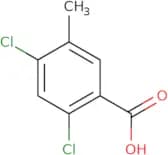
CAS:<p>Versatile small molecule scaffold</p>Formula:C15H14N2Purity:Min. 95%Molecular weight:222.28 g/mol2,4-Dichloro-5-methylbenzoic acid
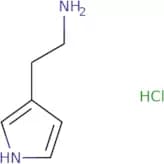
CAS:<p>Versatile small molecule scaffold</p>Formula:C8H6Cl2O2Purity:Min. 95%Molecular weight:205.03 g/mol2-(1H-Pyrrol-3-yl)ethan-1-amine hydrochloride
CAS:<p>Versatile small molecule scaffold</p>Formula:C6H11ClN2Purity:Min. 95%Molecular weight:146.62 g/mol2-Bromooxane
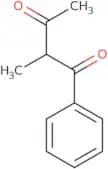
CAS:<p>2-Bromooxane is a molecule that binds to the alkylthio group on the surface of cells. It has been shown to be effective in the treatment of hepatitis and inflammatory diseases such as rheumatoid arthritis. 2-Bromooxane has also been shown to induce apoptotic cell death in macrophages, which may be due to its ability to inhibit the synthesis of inflammatory cytokines and chemokines. This drug also has nitrogen atoms that can form hydrogen bonds with hydroxyl groups in proteins, which may account for its biological properties.</p>Formula:C5H9BrOPurity:Min. 95%Molecular weight:165.03 g/mol2-Methyl-1-phenylbutane-1,3-dione
CAS:<p>2-Methyl-1-phenylbutane-1,3-dione is a chemical intermediate that belongs to the group of alkyl bromides. It is used as an herbicide and a pesticide, and can be reduced to 2-methyl-2-(4'-bromophenyl)pentanal by reductive cleavage with chlorine. The reduction of 2-methyl-1-phenylbutane-1,3-dione by hydrogen gas leads to the diastereoisomers 2-(4'-bromophenyl)-2-(2'-methylpropionyl)pentanal and 3-(4'-bromophenyl)-2-(2'-methylpropionyl)pentanal. The former is a chiral molecule that can be used as a medicine for high blood pressure, while the latter has been shown to be effective against microbial strains such as Escherichia coli and Candida albicans.</p>Formula:C11H12O2Purity:Min. 95%Molecular weight:176.21 g/mola-(1-Methylethyl)benzenemethanamine
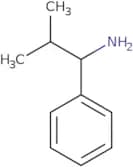
CAS:<p>a-(1-Methylethyl)benzenemethanamine is a phenylalkylamine that has been modified to contain a chloride group. It can be used as an analytical tool to study the effects of molecular modifications on the inhibitory potency and selectivity of phenylalkylamines. The chloride group was introduced in order to increase the solubility of this molecule in water and make it more compatible with other molecules that are often used for analysis, such as isopropyl alcohol. Electrospray ionization (ESI) was employed to generate a positive ion spectrum, which was then analyzed by a mass spectrometer (MS). Molecular modeling studies were also conducted using quantum chemical tools to predict the structure of this compound. Structural modifications were made based on these predictions in order to optimize properties such as inhibitory potency and selectivity. These changes were validated using ESI-MS analysis and then confirmed by molecular modeling studies. This compound can be used</p>Formula:C10H15NPurity:Min. 95%Molecular weight:149.23 g/moltert-Butoxybenzene
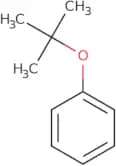
CAS:<p>Tert-Butoxybenzene is a chemical compound that is used to manufacture other chemicals. It is used as a reagent in organic synthesis, in particular for the preparation of derivatives of salicylic acid. Tert-Butoxybenzene can be detected by electron spin resonance spectroscopy and nuclear magnetic resonance spectroscopy. The health effects of tert-butoxybenzene are not well known, but it has been linked with cancer in animals and humans. Tert-butoxybenzene also reacts with hydrochloric acid to produce hydrogen chloride and benzyl alcohol. Further reactions lead to the formation of isobutene, which can be converted into propylene carbonate or alkylated to form methyl tert-butyl ether (MTBE).</p>Formula:C10H14OPurity:Min. 95%Molecular weight:150.21 g/molDimethyl-1,3-oxazole-2-thiol
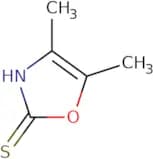
CAS:<p>Versatile small molecule scaffold</p>Formula:C5H7NOSPurity:Min. 95%Molecular weight:129.18 g/mol2-Azaspiro[5.5]undec-8-ene
CAS:<p>Versatile small molecule scaffold</p>Formula:C10H17NPurity:Min. 95%Molecular weight:151.25 g/mol
![(6-Bromobenzo[d][1,3]dioxol-5-yl)methanol](/_next/image/?url=https%3A%2Fstatic.cymitquimica.com%2Fproducts%2F3D%2Fthumb-webp%2FGAA64234.webp&w=3840&q=75)


![6-(4-Bromophenyl)-2H,3H,5H,6H-imidazo[2,1-b][1,3]thiazole](/_next/image/?url=https%3A%2Fstatic.cymitquimica.com%2Fproducts%2F3D%2Fthumb-webp%2FGAA64646.webp&w=3840&q=75)



![2-[(2-Methylphenyl)methyl]-1H-1,3-benzodiazole](/_next/image/?url=https%3A%2Fstatic.cymitquimica.com%2Fproducts%2F3D%2Fthumb-webp%2FGAA65983.webp&w=3840&q=75)

![2-Azaspiro[5.5]undec-8-ene](/_next/image/?url=https%3A%2Fstatic.cymitquimica.com%2Fproducts%2F3D%2Fthumb-webp%2FGAA67173.webp&w=3840&q=75)