Building Blocks
This section contains fundamental products for the synthesis of organic and biological compounds. Building blocks are the essential starting materials used to construct complex molecules through various chemical reactions. They play a critical role in drug discovery, material science, and chemical research. At CymitQuimica, we offer a diverse range of high-quality building blocks to support your innovative research and industrial projects, ensuring you have the essential components for successful synthesis.
Subcategories of "Building Blocks"
- Boronic Acids & Boronic Acid Derivatives(5,786 products)
- Chiral Building Blocks(1,246 products)
- Hydrocarbon Building Blocks(6,107 products)
- Organic Building Blocks(61,081 products)
Found 205489 products of "Building Blocks"
Sort by
Purity (%)
0
100
|
0
|
50
|
90
|
95
|
100
1-(4-Bromophenyl)-3,3-dimethylurea
CAS:1-(4-Bromophenyl)-3,3-dimethylurea is a growth regulator that belongs to the heterocycle pyrazole derivative. It binds to the cytochrome P450 enzyme and inhibits the production of proteins vital for cell division, leading to cell death by inhibiting the production of proteins vital for cell division. 1-(4-Bromophenyl)-3,3-dimethylurea has been shown to inhibit methionine adenosyltransferase and suppress DNA methylation. This drug also has a toxic effect on respiratory system cells, which may be due to its ability to induce apoptosis.Formula:C9H11BrN2OPurity:Min. 95%Molecular weight:243.1 g/molMethyl (2R)-2-amino-3-(4-hydroxyphenyl)propanoate
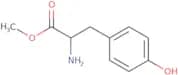
CAS:Methyl (2R)-2-amino-3-(4-hydroxyphenyl)propanoate is a linker that binds to the nuclear hormone receptors found in cancer cells. It has been shown that this molecule has anticancer activity in animals, but its efficacy has not been evaluated in humans. Methyl (2R)-2-amino-3-(4-hydroxyphenyl)propanoate is a stereoselective agent, which means it selectively binds to one of two mirror images of the same molecule. The molecule was originally synthesized for use as an estrogen receptor antagonist but also shows affinity for progesterone and androgen receptors. This linker is being investigated as a potential drug for the treatment of hormone receptor positive glioma, prostate cancer, and breast cancer.Formula:C10H13NO3Purity:Min. 95%Molecular weight:195.21 g/molEthyl[1-(oxolan-2-yl)-2-phenylethyl]amine
CAS:Versatile small molecule scaffold
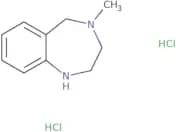
Formula:C14H21NOPurity:Min. 95%Molecular weight:219.32 g/mol4-Methyl-2,3,4,5-tetrahydro-1H-1,4-benzodiazepine dihydrochloride
CAS:Versatile small molecule scaffold
Formula:C10H16Cl2N2Purity:Min. 95%Molecular weight:235.15 g/mol2-Benzylbenzo[D]isothiazol-3(2H)-one 1,1-dioxide
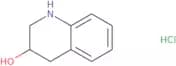
CAS:Versatile small molecule scaffoldFormula:C14H11NO3SPurity:Min. 95%Molecular weight:273.31 g/mol1,2,3,4-Tetrahydroquinolin-3-ol
CAS:1,2,3,4-Tetrahydroquinolin-3-ol is a stabilizer that can be used to prevent or slow down the polymerization of epoxy resins. It can also be used as an intermediate in the synthesis of other organic compounds. 1,2,3,4-Tetrahydroquinolin-3-ol has been shown to react with amines and nucleophiles to form new compounds. It has also been shown to stabilize proton transfer reactions. This compound is also capable of reacting with inorganic acids to form ring-opening polymers.
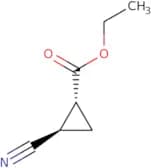
Formula:C9H11NOPurity:Min. 95%Molecular weight:149.19 g/molEthyl trans-2-cyanocyclopropane-1-carboxylate
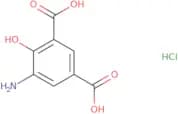
CAS:Versatile small molecule scaffoldFormula:C7H9NO2Purity:Min. 95%Molecular weight:139.15 g/mol5-Amino-4-hydroxybenzene-1,3-dicarboxylic acid hydrochloride
CAS:Versatile small molecule scaffold
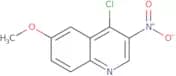
Formula:C8H8ClNO5Purity:Min. 95%Molecular weight:233.6 g/mol4-Chloro-6-methoxy-3-nitroquinoline
CAS:Versatile small molecule scaffoldFormula:C10H7ClN2O3Purity:Min. 95%Molecular weight:238.63 g/mol1-{3-[(Dimethylamino)methyl]phenyl}ethan-1-one
CAS:Versatile small molecule scaffoldFormula:C11H15NOPurity:Min. 95%Molecular weight:177.24 g/mol1-{3-[2-(Dimethylamino)ethoxy]phenyl}ethan-1-one
CAS:Controlled ProductVersatile small molecule scaffoldFormula:C12H17NO2Purity:Min. 95%Molecular weight:207.27 g/mol7-Chloro-8-fluoroimidazo[1,2-a]pyridine
CAS:Versatile small molecule scaffoldFormula:C7H4ClFN2Purity:Min. 95%Molecular weight:170.57 g/mol2,3-Dihydro-7-iodoinden-1-one
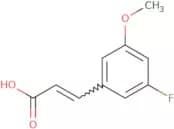
CAS:Versatile small molecule scaffoldFormula:C9H7IOPurity:Min. 95%Molecular weight:258.06 g/mol3-(3-fluoro-5-methoxyphenyl)prop-2-enoic Acid
CAS:Versatile small molecule scaffoldFormula:C10H9O3FPurity:Min. 95%Molecular weight:196.17 g/mol2,3,5-Trimethyl-3H-imidazo[4,5-b]pyridine-7-carboxylic acid
CAS:Versatile small molecule scaffold
Formula:C10H11N3O2Purity:Min. 95%Molecular weight:205.21 g/mol2-[4-(Trifluoromethyl)phenyl]cyclopentan-1-one
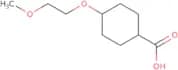
CAS:Versatile small molecule scaffoldFormula:C12H11F3OPurity:Min. 95%Molecular weight:228.21 g/mol4-(2-Methoxyethoxy)cyclohexane-1-carboxylic acid
CAS:Versatile small molecule scaffoldFormula:C10H18O4Purity:Min. 95%Molecular weight:202.25 g/molrac-(3R,6S)-1-[(tert-butoxy)carbonyl]-6-methylpiperidine-3-carboxylic acid, cis
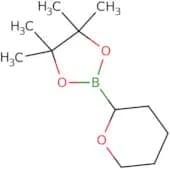
CAS:Versatile small molecule scaffoldFormula:C12H21NO4Purity:Min. 95%Molecular weight:243.3 g/mol4,4,5,5-Tetramethyl-2-(oxan-2-yl)-1,3,2-dioxaborolane
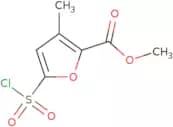
CAS:Versatile small molecule scaffoldFormula:C11H21BO3Purity:Min. 95%Molecular weight:212.1 g/molMethyl 5-(chlorosulfonyl)-3-methylfuran-2-carboxylate
CAS:Versatile small molecule scaffoldFormula:C7H7ClO5SPurity:Min. 95%Molecular weight:238.65 g/mol

![Ethyl[1-(oxolan-2-yl)-2-phenylethyl]amine](/_next/image/?url=https%3A%2Fstatic.cymitquimica.com%2Fproducts%2F3D%2Fthumb-webp%2FDAA41334.webp&w=3840&q=75)
![2-Benzylbenzo[D]isothiazol-3(2H)-one 1,1-dioxide](/_next/image/?url=https%3A%2Fstatic.cymitquimica.com%2Fproducts%2F3D%2Fthumb-webp%2FDAA41659.webp&w=3840&q=75)
![1-{3-[(Dimethylamino)methyl]phenyl}ethan-1-one](/_next/image/?url=https%3A%2Fstatic.cymitquimica.com%2Fproducts%2F3D%2Fthumb-webp%2FDAB30589.webp&w=3840&q=75)
![1-{3-[2-(Dimethylamino)ethoxy]phenyl}ethan-1-one](/_next/image/?url=https%3A%2Fstatic.cymitquimica.com%2Fproducts%2F3D%2Fthumb-webp%2FDAB30590.webp&w=3840&q=75)
![7-Chloro-8-fluoroimidazo[1,2-a]pyridine](/_next/image/?url=https%3A%2Fstatic.cymitquimica.com%2Fproducts%2F3D%2Fthumb-webp%2FDAB69187.webp&w=3840&q=75)
![2,3,5-Trimethyl-3H-imidazo[4,5-b]pyridine-7-carboxylic acid](/_next/image/?url=https%3A%2Fstatic.cymitquimica.com%2Fproducts%2F3D%2Fthumb-webp%2FDAC03890.webp&w=3840&q=75)
![2-[4-(Trifluoromethyl)phenyl]cyclopentan-1-one](/_next/image/?url=https%3A%2Fstatic.cymitquimica.com%2Fproducts%2F3D%2Fthumb-webp%2FDAC11175.webp&w=3840&q=75)
![rac-(3R,6S)-1-[(tert-butoxy)carbonyl]-6-methylpiperidine-3-carboxylic acid, cis](/_next/image/?url=https%3A%2Fstatic.cymitquimica.com%2Fproducts%2F3D%2Fthumb-webp%2FDAC20082.webp&w=3840&q=75)