Building Blocks
Subcategories of "Building Blocks"
- Boronic Acids & Boronic Acid Derivatives(5,805 products)
- Chiral Building Blocks(1,248 products)
- Hydrocarbon Building Blocks(6,118 products)
- Organic Building Blocks(61,447 products)
Found 208423 products of "Building Blocks"
5-(Bromomethyl)-2-methylpyrimidin-4-amine hydrobromide
CAS:Versatile small molecule scaffoldFormula:C6H9Br2N3Purity:Min. 95%Molecular weight:282.97 g/molN,N-Dimethylethanimidamide hydrochloride
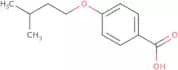
CAS:Controlled ProductVersatile small molecule scaffoldFormula:C4H11ClN2Purity:Min. 95%Molecular weight:122.6 g/mol4-(Isopentyloxy)benzenecarboxylic acid
CAS:Versatile small molecule scaffold
Formula:C12H16O3Purity:Min. 95%Molecular weight:208.25 g/mol±-Chlorophenylacetyl Chloride
CAS:±-Chlorophenylacetyl Chloride is a chemical reagent that is used in organic chemistry. It reacts with tetronic acid to form a ruthenium complex, which can be used as a catalyst for organic reactions. It has been shown to react with n-dimethyl formamide and sodium chloride, forming an insoluble precipitate. The rate of reaction depends on the morphology of the reactant and whether it is soluble or not. The reactive properties of ±-chlorophenylacetyl chloride are due to its chlorine atom, which forms a stable bond with a carbon atom on the reactant. This product has been shown to have low expression levels in Chinese herbs and fetal bovine serum when compared to subtilis.Formula:C8H6Cl2OPurity:Min. 95%Molecular weight:189.04 g/mol2-Hydroxy-3-nitrobenzamide
CAS:2-Hydroxy-3-nitrobenzamide is a cyclic, layered amide with the formula (NHCH)CO. It is a polymeric compound that has been shown to be effective in the treatment of bovine heart arrhythmia and as an antiarrhythmic agent in mice. 2-Hydroxy-3-nitrobenzamide can be synthesized by oxidative nitration of 2-aminoanisole followed by hydrolysis of the resulting nitro group. This compound also reacts with amines to form dimers and hydrogen bonding can occur between its nitro group and amino group.Formula:C7H6N2O4Purity:Min. 95%Molecular weight:182.13 g/molN-(1-Phenylethyl)hydroxylamine
CAS:N-(1-Phenylethyl)hydroxylamine is a research chemical that belongs to the class of oximes. It has been shown to react with a variety of amines and lipoxygenase in the presence of p-toluenesulfonic acid to form an N-hydroxyamino derivative. This reaction is stereospecific and enantioselective, which means it will only take place when the chiral center is on one side of the molecule. The hydroxylamine group is also synthesized by a novel asymmetric synthesis method involving ketones. This synthetic process uses tert-butyl and primary amines, which are racemized during the reaction.
Formula:C8H11NOPurity:Min. 95%Molecular weight:137.18 g/molOxiranemethanamine, N,N-diethyl-
CAS:Oxirane-methanamine, N,N-diethyl (ODME) is a surface active agent that can be used in the treatment of cancer. It is also a hydrophobic molecule that has been shown to bind to cellulose derivatives and sodium carbonate. ODME has been shown to have an optimal reaction at pH 7 and a reaction time of 3 minutes. The ODME molecule can form base with the amines present in the tissue and this leads to cellular damage. ODME is linear polymer and its structure can be seen below:
Formula:C7H15NOPurity:Min. 95%Molecular weight:129.2 g/mol2-(2-Fluoro-phenoxy)-ethanol
CAS:Versatile small molecule scaffoldFormula:C8H9FO2Purity:Min. 95%Molecular weight:156.16 g/mol1-Ethanesulphonyl-4-fluorobenzene
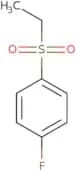
CAS:1-Ethanesulphonyl-4-fluorobenzene is a chemical compound that belongs to the group of fluorinated drugs. It has been used as a drug for the treatment of cancer and inflammatory diseases, such as epilepsy and inflammatory bowel disease. This polymer is biocompatible, which means it does not cause an adverse reaction in living tissue. 1-Ethanesulphonyl-4-fluorobenzene has a wide spectrum of biological properties and is able to inhibit water vapor transport through occlusive polymer matrices. The use of this polymer can be beneficial in the development of new drug delivery systems because it has low toxicity and high stability.
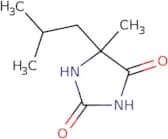
Formula:C8H9FO2SPurity:Min. 95%Molecular weight:188.22 g/mol5-Iso-butyl-5-methylhydantoin
CAS:5-Iso-butyl-5-methylhydantoin is an organic compound that contains a sulphonic acid group. It has the chemical formula of CH3C(O)NHCH2SO3H. 5-Iso-butyl-5-methylhydantoin is soluble in water and has a pH between 1 and 4. It can be used as a solvent for substances with high solubility, such as additives, solutions, and inorganic materials. The flow properties of 5-isobutyl-5-methylhydantoin are dependent on the binder or carbon atoms present.
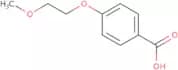
Formula:C8H14N2O2Purity:Min. 95%Molecular weight:170.21 g/mol4-(2-Methoxy-ethoxy)-benzoic acid
CAS:Versatile small molecule scaffold
Formula:C10H12O4Purity:Min. 95%Molecular weight:196.2 g/mol(3,3-Dimethylbicyclo[2.2.1]heptan-2-yl)methanol
CAS:Versatile small molecule scaffoldFormula:C10H18OPurity:Min. 95%Molecular weight:154.25 g/mol(2-Phenylethyl)propylamine
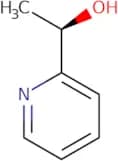
CAS:Controlled Product2-Phenylethyl)propylamine is an aminophenol that is a monosubstituted aromatic compound. 2-Phenylethyl)propylamine has been shown to be a bifunctional substrate for the cytochrome P450 enzyme and is also a receptor affinity analog of cannabinoids. The liposome formulation of 2-phenylethylamine has been shown to have an enhanced blood stability, which makes it useful for analytical toxicology as well as in pharmaceutical research. The oxidase type of 2-phenylethylamine has been shown to have inorganic particles, which may cause particle aggregation during storage.Formula:C11H17NPurity:Min. 95%Molecular weight:163.26 g/mol(R)-2-(1-Hydroxyethyl)pyridine
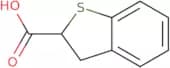
CAS:(R)-2-(1-Hydroxyethyl)pyridine is an enantiopure compound that is used as a catalyst in the production of alcohols, carbinols and hydrocarbons. It has been shown to be a high yield preparative catalyst for catalytic asymmetric reactions. The enzyme alcohol dehydrogenase catalyses the oxidation of (R)-2-(1-hydroxyethyl)pyridine to form an intermediate that can then be oxidized by the enzyme carbinol dehydrogenase, which produces carbinols. This product has also been found to act as a vasodilator and nonselective inhibitor of phosphodiesterases 3 and 4.Formula:C7H9NOPurity:Min. 95%Molecular weight:123.15 g/mol2,3-Dihydro-1-benzothiophene-2-carboxylic acid
CAS:2,3-Dihydro-1-benzothiophene-2-carboxylic acid is a hydrocarbon with the molecular formula C10H8O3. It has a benzene and phenolic functional groups. The compound is quantified by gas chromatography, which can be preselected to identify specific compounds, such as hydrocarbons and aromatic hydrocarbons. The compound can also be analyzed using spectrometric techniques, such as UV/Vis spectroscopy. 2,3-Dihydro-1-benzothiophene-2-carboxylic acid is found in databases of mass spectrometry data. It can be used to determine the structure of benzylsuccinic acid and naphthalenes.Formula:C9H8O2SPurity:Min. 95%Molecular weight:180.23 g/mol4-Chloro-2-methylbenzylamine
CAS:Versatile small molecule scaffold
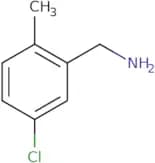
Formula:C8H10ClNPurity:Min. 95%Molecular weight:155.63 g/mol5-Chloro-2-methylbenzylamine
CAS:5-Chloro-2-methylbenzylamine is a chemical compound that has been shown to be an effective ozone depleter. It has also been used to study the relationship between chemical structure and reactivity, as well as in regression analysis. The ionic, nucleophilic, and electron properties of 5-Chloro-2-methylbenzylamine have been studied by looking at its affinity for different metal ions. This molecule can be used in organic pollutant remediation because of its ability to catalyze the regeneration of ozonide when it is oxidized by oxygen in water. This reaction is reversible, so 5-Chloro-2-methylbenzylamine can be regenerated from the ozonide product.
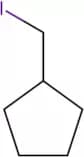
Formula:C8H10ClNPurity:Min. 95%Molecular weight:155.63 g/mol(Iodomethyl)cyclopentane
CAS:(Iodomethyl)cyclopentane is a potent cytotoxic agent that inhibits the proliferation of a wide range of cells. It binds to the DNA of proliferating cells and causes cross-linking and strand breakage, which leads to cell death. This compound also has anti-inflammatory properties and can be used in hyperproliferative diseases such as cancer, as well as infectious diseases such as tuberculosis. (Iodomethyl)cyclopentane is not available for sale in its pure form, but rather in a salt form.
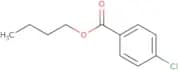
Formula:C6H11IPurity:Min. 95%Molecular weight:210.06 g/molButyl 4-chlorobenzoate
CAS:Butyl 4-chlorobenzoate is an organic compound that has a radical chain mechanism of action. It is used as a photosensitizer in photodynamic therapy and can be activated by ultraviolet light. The radical species generated by this drug attacks the DNA of the bacteria, leading to cell death. One of the key steps in the process is the transfer of a hydrogen atom from butyl 4-chlorobenzoate to an electron donor, such as hydroxyanisole, followed by irradiation with light to generate radical species. Butyl 4-chlorobenzoate also inhibits bacterial growth through its ability to act as an acid and cause acidic pH changes within cells.Formula:C11H13ClO2Purity:Min. 95%Molecular weight:212.67 g/mol2,4-Dimethylpentanal
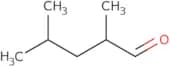
CAS:Versatile small molecule scaffold
Formula:C7H14OPurity:Min. 95%Molecular weight:114.19 g/mol




![(3,3-Dimethylbicyclo[2.2.1]heptan-2-yl)methanol](/_next/image/?url=https%3A%2Fstatic.cymitquimica.com%2Fproducts%2F3D%2Fthumb-webp%2FCBA89945.webp&w=3840&q=75)