Building Blocks
This section contains fundamental products for the synthesis of organic and biological compounds. Building blocks are the essential starting materials used to construct complex molecules through various chemical reactions. They play a critical role in drug discovery, material science, and chemical research. At CymitQuimica, we offer a diverse range of high-quality building blocks to support your innovative research and industrial projects, ensuring you have the essential components for successful synthesis.
Subcategories of "Building Blocks"
- Boronic Acids & Boronic Acid Derivatives(5,756 products)
- Chiral Building Blocks(1,242 products)
- Hydrocarbon Building Blocks(6,095 products)
- Organic Building Blocks(61,038 products)
Found 196817 products of "Building Blocks"
Sort by
Purity (%)
0
100
|
0
|
50
|
90
|
95
|
100
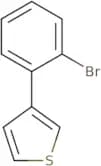
3-(2-Bromo-phenyl)-thiophene
CAS:<p>Versatile small molecule scaffold</p>Formula:C10H7BrSPurity:Min. 95%Molecular weight:239.13 g/molRef: 3D-VAA60883
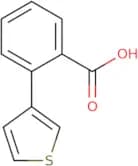
1gTo inquire5gTo inquire5mg192.00€50mg759.00€100mgTo inquire250mgTo inquire500mgTo inquire2-Thiophen-3-yl-benzoic acid
CAS:<p>Versatile small molecule scaffold</p>Formula:C11H8O2SPurity:Min. 95%Molecular weight:204.24 g/molRef: 3D-VAA60887
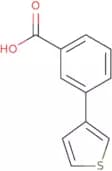
1gTo inquire5gTo inquire10gTo inquire10mg197.00€100mg705.00€250mgTo inquire500mgTo inquire3-Thiophen-3-yl-benzoic acid
CAS:<p>Versatile small molecule scaffold</p>Formula:C11H8O2SPurity:Min. 95%Molecular weight:204.24 g/molPropanoic acid, 3-bromo-2-methyl-, methyl ester
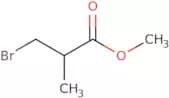
CAS:<p>3-Bromo-2-methylpropanoic acid is a colorimetric substrate that is used in the screening of enzymes with propionate as a cofactor. This substrate has been found to be selective for esterases, and can be used as an alternative to octanoate for enzymatic studies. The 3-bromo-2-methylpropanoic acid esters are also hydrophobic and have higher melting points than their corresponding acids, making them more suitable for thermophilic organisms. <br>The 3-bromo-2-methylpropanoic acid esters are chiral compounds that can be synthesized in two forms: (R)-3-bromo-2-methylpropanoic acid methyl ester and (S)-3-bromo-2-methylpropanoic acid methyl ester. The enantiomers of these compounds exhibit different biological activity. For example, the (S)-enantiomer</p>Formula:C5H9BrO2Purity:Min. 95%Molecular weight:181.03 g/molEthanol, 2-(phenylsulfonyl)-
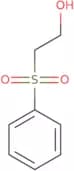
CAS:<p>Ethanol, 2-(phenylsulfonyl)- is a synthetic chemical compound. It is used as an electron donor in the Suzuki coupling reaction and has shown significant cytotoxicity against tumour cell lines. This product also has been used in the synthesis of naphthalene and pulchella. The mechanism for its cytotoxicity involves the desulfurization of tyrosinase, which is an enzyme that catalyzes the conversion of dihydroxyphenylalanine to melanin. This product has also been shown to be effective against glandularia with structural studies showing that it reacts with sulfonic acid groups.</p>Formula:C8H10O3SPurity:Min. 95%Molecular weight:186.23 g/molRef: 3D-VAA61121
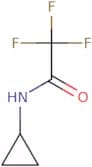
1g737.00€5gTo inquire10gTo inquire25gTo inquire50gTo inquire100gTo inquire100mg208.00€N-Cyclopropyl-2,2,2-trifluoroacetamide
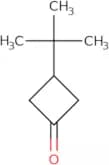
CAS:<p>Versatile small molecule scaffold</p>Formula:C5H6F3NOPurity:Min. 95%Molecular weight:153.1 g/mol3-tert-Butylcyclobutanone
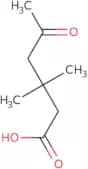
CAS:<p>3-tert-Butylcyclobutanone is an organocatalyst that is used for the asymmetric synthesis of cyclobutanones. It has been shown to be a chiral, stereoselective and catalytic mediator in the Baeyer–Villiger oxidation of enones. 3-tert-Butylcyclobutanone also exhibits self-assembly properties and can form dimers with other molecules. This compound is also capable of catalyzing cycloadditions between electron deficient alkenes and electron rich dienes. The dimers of 3-tert-butylcyclobutanone are formed by hydrogen bonding interactions between the keto groups on adjacent molecules.</p>Formula:C8H14OPurity:Min. 95%Molecular weight:126.2 g/mol3,3-Dimethyl-5-oxohexanoic acid
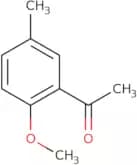
CAS:<p>3,3-Dimethyl-5-oxohexanoic acid is a peroxide with the chemical formula C10H16O4. It is synthesized by the ozonolysis of isophorone. 3,3-Dimethyl-5-oxohexanoic acid can be used as a dehydrating agent and has been shown to be effective in the production of esters, such as methyl esters. The dehydration of this compound gives rise to hydrogen peroxide and acetone. The hydrolysis of 3,3-dimethyl-5-oxohexanoic acid with water yields acetic acid and methyl alcohol. This reaction has been shown to be stoichiometric.</p>Formula:C8H14O3Purity:Min. 95%Molecular weight:158.19 g/mol1-(2-Methoxy-5-methylphenyl)ethanone
CAS:<p>1-(2-Methoxy-5-methylphenyl)ethanone is a volatile, synthetic compound. It is used as a chemical intermediate in the production of picotamide and esterification products. Methoxyphenylacetic acid (1) is methylated with methanol in the presence of hydrochloric acid to form 2,5-dimethoxybenzoic acid (2). The latter is then esterified with methanol and acetic anhydride to yield picotamide (3).</p>Formula:C10H12O2Purity:Min. 95%Molecular weight:164.2 g/mol1-(2,3-Dihydro-benzo[1,4]dioxin-6-yl)-propan-1-one
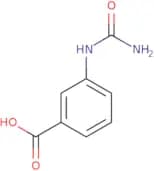
CAS:<p>Versatile small molecule scaffold</p>Formula:C11H12O3Purity:Min. 95%Molecular weight:192.21 g/mol3-Ureidobenzoic acid
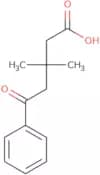
CAS:<p>3-Ureidobenzoic acid is an organic compound that can act as a reducer or bidentate ligand. The reductive properties of 3-ureidobenzoic acid are due to its ability to accept electrons from other molecules, which can be used to reduce metal ions. The ligand properties of 3-ureidobenzoic acid are due to the formation of a covalent bond with other molecules, often metal ions. 3-Ureidobenzoic acid is also known to be a synthetase, which catalyzes the formation of peptide bonds in proteins by joining amino acids together. This compound has been found in cytochrome P450 enzymes, where it is believed to play a role in electron transfer and activation reactions. It has also been shown to be involved in supramolecular hydrogen bonding, which stabilizes certain compounds and plays an important role in enzyme activity and intermolecular reactions.</p>Formula:C8H8N2O3Purity:Min. 95%Molecular weight:180.16 g/mol3,3-Dimethyl-5-oxo-5-phenylpentanoic acid
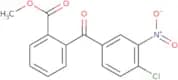
CAS:<p>Versatile small molecule scaffold</p>Formula:C13H16O3Purity:Min. 95%Molecular weight:220.26 g/molMethyl 2-(4-chloro-3-nitrobenzoyl)benzoate
CAS:<p>Versatile small molecule scaffold</p>Formula:C15H10ClNO5Purity:Min. 95%Molecular weight:319.69 g/mol{Tricyclo[2.2.1.0,2,6]heptan-1-yl}methanol
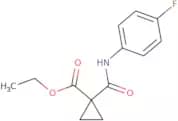
CAS:<p>Versatile small molecule scaffold</p>Formula:C8H12OPurity:Min. 95%Molecular weight:124.2 g/molEthyl 1-((4-fluorophenyl)carbamoyl)cyclopropanecarboxylate
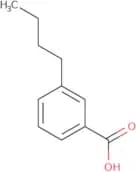
CAS:<p>Versatile small molecule scaffold</p>Formula:C13H14FNO3Purity:Min. 95%Molecular weight:251.25 g/mol3-N-Butylbenzoic acid
CAS:<p>Versatile small molecule scaffold</p>Formula:C11H14O2Purity:Min. 95%Molecular weight:178.23 g/molRef: 3D-VAA65172
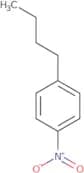
1gTo inquire5gTo inquire10gTo inquire5mg200.00€50mg715.00€250mgTo inquire500mgTo inquire1-Butyl-4-nitrobenzene
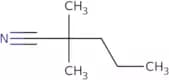
CAS:<p>1-Butyl-4-nitrobenzene is an environmental pollutant that is a byproduct of coal combustion and industrial processes. It can be chlorinated to produce 1,2,3-trichloropropane, which is used in the production of various chemicals. The chemical transformation of 1-butyl-4-nitrobenzene yields a variety of products including nitroarenes and anilines. The mechanistic pathways for the production of these compounds are not completely understood but it has been shown that isotope effects may play a role in the formation of certain product yields.</p>Formula:C10H13NO2Purity:Min. 95%Molecular weight:179.22 g/mol2,2-Dimethylpentanenitrile
CAS:<p>2,2-Dimethylpentanenitrile is a solvent that can be used in the polymerization of cellulose acetate. It has been shown to have reactive sites and be resistant to radiation and heat. 2,2-Dimethylpentanenitrile has also been used as a polymerization initiator for cationic polymers, which are water vapor-resistant and bond cleavage resistant. This compound is an experimental infection agent that is used against enteritidis, which is an antibiotic-resistant bacterium. 2,2-Dimethylpentanenitrile has also been shown to be effective as an electrophotographic developer for particle suspensions and gaseous emissions.</p>Purity:Min. 95%Ref: 3D-VAA65447
1gTo inquire5gTo inquire10gTo inquire25gTo inquire50gTo inquire10mg197.00€100mg705.00€2-Methyl-4-phenyl-1,3-oxazole
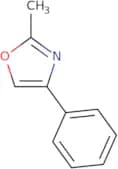
CAS:<p>2-Methyl-4-phenyl-1,3-oxazole is an organic compound that is a white solid. It has a molecular weight of 222.2 g/mol and chemical formula C6H5NO2. 2-Methyl-4-phenyl-1,3-oxazole can be synthesized by reacting phenylmagnesium bromide with methyl iodide in an ether solvent at room temperature. The reaction produces a product in high yield, which is soluble in both water and organic solvents. The product is stable to air and light for up to two months at room temperature.<br><br>The following are the properties of 2-methyl 4 phenyl 1,3 oxazole:<br><br>• White solid<br>• Molecular weight of 222.2 g/mol<br>• Chemical formula C6H5NO2 <br>• Soluble in both water and organic solvents <br>• Synthesized by reacting phenylmag</p>Formula:C10H9NOPurity:Min. 95%Molecular weight:159.18 g/molMethyl (2E)-3-(dimethylamino)prop-2-enoate
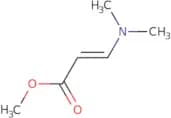
CAS:<p>Versatile small molecule scaffold</p>Formula:C6H11NO2Purity:Min. 95%Molecular weight:129.2 g/mol

![1-(2,3-Dihydro-benzo[1,4]dioxin-6-yl)-propan-1-one](/_next/image/?url=https%3A%2Fstatic.cymitquimica.com%2Fproducts%2F3D%2Fthumb-webp%2FVAA63212.webp&w=3840&q=75)
![{Tricyclo[2.2.1.0,2,6]heptan-1-yl}methanol](/_next/image/?url=https%3A%2Fstatic.cymitquimica.com%2Fproducts%2F3D%2Fthumb-webp%2FVAA64797.webp&w=3840&q=75)