Building Blocks
This section contains fundamental products for the synthesis of organic and biological compounds. Building blocks are the essential starting materials used to construct complex molecules through various chemical reactions. They play a critical role in drug discovery, material science, and chemical research. At CymitQuimica, we offer a diverse range of high-quality building blocks to support your innovative research and industrial projects, ensuring you have the essential components for successful synthesis.
Subcategories of "Building Blocks"
- Boronic Acids & Boronic Acid Derivatives(5,756 products)
- Chiral Building Blocks(1,242 products)
- Hydrocarbon Building Blocks(6,095 products)
- Organic Building Blocks(61,055 products)
Found 199650 products of "Building Blocks"
Sort by
Purity (%)
0
100
|
0
|
50
|
90
|
95
|
100
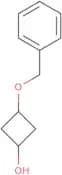
(1s,3s)-3-(Benzyloxy)cyclobutanol
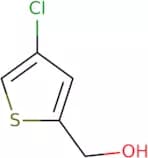
CAS:<p>(1s,3s)-3-(Benzyloxy)cyclobutanol (BOC) is a prodrug that has been shown to inhibit proliferation of cancer cells in vitro. BOC has also been shown to inhibit tumor growth by blocking the cellular uptake of glucose, which is an important source of energy for cancer cells. The use of positron emission tomography (PET) and radiolabeling with BOC can be used as a model system to study cancer metabolism and metastasis.</p>Formula:C11H14O2Purity:Min. 95%Molecular weight:178.23 g/mol4-Chlorothiophene-2-methanol
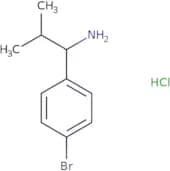
CAS:<p>Versatile small molecule scaffold</p>Formula:C5H5ClOSPurity:Min. 95%Molecular weight:148.61 g/mol1-(4-Bromophenyl)-2-methylpropan-1-amine hydrochloride
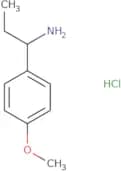
CAS:<p>Versatile small molecule scaffold</p>Formula:C10H15BrClNPurity:Min. 95%Molecular weight:264.59 g/mol1-(4-Methoxy-phenyl)-propylaminehydrochloride
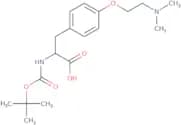
CAS:<p>Versatile small molecule scaffold</p>Formula:C10H16ClNOPurity:Min. 95%Molecular weight:201.7 g/mol(S)-2-((tert-Butoxycarbonyl)amino)-3-(4-(2-(dimethylamino)ethoxy)phenyl)propanoic acid
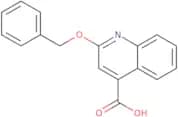
CAS:Controlled Product<p>Versatile small molecule scaffold</p>Formula:C18H28N2O5Purity:Min. 95%Molecular weight:352.4 g/mol2-(Benzyloxy)quinoline-4-carboxylic acid
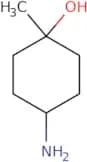
CAS:<p>Versatile small molecule scaffold</p>Formula:C17H13NO3Purity:Min. 95%Molecular weight:279.3 g/mol4-amino-1-methylcyclohexan-1-ol
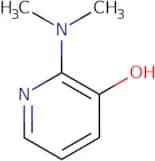
CAS:<p>Versatile small molecule scaffold</p>Formula:C7H15NOPurity:Min. 95%Molecular weight:129.2 g/mol2-(Dimethylamino)pyridin-3-ol
CAS:<p>2-(Dimethylamino)pyridin-3-ol is a nucleophilic reagent that can be used to modify biomolecules with azide and alkyne functionalities. It can be used for the synthesis of peptide receptor agonists and antagonists, as well as for labeling proteins and nucleic acids. This compound also has bifunctional characteristics, which means it can act as both a precursor in the synthesis of prosthetic groups and peptides, as well as an intermediate in the preparation of organic compounds. 2-(Dimethylamino)pyridin-3-ol is a commercially available chemical that yields high purity (>99%) when synthesized from 2-amino-5H-pyridin-2-one.</p>Formula:C7H10N2OPurity:Min. 95%Molecular weight:138.17 g/mol3-[(Methylsulfanyl)methyl]benzonitrile
CAS:<p>Versatile small molecule scaffold</p>Formula:C9H9NSPurity:Min. 95%Molecular weight:163.24 g/mol4-[2-(Methylsulfanyl)ethyl]aniline
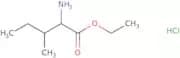
CAS:<p>Versatile small molecule scaffold</p>Formula:C9H13NSPurity:Min. 95%Molecular weight:167.27 g/molEthyl (2S,3R)-2-amino-3-methylpentanoate hydrochloride
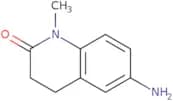
CAS:<p>Versatile small molecule scaffold</p>Formula:C8H18ClNO2Purity:Min. 95%Molecular weight:195.69 g/mol6-amino-1-methyl-1,2,3,4-tetrahydroquinolin-2-one
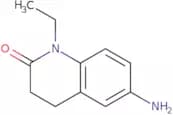
CAS:<p>Versatile small molecule scaffold</p>Formula:C10H12N2OPurity:Min. 95%Molecular weight:176.22 g/mol6-Amino-1-ethyl-1,2,3,4-tetrahydroquinolin-2-one
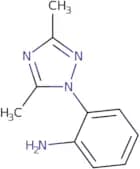
CAS:<p>Versatile small molecule scaffold</p>Formula:C11H14N2OPurity:Min. 95%Molecular weight:190.24 g/mol2-(Dimethyl-1H-1,2,4-triazol-1-yl)aniline
CAS:<p>Versatile small molecule scaffold</p>Formula:C10H12N4Purity:Min. 95%Molecular weight:188.23 g/mol(2-Amino-ethyl)-urea hydrochloride
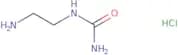
CAS:<p>(2-Amino-ethyl)-urea hydrochloride is a ligand that binds to the nitro group of the aromatic amine, phenylhydrazine. This binding prevents the formation of reactive oxygen species, which are involved in neurodegeneration and cancer. The affinity for the ligand is determined by steric factors, with methyl ester being more potent than ethyl ester. The 2-aminoethyl urea ligand binds to the carboxylate region of phenylhydrazine and inhibits its activity.</p>Formula:C3H10ClN3OPurity:Min. 95%Molecular weight:139.58 g/mol5-Acetyl-3-methyl-1,2,3,4-tetrahydropyrimidine-2,4-dione
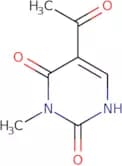
CAS:<p>Versatile small molecule scaffold</p>Formula:C7H8N2O3Purity:Min. 95%Molecular weight:168.15 g/mol4-(3,5-Dimethyl-1H-1,2,4-triazol-1-yl)benzoic acid
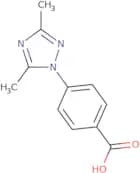
CAS:<p>Versatile small molecule scaffold</p>Formula:C11H11N3O2Purity:Min. 95%Molecular weight:217.23 g/mol2-Chloro-4-methyl-5-nitrobenzene-1-sulfonyl chloride
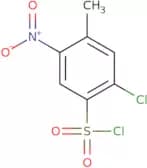
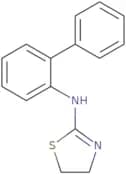
CAS:<p>Versatile small molecule scaffold</p>Formula:C7H5Cl2NO4SPurity:Min. 95%Molecular weight:270.09 g/molN-(2-Phenylphenyl)-4,5-dihydro-1,3-thiazol-2-amine
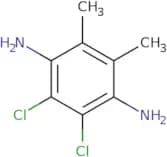
CAS:<p>Versatile small molecule scaffold</p>Formula:C15H14N2SPurity:Min. 95%Molecular weight:254.4 g/mol2,3-Dichloro-5,6-dimethylbenzene-1,4-diamine
CAS:<p>Versatile small molecule scaffold</p>Formula:C8H10Cl2N2Purity:Min. 95%Molecular weight:205.08 g/mol

![3-[(Methylsulfanyl)methyl]benzonitrile](/_next/image/?url=https%3A%2Fstatic.cymitquimica.com%2Fproducts%2F3D%2Fthumb-webp%2FIJA77214.webp&w=3840&q=75)
![4-[2-(Methylsulfanyl)ethyl]aniline](/_next/image/?url=https%3A%2Fstatic.cymitquimica.com%2Fproducts%2F3D%2Fthumb-webp%2FIJA77217.webp&w=3840&q=75)