Building Blocks
This section contains fundamental products for the synthesis of organic and biological compounds. Building blocks are the essential starting materials used to construct complex molecules through various chemical reactions. They play a critical role in drug discovery, material science, and chemical research. At CymitQuimica, we offer a diverse range of high-quality building blocks to support your innovative research and industrial projects, ensuring you have the essential components for successful synthesis.
Subcategories of "Building Blocks"
- Boronic Acids & Boronic Acid Derivatives(5,756 products)
- Chiral Building Blocks(1,242 products)
- Hydrocarbon Building Blocks(6,095 products)
- Organic Building Blocks(61,055 products)
Found 199650 products of "Building Blocks"
Sort by
Purity (%)
0
100
|
0
|
50
|
90
|
95
|
100
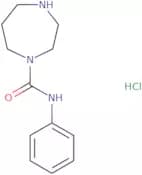
N-Phenyl-1,4-diazepane-1-carboxamide hydrochloride
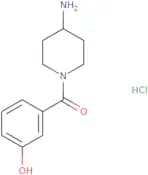
CAS:<p>Versatile small molecule scaffold</p>Formula:C12H18ClN3OPurity:Min. 95%Molecular weight:255.74 g/mol3-(4-Aminopiperidine-1-carbonyl)phenol hydrochloride
CAS:<p>Versatile small molecule scaffold</p>Formula:C12H17ClN2O2Purity:Min. 95%Molecular weight:256.73 g/molN-(2,5-Dimethylphenyl)-2-(methylamino)acetamide hydrochloride
CAS:<p>Versatile small molecule scaffold</p>Formula:C11H17ClN2OPurity:Min. 95%Molecular weight:228.72 g/molN-(2-Aminoethyl)-2-(trifluoromethyl)benzamide hydrochloride
CAS:<p>Versatile small molecule scaffold</p>Formula:C10H12ClF3N2OPurity:Min. 95%Molecular weight:268.66 g/mol1-[4-(Butan-2-yl)benzenesulfonyl]piperazine hydrochloride
CAS:<p>Versatile small molecule scaffold</p>Formula:C14H23ClN2O2SPurity:Min. 95%Molecular weight:318.9 g/mol4-[(Cyclopropylamino)methyl]-N-methylbenzamide
CAS:<p>Versatile small molecule scaffold</p>Formula:C12H16N2OPurity:Min. 95%Molecular weight:204.27 g/mol5-(Chloromethyl)-2-methyl-4-(trifluoromethyl)-1,3-thiazole
CAS:<p>Versatile small molecule scaffold</p>Formula:C6H5ClF3NSPurity:Min. 95%Molecular weight:215.62 g/mol1-{5-[(Dimethylamino)methyl]-1,2,4-oxadiazol-3-yl}cycloheptan-1-amine dihydrochloride
CAS:<p>Versatile small molecule scaffold</p>Formula:C12H24Cl2N4OPurity:Min. 95%Molecular weight:311.25 g/mol2-[4-(4-Methylbenzenesulfonyl)piperazin-1-yl]acetic acid hydrochloride
CAS:Controlled Product<p>2-[4-(4-Methylbenzenesulfonyl)piperazin-1-yl]acetic acid hydrochloride is a potent, selective inhibitor of the sodium channel Nav1.8. It has been shown to inhibit the function of Nav1.8 in human neurons and rat dorsal root ganglia, which may be useful for the treatment of pain associated with inflammation and neuropathic pain conditions. 2-[4-(4-Methylbenzenesulfonyl)piperazin-1-yl]acetic acid hydrochloride binds to the extracellular domain of Nav1.8 with high affinity. This binding prevents the opening of the channel pore and inhibits voltage gating by blocking sodium ion permeability through the channel pore.</p>Formula:C13H19ClN2O4SPurity:Min. 95%Molecular weight:334.82 g/mol4-[(4-Amino-3,5-dimethyl-1H-pyrazol-1-yl)methyl]benzoic acid
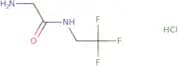
CAS:<p>Versatile small molecule scaffold</p>Formula:C13H15N3O2Purity:Min. 95%Molecular weight:245.28 g/mol2-Amino-N-(2,2,2-trifluoroethyl)acetamide hydrochloride
CAS:<p>Versatile small molecule scaffold</p>Formula:C4H7F3N2O·HClPurity:Min. 95%Molecular weight:192.57 g/mol[3-(Piperidine-1-carbonyl)phenyl]methanamine hydrochloride
CAS:<p>Versatile small molecule scaffold</p>Formula:C13H19ClN2OPurity:Min. 95%Molecular weight:254.75 g/mol5-(Ethylcarbamoyl)-1-methyl-1H-pyrazole-3-carboxylic acid
CAS:<p>Versatile small molecule scaffold</p>Formula:C8H11N3O3Purity:Min. 95%Molecular weight:197.19 g/molN-[3-(3-Aminoprop-1-yn-1-yl)phenyl]methanesulfonamide hydrochloride
CAS:<p>Versatile small molecule scaffold</p>Formula:C10H13ClN2O2SPurity:Min. 95%Molecular weight:260.74 g/mol5,6,7,8-Tetrahydropyrido[3,4-d]pyrimidin-4-ol hydrochloride
CAS:<p>Versatile small molecule scaffold</p>Formula:C7H10ClN3OPurity:Min. 95%Molecular weight:187.63 g/mol1-(Pyrrolidin-2-ylmethyl)-1H-pyrazole
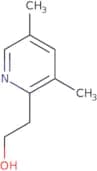
CAS:<p>The compound 1-(pyrrolidin-2-ylmethyl)-1H-pyrazole is a low-molecular-weight pyrazole analogue that has been shown to be an effective chemotherapeutic agent for the treatment of cancer, specifically in lung and breast cancers. It is synthesized by alkylation with 2-(trimethylsilyl)ethanol and methyl iodide in the presence of copper (II) chloride to form 1-(pyrrolidin-2-ylmethyl)-1H-pyrazole. The product was purified by recrystallization from ethyl acetate and ethanol. This compound is a multigram synthetic template for the synthesis of imidazoles, triazoles, and pyrazoles. Deprotection of the hydroxymethyl group at position 4 yields the corresponding amine or alcohol. Hydrophilic substituents are tolerated on position 3, while bulky groups are tolerated on positions 1</p>Formula:C8H13N3Purity:Min. 95%Molecular weight:151.21 g/mol2-(3,5-Dimethylpyridin-2-yl)ethan-1-ol
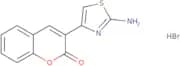
CAS:<p>Versatile small molecule scaffold</p>Formula:C9H13NOPurity:Min. 95%Molecular weight:151.21 g/mol3-(2-Amino-1,3-thiazol-4-yl)-2H-chromen-2-one hydrobromide
CAS:<p>Versatile small molecule scaffold</p>Formula:C12H9BrN2O2SPurity:Min. 95%Molecular weight:325.18 g/mol3-(2-Ethyl-1H-imidazol-1-yl)propanoic acid hydrochloride
CAS:<p>Versatile small molecule scaffold</p>Formula:C8H13ClN2O2Purity:Min. 95%Molecular weight:204.65 g/mol1-(7-Amino-1,2,3,4-tetrahydroquinolin-1-yl)-2-methoxyethan-1-one
CAS:<p>Versatile small molecule scaffold</p>Formula:C12H16N2O2Purity:Min. 95%Molecular weight:220.27 g/mol



![1-[4-(Butan-2-yl)benzenesulfonyl]piperazine hydrochloride](/_next/image/?url=https%3A%2Fstatic.cymitquimica.com%2Fproducts%2F3D%2Fthumb-webp%2FWWB23446.webp&w=3840&q=75)
![4-[(Cyclopropylamino)methyl]-N-methylbenzamide](/_next/image/?url=https%3A%2Fstatic.cymitquimica.com%2Fproducts%2F3D%2Fthumb-webp%2FWWB31016.webp&w=3840&q=75)

![1-{5-[(Dimethylamino)methyl]-1,2,4-oxadiazol-3-yl}cycloheptan-1-amine dihydrochloride](/_next/image/?url=https%3A%2Fstatic.cymitquimica.com%2Fproducts%2F3D%2Fthumb-webp%2FWWB31553.webp&w=3840&q=75)
![2-[4-(4-Methylbenzenesulfonyl)piperazin-1-yl]acetic acid hydrochloride](/_next/image/?url=https%3A%2Fstatic.cymitquimica.com%2Fproducts%2F3D%2Fthumb-webp%2FWWB32550.webp&w=3840&q=75)
![4-[(4-Amino-3,5-dimethyl-1H-pyrazol-1-yl)methyl]benzoic acid](/_next/image/?url=https%3A%2Fstatic.cymitquimica.com%2Fproducts%2F3D%2Fthumb-webp%2FWWB33123.webp&w=3840&q=75)
![[3-(Piperidine-1-carbonyl)phenyl]methanamine hydrochloride](/_next/image/?url=https%3A%2Fstatic.cymitquimica.com%2Fproducts%2F3D%2Fthumb-webp%2FWWB33200.webp&w=3840&q=75)

![N-[3-(3-Aminoprop-1-yn-1-yl)phenyl]methanesulfonamide hydrochloride](/_next/image/?url=https%3A%2Fstatic.cymitquimica.com%2Fproducts%2F3D%2Fthumb-webp%2FWWB33324.webp&w=3840&q=75)
![5,6,7,8-Tetrahydropyrido[3,4-d]pyrimidin-4-ol hydrochloride](/_next/image/?url=https%3A%2Fstatic.cymitquimica.com%2Fproducts%2F3D%2Fthumb-webp%2FWWB33407.webp&w=3840&q=75)