Building Blocks
This section contains fundamental products for the synthesis of organic and biological compounds. Building blocks are the essential starting materials used to construct complex molecules through various chemical reactions. They play a critical role in drug discovery, material science, and chemical research. At CymitQuimica, we offer a diverse range of high-quality building blocks to support your innovative research and industrial projects, ensuring you have the essential components for successful synthesis.
Subcategories of "Building Blocks"
- Boronic Acids & Boronic Acid Derivatives(5,756 products)
- Chiral Building Blocks(1,242 products)
- Hydrocarbon Building Blocks(6,095 products)
- Organic Building Blocks(61,051 products)
Found 199813 products of "Building Blocks"
Sort by
Purity (%)
0
100
|
0
|
50
|
90
|
95
|
100
2-(Propan-2-yl)hexanoic acid
CAS:<p>2-(Propan-2-yl)hexanoic acid is a fatty acid with the chemical formula CH3CH(CO2H)CH2COOH. It is used as an emulsifier and plasticizer in food. 2-(Propan-2-yl)hexanoic acid is also used in cosmetics, pharmaceuticals, and textiles.</p>Formula:C9H18O2Purity:Min. 95%Molecular weight:158.24 g/mol5-(1-Hydroxyethyl)oxolan-2-one
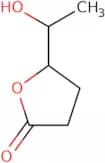
CAS:<p>5-(1-Hydroxyethyl)oxolan-2-one (5-HEOL) is a chiral compound. It is a potential new drug for the treatment of fungal infections. 5-HEOL has been shown to inhibit growth in vitro, and it also shows good efficacy in an animal model that mimics human infection with Candida albicans. This compound has been found to be safe and effective when administered orally to mice. The effect of 5-HEOL is stereoselective; it inhibits the growth of C. albicans yeast cells by blocking fatty acid synthesis at the level of transcription, while not affecting the production of fatty acids by mammalian cells.</p>Formula:C6H10O3Purity:Min. 95%Molecular weight:130.14 g/mol4-Formyl-3-methylbenzonitrile
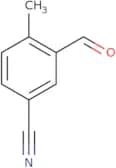
CAS:<p>4-Formyl-3-methylbenzonitrile is a glutamate antagonist that binds to metabotropic glutamate receptors, which inhibit the release of glutamate. It has been shown to be a potent and selective antagonist at mGluR1, with an IC50 of 3.3 μM. The potency of this drug was found to be 10 times lower than that of LY354740, another mGluR1 antagonist. Substituents on the 4-formyl group have been shown to affect the binding affinity and potency of this compound.</p>Formula:C9H7NOPurity:Min. 95%Molecular weight:145.16 g/mol2-Ethyl-2-(prop-2-en-1-yl)propane-1,3-diol
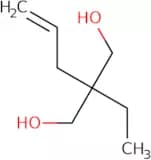
CAS:<p>Versatile small molecule scaffold</p>Formula:C8H16O2Purity:Min. 95%Molecular weight:144.21 g/mol2-(Chloromethyl)-5-methanesulfonyl-1,3,4-thiadiazole
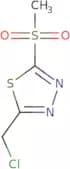
CAS:<p>Versatile small molecule scaffold</p>Formula:C4H5ClN2O2S2Purity:Min. 95%Molecular weight:212.7 g/mol2-(Methylamino)-2-phenylethan-1-ol
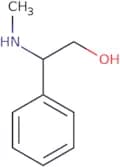
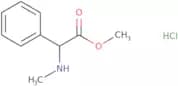
CAS:<p>Versatile small molecule scaffold</p>Formula:C9H13NOPurity:Min. 95%Molecular weight:151.21 g/molMethyl 2-(methylamino)-2-phenylacetate hydrochloride
CAS:<p>Versatile small molecule scaffold</p>Formula:C10H14ClNO2Purity:Min. 95%Molecular weight:215.67 g/molTricyclo[7.3.1.0,2,7]trideca-2,4,6-trien-13-one
CAS:<p>Versatile small molecule scaffold</p>Formula:C13H14OPurity:Min. 95%Molecular weight:186.25 g/mol4-Bromo-1,2,5-thiadiazol-3-amine
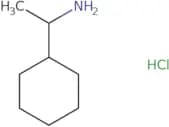
CAS:<p>Versatile small molecule scaffold</p>Formula:C2H2BrN3SPurity:Min. 95%Molecular weight:180.03 g/mol(1-Cyclohexylethyl)amine hydrochloride
CAS:<p>Versatile small molecule scaffold</p>Formula:C8H18ClNPurity:Min. 95%Molecular weight:163.69 g/mol2-(Hydroxymethyl)cyclohexan-1-ol
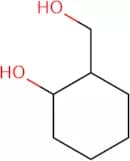
CAS:<p>2-(Hydroxymethyl)cyclohexan-1-ol is a potassium salt that is used as an intermediate for the synthesis of other chemicals. It has been shown to be a strong inhibitor of the enzyme acetylcholinesterase in vitro, which leads to increased levels of acetylcholine and neurotransmission. The compound has also been shown to inhibit the growth of bacteria by inhibiting protein synthesis through an unknown mechanism. 2-(Hydroxymethyl)cyclohexan-1-ol is isolated from a variety of sources, including wood tar, coal tar, and petroleum.<br> 2-(Hydroxymethyl)cyclohexan-1-ol can be synthesized by solvolysis with potassium hydroxide or tetrafluoroborate followed by acetolysis with acetic anhydride.<br> Potassium acetate can also be used to synthesize 2-(hydroxymethyl)-cyclohexan-1-</p>Formula:C7H14O2Purity:Min. 95%Molecular weight:130.18 g/mol[5-(4-Chlorophenyl)-2H-tetrazol-2-yl]acetic acid
CAS:Versatile small molecule scaffoldFormula:C9H7ClN4O2Purity:Min. 95%Molecular weight:238.63 g/mol5-methyl-1H-imidazo[4,5-b]pyridine
CAS:<p>Versatile small molecule scaffold</p>Formula:C7H6N3Purity:Min. 95%Molecular weight:132.14 g/mol7-Methyl-1H-imidazo[4,5-b]pyridine
CAS:<p>7-Methyl-1H-imidazo[4,5-b]pyridine is an optimised molecule for the treatment of various cancers. It has a hydrophobic nature and can be used to prevent the spread of cancer cells through the body by blocking their ability to attach to other cells. The 7-Methyl-1H-imidazo[4,5-b]pyridine molecule is composed of a pyridine ring with a hydrogen atom at the 4th position and is capable of forming hydrogen bonding interactions with complementary molecules. This chemical also blocks DNA polymerase enzymes that are responsible for copying genetic information from DNA to RNA, which prevents cell division.</p>Formula:C7H7N3Purity:Min. 95%Molecular weight:133.15 g/mol1,2,5,6,7,8-Hexahydroquinoxalin-2-one
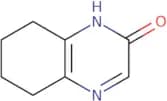
CAS:<p>1,2,5,6,7,8-Hexahydroquinoxalin-2-one is a stimulant that has been shown to be effective for the prophylaxis and/or treatment of diabetes. It is also a prophylactic agent for the prevention of pyrazinone. This drug has been shown to stimulate insulin secretion from pancreatic beta cells in vitro. 1,2,5,6,7,8-Hexahydroquinoxalin-2-one stimulates the release of insulin by stimulating exocytosis and inhibiting vesicle fusion in response to glucose. It can also inhibit or stimulate the release of insulin in response to other stimuli such as amino acids and fatty acids.</p>Formula:C8H10N2OPurity:Min. 95%Molecular weight:150.18 g/mol4-Cyano-4,4-dimethylbutanoic acid
CAS:<p>Versatile small molecule scaffold</p>Formula:C7H11NO2Purity:Min. 95%Molecular weight:141.17 g/molTricyclo[4.3.1.0,3,8]decan-4-one
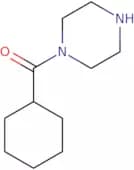
CAS:<p>Tricyclo[4.3.1.0,3,8]decan-4-one is a heterocyclic compound that has been used as an intermediate in pharmaceutical formulations. It is synthesized by the reaction of cyclopentadiene with oxirane and reacts with trimethylsilyl chloride to produce the corresponding sulfonium salt. Tricyclo[4.3.1.0,3,8]decan-4-one is also a synthetic precursor to hypoxia-targeted prodrugs that act via c1-4 alkyl and 1-4 alkyl intermediates to inhibit the growth of cancer cells.</p>Formula:C10H14OPurity:Min. 95%Molecular weight:150.22 g/mol1-(Cyclohexylcarbonyl)piperazine
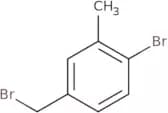
CAS:<p>Versatile small molecule scaffold</p>Formula:C11H20N2OPurity:Min. 95%Molecular weight:196.29 g/mol1-Bromo-4-(bromomethyl)-2-methylbenzene
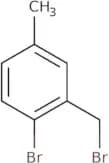
CAS:<p>Versatile small molecule scaffold</p>Formula:C8H8Br2Purity:Min. 95%Molecular weight:263.96 g/mol1-bromo-2-(bromomethyl)-4-methylbenzene
CAS:<p>Versatile small molecule scaffold</p>Formula:C8H8Br2Purity:Min. 95%Molecular weight:263.96 g/mol


![Tricyclo[7.3.1.0,2,7]trideca-2,4,6-trien-13-one](/_next/image/?url=https%3A%2Fstatic.cymitquimica.com%2Fproducts%2F3D%2Fthumb-webp%2FCBA59118.webp&w=3840&q=75)

![[5-(4-Chlorophenyl)-2H-tetrazol-2-yl]acetic acid](/_next/image/?url=https%3A%2Fstatic.cymitquimica.com%2Fproducts%2F3D%2Fthumb-webp%2FCBA58237.webp&w=3840&q=75)
![5-methyl-1H-imidazo[4,5-b]pyridine](/_next/image/?url=https%3A%2Fstatic.cymitquimica.com%2Fproducts%2F3D%2Fthumb-webp%2FCBA58224.webp&w=3840&q=75)
![7-Methyl-1H-imidazo[4,5-b]pyridine](/_next/image/?url=https%3A%2Fstatic.cymitquimica.com%2Fproducts%2F3D%2Fthumb-webp%2FCBA58220.webp&w=3840&q=75)

![Tricyclo[4.3.1.0,3,8]decan-4-one](/_next/image/?url=https%3A%2Fstatic.cymitquimica.com%2Fproducts%2F3D%2Fthumb-webp%2FCBA56785.webp&w=3840&q=75)